
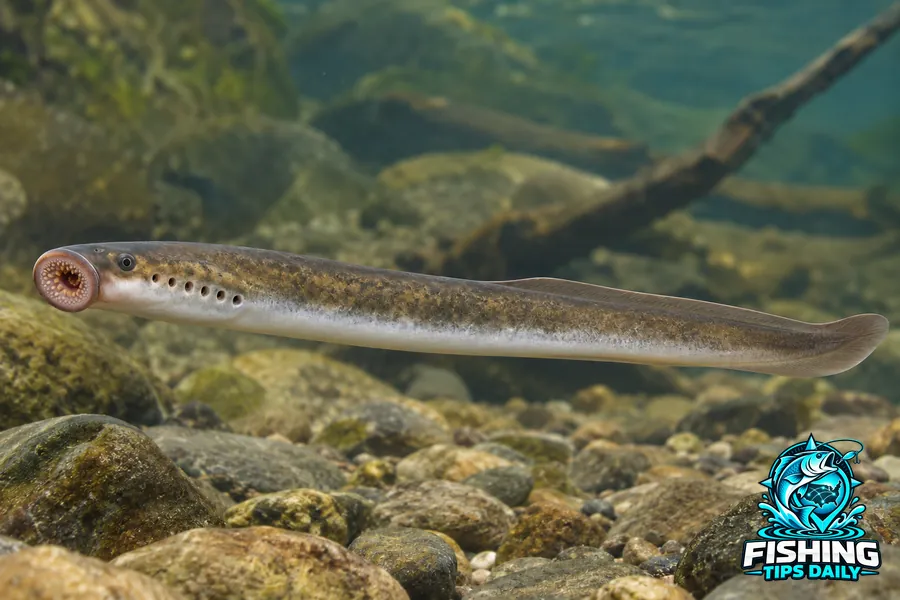
Range and Identity
Ichthyomyzon bdellium is associated with the Ohio basin, including tributaries from the northeastern part of the drainage toward its southern reaches. It is distinct from the nonparasitic Northern Brook Lamprey. A lamprey’s general body shape cannot establish whether its transformed adults feed on hosts.
Habitat and Behavior
Larvae occupy muddy pools and backwaters, often near debris, while spawning adults use brooks and smaller rivers. Feeding adults occur in larger flowing waters. A habitat description should retain life stage rather than combine all of these observations into one preferred stream size.
Food and Life History
Suckers are among the recorded hosts of feeding adults. The female maximum reference reaches 30.5 centimeters total length, slightly above the male or unsexed reference. No lifespan is inferred from a short adult-stage age entry, because larval development is a separate part of the life cycle.
Field Note
Identify life stage before interpreting a lamprey observation. A sediment-dwelling larva and a feeding adult can represent very different habitat and food relationships.
All Lakes With Ohio Lamprey
Browse lakes and reservoirs with documented Ohio Lamprey records, listed alphabetically. Records do not establish current abundance or public access. Check the evidence and managing authority for the water you choose.
No published lakes are currently linked to this species in our confirmed records.