Cool enough to feed.
Carry a thermometer. Comfortable water and enough oxygen matter more than a favorite color. A shaded bank can still have warm water, and the deepest part of a lake is not always its best habitat.

A rainbow cruising a lake edge and a lake trout following baitfish in deep water need different plans. Learn what to look for, what to tie on, and how to put it where a trout can eat it.

Carry a thermometer. Comfortable water and enough oxygen matter more than a favorite color. A shaded bank can still have warm water, and the deepest part of a lake is not always its best habitat.
A tiny rise, a cloud of midges, or baitfish breaking the surface can narrow your search. Trout eat insects, crustaceans, and fish; what is available now matters more than a universal “best bait.”
Before changing the lure, adjust its depth or speed. A nymph racing unnaturally across a current seam or a spoon passing well above deep fish can miss a good opportunity.
Trout belong to the salmon family. Brook and lake trout are char, close relatives with their own habits. These illustrations show useful clues; color changes with age, habitat, and spawning condition.
Oncorhynchus mykiss
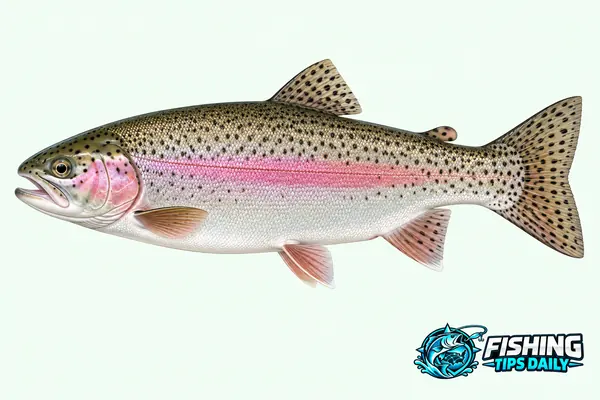
Salmo trutta
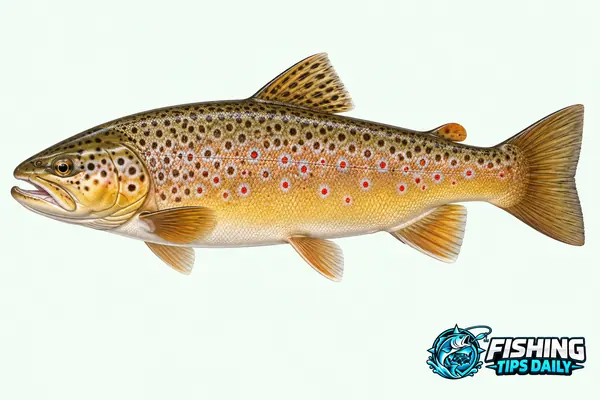
Salvelinus fontinalis

Several native forms

Salvelinus namaycush

The name commonly refers to rainbows that migrate between feeding waters and spawning streams, including ocean-going fish and Great Lakes populations. They are not a sixth species on this page.
A wild fish was born through natural reproduction. A native fish belongs to a species naturally found in that drainage. A trout can be wild in a place where its species was introduced.
Hybrids and other trout occur too. Use a local identification guide before keeping a fish you cannot confidently name.
In open water, follow a feeding route. In current, look for a place a fish can hold without spending more energy than its next meal provides.
Start close. A trout may be cruising the first drop just beyond your feet while you are trying to reach the middle. Work a fan of casts across a point, a weed edge, or an inlet area that is open to fishing.
After covering the shallow band, let the same lure sink longer and repeat. Keep track of the count that gets attention. If you see repeated rises, watch where the fish is headed and cast ahead of it instead of landing on the last ring.
A boulder, a soft inside bend, or the edge of a faster tongue of water can give a trout a resting place beside passing food. Approach from a position that keeps your shadow and line out of the feeding lane.
With a drifting nymph or permitted bait, manage slack so the offering moves with the water. With a spinner, feel for the blade working as the current changes. Below a dam, changing releases can quickly alter both the fishing and your route back to shore.
Choose the presentation for the water in front of you. Bait rules vary sharply: a method that is fine at a stocked pond may be prohibited at a nearby trophy fishery.

An inline spinner has a blade rotating around a straight shaft. It is a handy search lure when you want to walk a bank and cover different angles.

A spoon wobbles and flashes on the retrieve. Small casting spoons fit shore fishing; deeper lake-trout work may call for different weights or depth-control equipment.

A nymph works below the surface, a dry fly imitates food on top, and a streamer suggests a swimming meal. You do not need a rising fish to fish a fly.
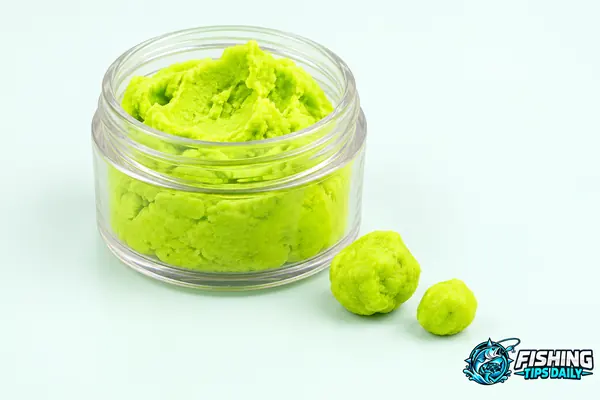
A small ball of floating dough can lift a hook above the bottom. Its buoyancy depends on the amount of bait and the hook, so test the finished combination in shallow water.

A small worm or manageable nightcrawler piece is enough for many trout. A float lets you control how far it hangs below the surface and makes subtle takes easier to see.

Fish-shaped lures and compact jigs can be useful when larger trout are feeding on baitfish. Match the size of the available forage before reaching for the biggest lure in the box.
Fish eggs and egg imitations are another local option in some fisheries. Do not assume they, scented products, or soft plastics are allowed under an artificial-only rule; read the definition for that water.
These diagrams show the connections clearly. Adjust depth, weight, hook size, and leader strength to your fishery; the drawings are not to scale.
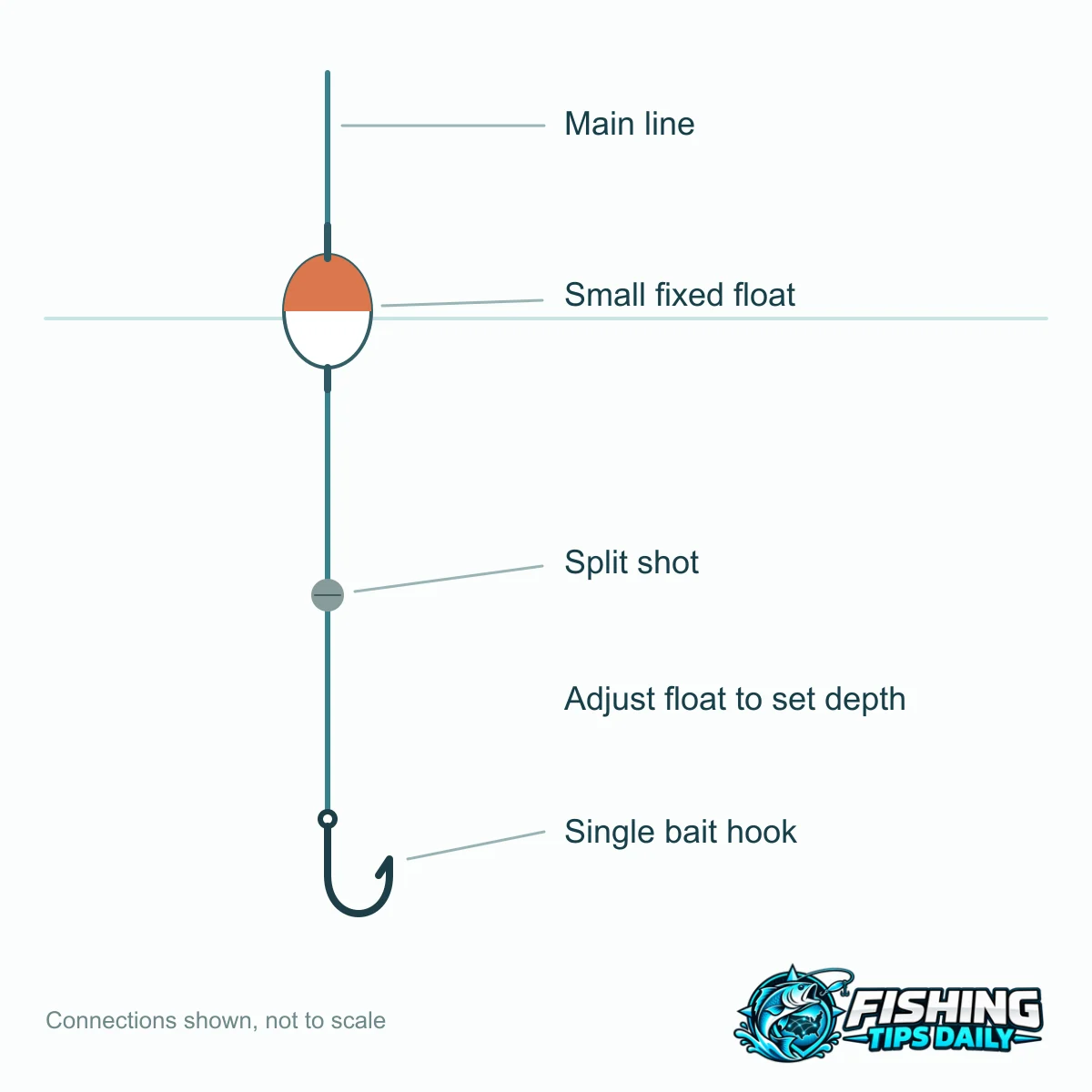 View larger setup ↗
 View larger setup ↗
 View larger setup ↗
| Trip | Starting outfit | Pay attention to |
|---|---|---|
| Small stocked lake or stream | Light spinning rod, balanced reel, roughly 4–6 lb line | A smooth drag and a rod that casts your small lure comfortably. |
| General fly fishing | A 9-foot 5-weight is a versatile starting point | Match leader and tippet to fly size, wind, cover, and fish. |
| Bigger lake rainbows or browns | A stronger spinning or fly outfit matched to your presentation | Enough leader strength to land a fish promptly rather than prolonging the fight. |
| Deep lake trout | A jigging or trolling outfit rated for the lure and depth-control gear | Line capacity, boat control, depth, and safe fish handling. |
Polarized glasses help you see into the water; a rubber-mesh landing net, forceps, spare leader, and a thermometer earn their space on most trout trips.
A stocked pond, a windy reservoir, and a tailwater are different trips. Pick the setting and the way you want to fish; then adjust the suggestion to current rules and conditions.
After ice-out, or as low-elevation water warms from winter, trout can become accessible along lake margins. Compare shallow feeding areas with the first drop rather than assuming every fish has moved in.
In streams, runoff can change visibility and access quickly. A slightly larger visible offering may help in stained water, but unsafe flow is a reason to change the trip.
Cool early hours can help on some waters, while deep lakes may call for controlled presentations well below the surface. Follow insects on suitable mountain lakes and temperature on warmer streams.
Do not crowd fish concentrated in a small cold-water refuge during a heat spell. Choose another fishery when trout are already stressed.
Cooling water can open up new shoreline fishing. Browns, brook trout, and lake trout also approach their spawning season, so a gathering of fish is not automatically an invitation to target them.
Respect closures and give spawning areas room. Fish feeding routes away from redds rather than casting repeatedly at paired fish on clean gravel.
On open streams, concentrate on manageable holding water and get a small offering to the fish. A bright mild period or a midge hatch can change a quiet day.
Ice fishing is a separate plan: confirm that the water is open to it and that local ice conditions are suitable. Neither a calendar date nor other anglers on the ice proves it is safe.
Rainbow and cutthroat trout generally spawn in spring, with timing varying by population and elevation. Brown and brook trout generally spawn in fall; lake trout are also fall spawners.
Many stream-spawning trout excavate gravel nests called redds. Lake trout instead scatter eggs over suitable rock and rubble. Some stocked lakes lack the habitat needed for successful reproduction and depend on continued stocking.
A fish following your lure has told you more than an empty cast. Change one part of the presentation and see whether the response changes.
Try a smaller profile, a different running depth, or a controlled pause. Check that the lure is not spinning or fouled with weed. Repeated casts over the same fish can make it less willing.
Shorten the cast, move to a better angle, or manage the upstream line before it pulls tight. More false casts do not fix a presentation that crosses several currents.
Reduce weight or sink time. The goal is a feeding zone, not a collection of snags. Deep trolling requires knowing where the lure runs, not simply how much line is out.
Set the drag before casting, keep steady pressure, and bring the fish to a wet rubber-mesh net. Wet your hands and support it in the water while removing the hook. Have the camera ready before lifting a fish, keep air exposure brief, and release it when it can swim away under its own power.
Do not pull hard on a deeply swallowed hook. Cutting the leader close can avoid more damage. If you intend to keep fish, know the harvest rules and bring a way to chill your legal catch promptly.
Ten destinations to build a trip around, in our chosen order. Pick the trout and the part of the water you want to fish before choosing tackle.
Flaming Gorge offers very different trout trips, from rainbow fishing to deep-water lake trout. Its Utah and Wyoming shores belong to the same reservoir, but the rules on each side deserve a separate check.
Trip approach: Choose a target first: a shore-casting rainbow trip and a boat trip for lake trout call for different equipment and depth control.
Explore this water →Taneycomo is a reservoir with a strong tailwater character. Cold releases below Table Rock Dam support stocked rainbow and brown trout, while generation changes how much current you fish.
Trip approach: Plan around the current flow and the exact section. Upper-water bait restrictions mean the tackle that works elsewhere on the lake may not be allowed there.
Explore this water →This desert lake is a destination for large Lahontan cutthroat trout. It is a Tribal fishery with its own permit requirements, and bait fishing is prohibited. Shore anglers have a meaningful place in the fishery.
Trip approach: Bring permitted flies or lures and work a reachable contour. Check the open season, Tribal permit, current hook rules, and shoreline conditions before the trip.
Explore this water →Idaho’s largest lake supports a distinctive trophy rainbow fishery as well as lake trout and other cold-water fish. Its great depth and open-water scale reward a focused plan rather than a lap around the shoreline.
Trip approach: Decide whether you are pursuing rainbows or lake trout, then locate forage and control lure depth. Learn to identify protected bull trout before keeping a catch.
Explore this water →Lake trout, often called mackinaw here, share Tahoe with rainbow and brown trout. The clear water and steep basin make a deep-water trip a different undertaking from casting along a quiet shoreline.
Trip approach: For lake trout, choose a boat plan that can reach and follow the feeding depth. For shore fishing, investigate cooler periods and accessible edges rather than assuming deep fish are within casting range.
Explore this water →This mountain reservoir supports rainbow, brown, and lake trout. Cold, oxygenated habitat gives the lake trout a place here, well south of many of the species’ best-known northern waters.
Trip approach: Separate spring bank fishing from summer depth-control fishing. The reach between Watauga Point and Butler Bridge is an established lake-trout area to investigate.
Explore this water →Lake Superior is a major native lake-trout water, with other trout opportunities along its shores and tributaries. Its size, cold water, and exposed weather make access and boat suitability part of the fishing plan.
Trip approach: Choose a specific shore or launch area and the rules for that jurisdiction. Shore-casting spoons and offshore lake-trout fishing are separate trips with different demands.
Explore this water →Jocassee offers a southern reservoir fishery for rainbow and brown trout. Its deep water and baitfish give anglers a reason to think beyond the shallow stream tactics often associated with trout.
Trip approach: Control trolling depth and compare the layer holding forage. Jocassee has special bait restrictions, including corn, cheese, and fish eggs or their imitations; check the current rules before packing bait.
Explore this water →Hebgen’s rainbow and brown trout draw anglers to the Madison River country. Its well-known “gulper” fishing centers on trout cruising near the surface and picking off emerging or fallen insects.
Trip approach: On a suitable calm morning, watch several rises before casting. Lead the fish’s route with an appropriate fly rather than dropping a line onto the last rise.
Explore this water →Spinney Mountain is a Gold Medal reservoir in Colorado’s open South Park country. Trout fishing, mountain views, and exposed wind all shape a day here; it is not a year-round ice-fishing destination.
Trip approach: Use permitted artificial flies or lures. Plan around the park’s seasonal opening, current ramp access, and wind, and check the special harvest rules before fishing.
Explore this water →No. A light spinning outfit is a practical way to fish many trout waters. A fly rod offers a different way to deliver small insect imitations and other flies. Choose the method you enjoy and that the water permits.
Where allowed, a small worm piece or floating trout dough is a useful starting option. Newly stocked fish do not all behave identically, and fish that have been in the water longer may focus on natural food. Depth and presentation still matter.
Low light can help, especially in clear shallow water. An insect hatch, cool weather, cloud cover, or a change in flow may create daytime opportunities. In hot weather, an early start does not make an already warm stream suitable.
Start with the habitat and the target fish. A rainbow may cruise shallow water in spring while a lake trout uses a deeper route. Count a lure down, adjust float depth, or use electronics from a boat to make changes you can repeat.
Clear water and pressured fish can reward a suitable fine leader, but visibility is only one factor. A good drift, sensible approach, and dependable knot often matter more than changing line color. Do not go so light that you cannot land a fish promptly.
A cutbow is a rainbow–cutthroat hybrid. It can show mixed features, which is one reason a single color mark is not always enough for identification.
The principles carry over; the methods do not all carry over. For example, Pyramid Lake prohibits bait, and Spinney Mountain has artificial-flies-and-lures rules. Check each destination before packing natural or prepared bait.