Food beats an empty mark.
A great-looking point without prey can be a short stop. Look for baitfish, productive weed edges, or a bottom change that concentrates feeding activity.

A jig beside a rocky point. A leech hovering over a reef. A crankbait tracking through suspended baitfish. Walleye give you several ways in—if your presentation reaches the water they are actually using.
A great-looking point without prey can be a short stop. Look for baitfish, productive weed edges, or a bottom change that concentrates feeding activity.
Remember your float setting, jig weight, or trolling line length. A bite is much more useful when you can put the next offering in the same place.
Dusk is worth planning around, but stained water, clouds, and a manageable chop can keep fish within reach during the day. Darkness is not a requirement.
Walleye are freshwater predators found across much of northern North America and in stocked waters farther south and west. Lakes, reservoirs, and larger rivers all hold them; one depth or one season cannot describe the whole fishery.
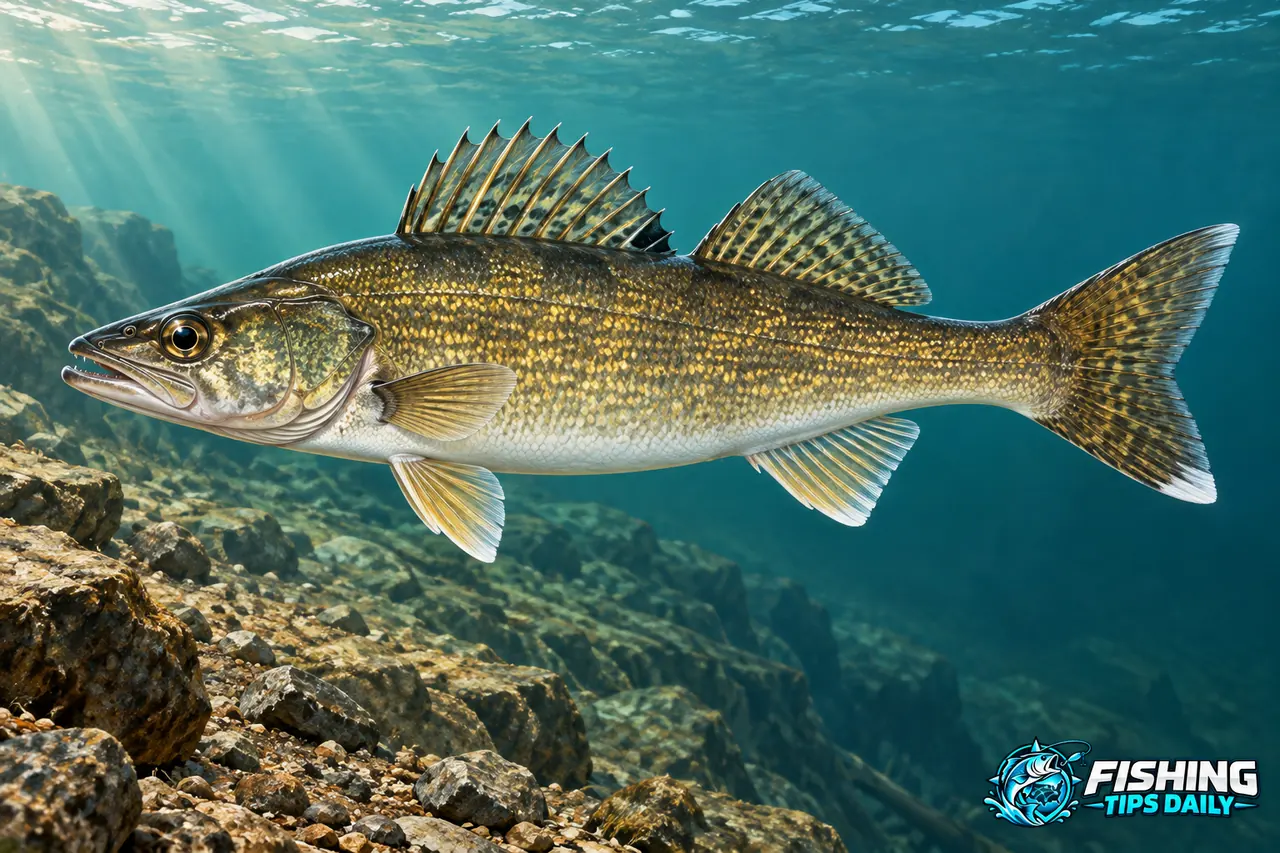
Look for a long olive-to-gold body, a large reflective eye, and two separate dorsal fins. A dark blotch near the rear base of the first dorsal fin and a white tip on the lower tail lobe are useful clues.
The mouth holds sharp teeth. Use a net and pliers instead of handling a walleye like a lip-gripped bass.
Adult walleye eat a variety of smaller fish, including perch and minnows where available. Insects and other invertebrates also contribute. Young fish start with much smaller food.
Notice the size of the prey you see. A compact jig can be a better match than a large plug when the available food is small.
A reflective layer inside the eye helps walleye make use of limited light. That advantage can matter in dim, stained, or deeper water, as well as at dawn and dusk.
It does not make every walleye a night-only bottom feeder. Some follow baitfish well off bottom in open water.
Pick a small stretch you can fish thoroughly. Compare its shallow edge, its break, and the water just beyond it before making a long run to the next spot.
A point leading into deeper water gives fish several depths within a short move. Gravel meeting softer bottom, the edge of a rock pile, and the outside of a healthy weed bed are all worth investigating.
Cast across the feature from different angles. If the bite comes halfway back every time, mark that depth instead of assuming the fish are on top of the reef.
A manageable breeze can disturb the surface and move food toward a shoreline. In a river, a seam beside faster water may let a fish hold close to passing prey.
Position the boat or your cast so you can control the drift. When wind or current makes that impossible, a more sheltered location can be a better fishing decision.
Some of the fish under a school of bait may be far above the lake floor. A bottom rig passing beneath them misses the point, even if the boat is in the right place.
Use your depth reading to choose a lure that runs at or slightly above the fish. Keep the presentation in the feeding zone rather than repeatedly lowering it to bottom.
A public point, riprap shoreline, or permitted river access near a depth change is worth a focused evening. Check footing and your return route while it is still light.
Start with a jig or shallow-running minnow plug. Work parallel to shore as well as straight out; a fish can travel the near-bank edge while you cast over it.
Minnows, leeches, and nightcrawlers earn their place. Jigs and moving lures let you cover water or work without a bait bucket. Choose depth and action first, then experiment with color.
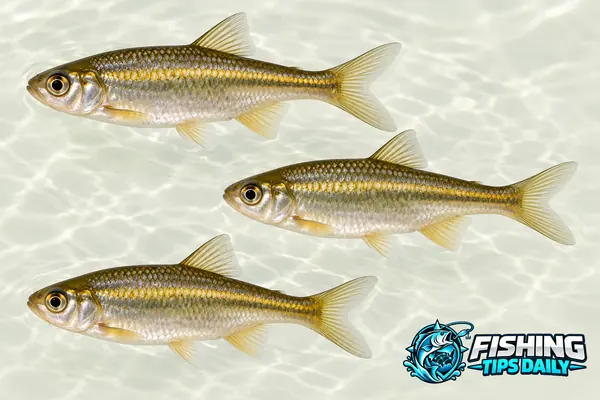
A lively, legally sourced minnow suits a jig, slip float, or slow live-bait rig. Match its size to the hook and local forage rather than automatically choosing the biggest bait in the tank.
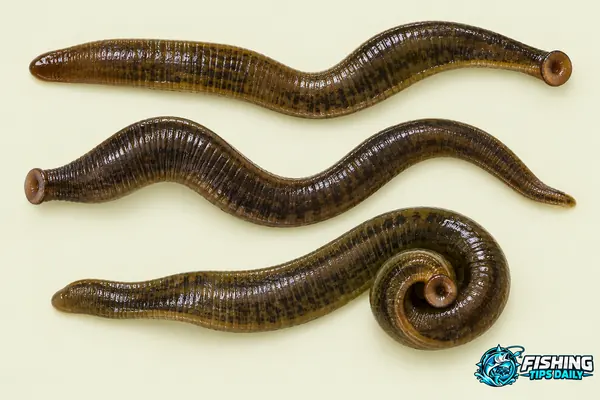
A leech can keep moving while a slip float holds it beside a small target. It also fits a slow rig when you want to explore an edge without the extra flash of a spinner blade.
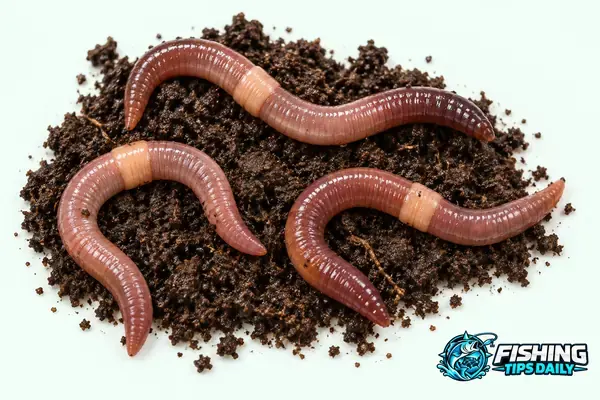
A nightcrawler can ride behind a bottom bouncer on a spinner harness or hang under a float. On a harness, keep the worm reasonably straight so it trails instead of spinning into a tangle.
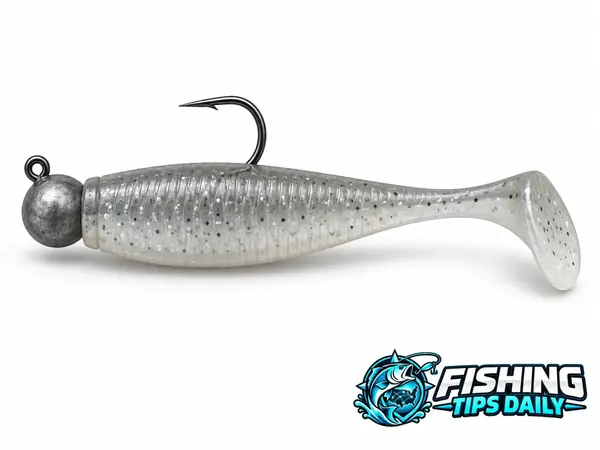
A jig with a minnow-shaped plastic lets you pitch a target, swim an edge, or fish below the boat. Thread the plastic straight and choose enough weight to maintain contact without plowing bottom.
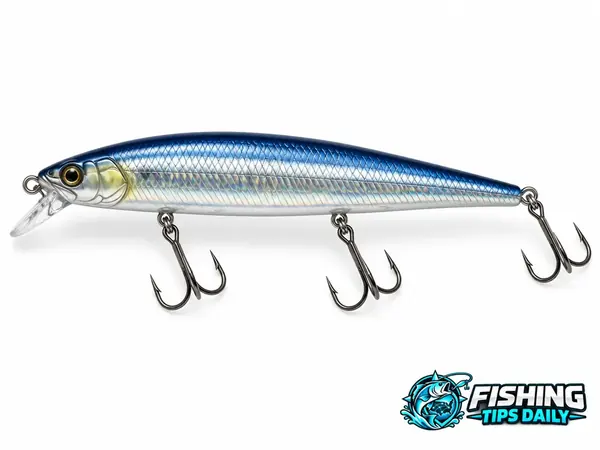
A plug can search a long shoreline or a band of open water. Some are designed for shallow casting; others dive farther on a troll. The bill, line diameter, line length, and speed all affect the result.
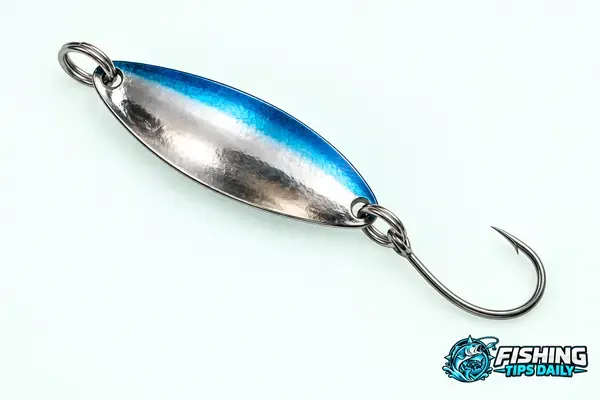
A spoon can flash on a lift and flutter during a pause. Compact jigging lures offer another way to work fish below a boat or through the ice. Their actions vary, so test the lure before settling into a rhythm.
Spinner harnesses are the blade-and-hook rigs used behind weights—not the same thing as a safety-pin-shaped bass spinnerbait. The bottom-bouncer diagram below shows the connection.
These connection diagrams are simplified, not drawn to fishing-depth scale. Use the lightest practical weight and adjust hook, leader, and bait to the conditions.
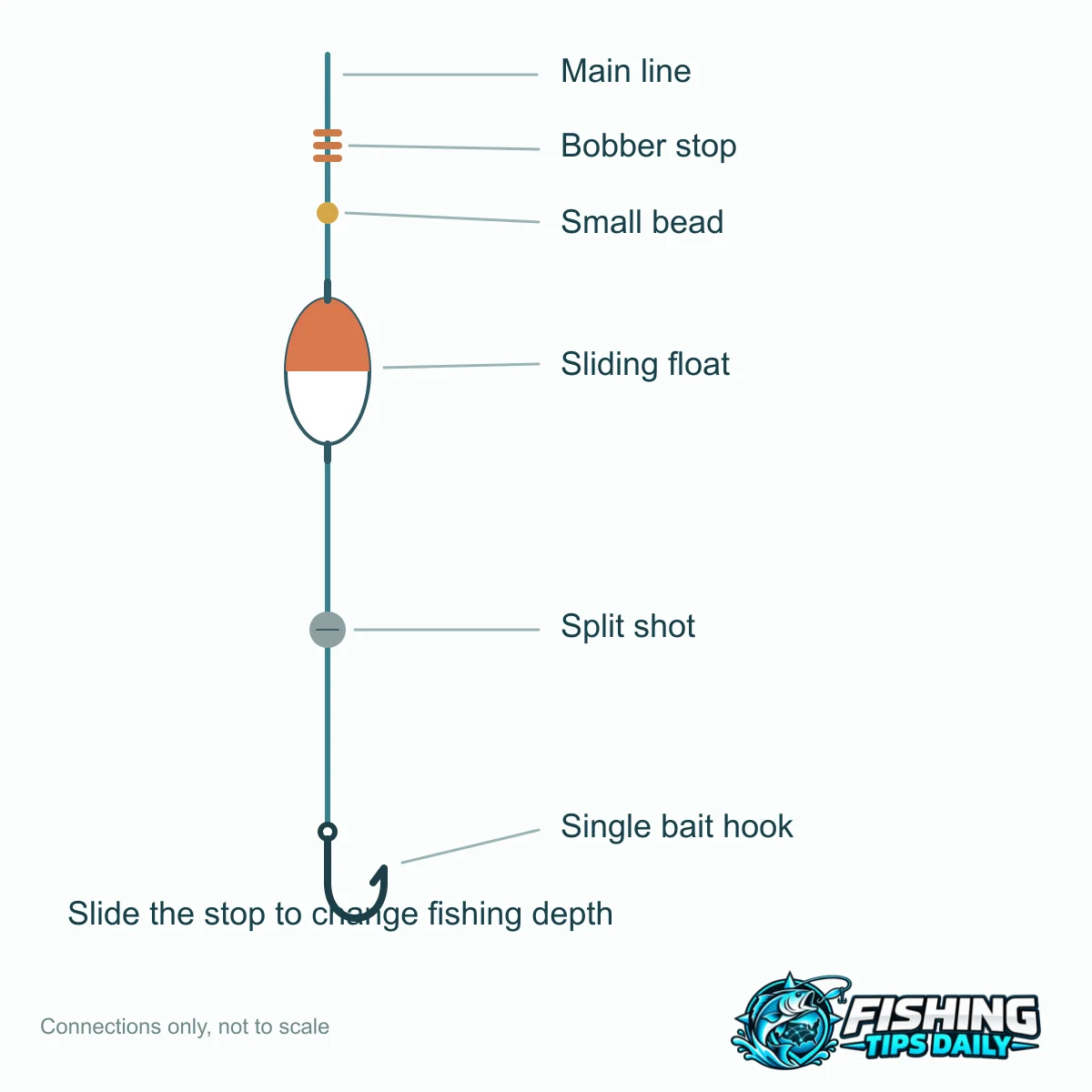 View larger setup ↗
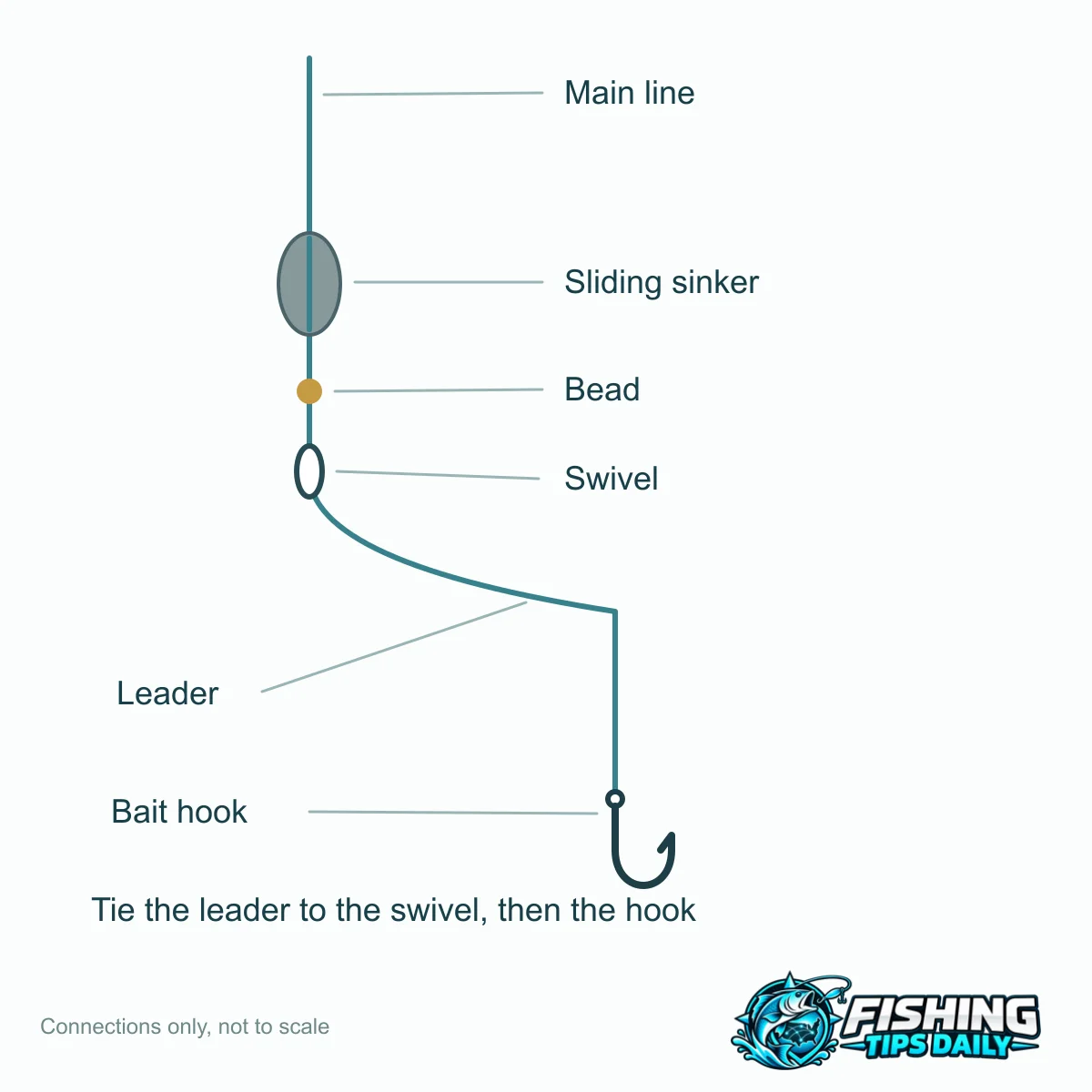 View larger setup ↗
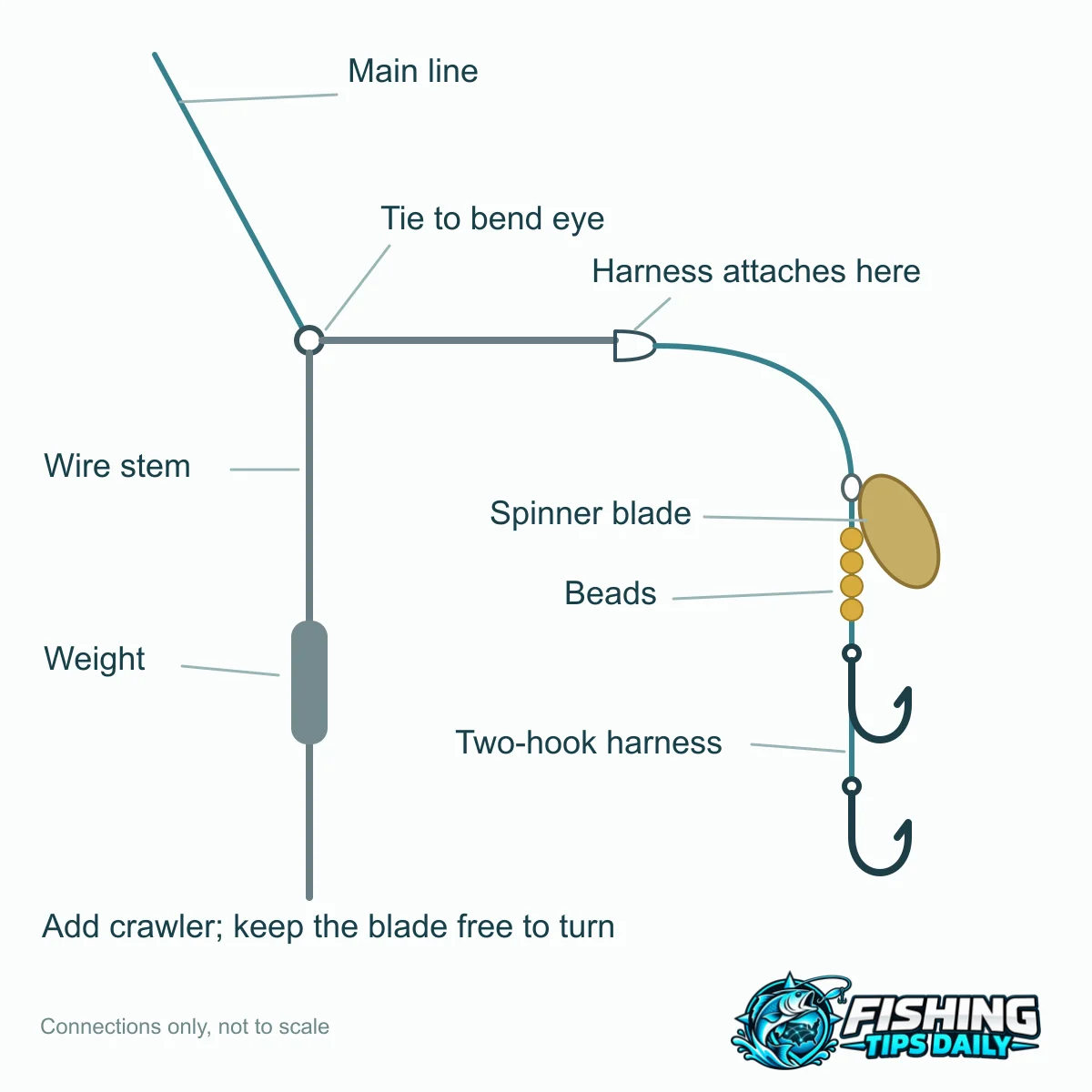 View larger setup ↗
| Method | A useful starting outfit | What matters most |
|---|---|---|
| Jigs and light live bait | 6½–7½ ft medium-light or medium spinning rod; roughly 6–10 lb line, or light braid with a suitable leader | A sensitive tip, dependable drag, and enough strength for current and cover |
| Slip floats | A spinning rod long enough to manage slack; line that lets the stop and float slide properly | A balanced float and weight, accurate depth, and a hook matched to the bait |
| Bottom bouncers and harnesses | A medium or medium-heavy outfit rated for the sinker weight; a reel with smooth drag | Boat control, readable line angle, and keeping the harness untangled |
| Trolling plugs | A trolling outfit suited to the lure and any boards or diving gear; a line counter helps repeat a pass | Knowing running depth with your actual line and keeping fish under steady pressure |
A measuring board, pliers, a suitable landing net, and fresh knots matter on every trip. You can learn a shoreline with one reliable spinning outfit before building a full trolling spread.
Choose a situation and whether you want to use bait or artificials. Treat the result as a first experiment; adjust depth, speed, and location from what the fish show you.
After spawning, nearby flats, points, and current edges can hold fish looking for food. Start with a controlled jig presentation instead of assuming the whole lake wants a fast troll.
Shallow does not mean right against shore everywhere. Water clarity, warming trends, prey, and the local season all affect where you can start.
Weed edges, reefs, and deeper breaks offer different opportunities. A slow rig can work a defined patch; a harness or plug helps cover a longer route.
In open basins, look for fish using suspended forage. Warm surface water does not guarantee good oxygen on the deepest bottom, so depth alone is not the answer.
Cooling water can bring bait and predators onto reachable edges. Minnow plugs make sense when fish are chasing fish-shaped meals along a long stretch of shoreline.
Compare speed before switching through a dozen colors. A lure that works well on a steady daytime pass may need a different pace as conditions change.
Where ice conditions and the season allow it, a jigging spoon or permitted bait can work over a break or feeding route. Pause when a fish approaches instead of lifting continuously.
Ice is never uniformly safe, particularly around current, cracks, and changing weather. In open water, cold-weather bank or river fishing calls for equally careful footing and planning.
Walleye spawn in spring, often with water in roughly the mid-40s to low-50s °F. Timing changes with latitude, weather, and the waterbody. Some use tributary riffles; others spawn over lake reefs, gravel, or suitable rocky shorelines.
They scatter eggs rather than build and guard a bass-style nest. Eggs are left among the bottom material, where water movement and conditions influence survival.
Record the useful details: depth, bottom type, direction, speed, and the shape of the offering. One repeatable change teaches more than replacing everything at once.
Check for a partly missing worm, a buried point, or a twisted harness. Try a more compact bait or a different pace. Do not assume every tap is a walleye; smaller fish can strip bait too.
Check the lure's depth before abandoning the spot. Try a smaller profile or longer pause, then change angle. Sonar returns show something is there; they do not prove the species or its willingness to feed.
Wind and current change how a lure moves through the water. Repeat the productive direction, and check the action during turns. Boat speed on a screen is not the whole story.
Keep steady pressure and guide the fish headfirst into a suitable net. Wet your hands, support the body, and keep fingers away from gills and sharp teeth. Have pliers and a measuring board ready so any decision is quick.
Deep-caught fish can suffer pressure injuries even if they swim away. Avoid repeatedly targeting deep fish you must release; consult local fish-care guidance. Keep only legal fish you intend to use, chill them promptly, and check consumption advice for the water.
Your next trip could be a big-lake trolling day or a careful pass along a reservoir point. These are our ten picks, in order, with a different reason to visit each one.
Port Clinton puts you beside Erie’s western basin, where islands, reefs, and open feeding water give a walleye trip several directions. A spring reef trip and a summer search for roaming fish are different days on the same lake.
A useful starting plan: Choose the area for the season, then use jigs or trolling gear that reaches the fish. Pay attention to the marine forecast before committing to exposed water.
Explore Lake Erie →The Rainy River connects to this international lake near Baudette. Walleye and sauger share the fishery, and natural reproduction supports both populations. The south shore offers a very different setting from the lake’s island country.
A useful starting plan: Learn the walleye–sauger identification clues and the rules for your jurisdiction. A controlled jig presentation or slow live-bait rig gives you a way to compare bottom contours.
Explore Lake of the Woods →This prairie-lake system is one of North Dakota’s major walleye destinations. Its changing water levels have reshaped the shoreline, so a remembered bank or old map does not tell the entire access story.
A useful starting plan: Investigate a manageable stretch of shoreline structure, then compare casting with a controlled live-bait pass. Use current access information and watch for submerged hazards.
Explore Devils Lake →Winnebago belongs to a connected system of lakes and the Fox and Wolf rivers. It gives anglers a broad, relatively shallow lake to explore rather than a single deep reservoir channel. Wind can quickly change how comfortable a day feels.
A useful starting plan: Compare reefs and their edges with open-water forage. Work a defined target with a jig or bait, and use a moving presentation when fish are spread out.
Explore Lake Winnebago →Oahe stretches from riverlike water in North Dakota to deep water near the dam above Pierre. That range of habitat is part of its appeal: choosing a section is more useful than treating the entire reservoir as one fishing spot.
A useful starting plan: Start with accessible points and breaks in your chosen section. A bottom bouncer and harness can follow a contour when boat speed and weight stay under control.
Explore Lake Oahe →Nebraska’s largest reservoir combines clear water, sandy shorelines, and a well-established trophy-walleye reputation. Water-level changes affect both the fishable shoreline and the ability to launch a boat.
A useful starting plan: Confirm current ramp access before towing a boat. Give clear-water edges a careful approach and compare reachable low-light water with deeper daytime contours.
Explore Lake McConaughy →This large Minnesota lake is known for walleye, with rock and gravel habitat giving anglers plenty to investigate. Its fishery is managed with lake-specific rules, so last season’s keeper rules are not a reliable packing checklist.
A useful starting plan: Try a carefully set slip float over a defined target or a slow rig along an edge. Check current harvest and night-fishing rules before planning your session.
Explore Mille Lacs Lake →Saginaw Bay is a major walleye fishery within Lake Huron. Its connection to the Saginaw River and broad bay habitat make it a distinct destination, rather than a stand-in for every part of the Great Lake.
A useful starting plan: Match the launch and presentation to the part of the bay holding fish. Trolled harnesses or plugs can search a broad area; keep a close eye on wind and the ride home.
Explore Lake Huron →Green Bay’s walleye fishery includes the bay and several important tributaries, including the Fox River. Fish moving between river and bay create very different seasonal opportunities around the southern end.
A useful starting plan: Decide whether you are fishing current or the open bay before rigging up. A river jig presentation and a bay trolling spread need different depth and boat-control plans.
Explore Lake Michigan →Fort Peck’s walleye fishery is a central part of this large Missouri River reservoir’s management. Shoreline forage and open-water prey both matter, so a promising point is one piece of a much larger feeding landscape.
A useful starting plan: Build the day around a reachable area instead of running from end to end. Investigate points and forage, and carry a realistic weather, fuel, and return plan.
Explore Fort Peck Lake →Choose for your kind of trip, rather than treating this list as a ranking. The reasons below are our interpretation of the linked agency information. Source checks: October 6, 2026.
Historical records and seasonal guidance do not predict today’s bite. Verify your access point, weather and current rules before departure.
Your shortlist is saved in this browser only.
| Water | Trip focus | Why consider it? | Access planning | Before you go | Source | Shortlist |
|---|---|---|---|---|---|---|
| Lake ErieOhio | Open-water lake versus nearshore fishing | DEC explains how walleye methods change between nearshore and offshore water. This supports comparing the kind of trip, rather than selecting one universal technique. | Choose a launch for your planned basin; the linked guide describes New York access. | This source covers New York waters, not Port Clinton rules or current Ohio conditions. | NYSDEC Lake Erie walleye guide | |
| Lake of the WoodsMinnesota | Walleye and sauger; naturally reproducing fishery | Minnesota DNR describes both species as naturally sustained fisheries. Learn to tell them apart before planning harvest. | Choose a south-shore launch or a permitted Rainy River access for your actual trip. | The river, lake and international waters can have different rules. | Minnesota DNR Lake of the Woods | |
| Devils LakeNorth Dakota | Walleye; prairie-lake system | North Dakota’s 2026 fishing-water outlook identifies Devils Lake as a walleye destination. Use the outlook to plan, then check recent local conditions. | Choose a currently usable bank site or launch from the state access resources. | A 2026 outlook is not a live report of the bite or ramp conditions. | North Dakota 2026 fishing waters | |
| Lake WinnebagoWisconsin | Walleye; connected lake system | Wisconsin’s 2026 report describes walleye recruitment in the Winnebago system. It supports comparing this connected fishery with isolated reservoirs. | Select a launch and a manageable part of the system before travel. | Systemwide survey results do not describe every bay or predict today’s catch. | Wisconsin DNR Winnebago report | |
| Lake OaheSouth Dakota | Walleye; large interstate reservoir | GFP’s Oahe resources describe a long-running walleye fishery. Selecting a section is more practical than trying to cover the entire reservoir. | GFP lists Spring Creek and Cow Creek as Oahe access bases. Verify launch status. | Check the rules for the state waters you fish and allow for wind and long travel distances. | South Dakota GFP Oahe fisherySouth Dakota GFP access bases | |
| Lake McConaughyNebraska | Walleye; reservoir trip with launch planning | Nebraska identifies McConaughy among its walleye destinations. Compare its reservoir setting with shallow lake or river trips. | Choose a usable ramp after checking current reservoir and recreation-area notices. | Water-level changes can affect launching and the shoreline you intend to fish. | Nebraska Game and Parks fishing destinations | |
| Mille Lacs LakeMinnesota | Walleye; lake with changing special rules | Minnesota DNR provides a dedicated Mille Lacs hub because its open-water and winter rules change. Plan the season before planning harvest. | Choose a legal shore or launch site suited to your intended fishing area. | Check current harvest and night-fishing restrictions; last season’s rules may differ. | Minnesota DNR Mille Lacs | |
| Saginaw Bay (Lake Huron)Michigan | Walleye; bay-specific Great Lakes fishery | Michigan’s 2026 survey summary documents Saginaw Bay walleye monitoring. Compare the bay itself rather than all of Lake Huron. | Choose a bay launch with a manageable weather and return plan. | Scientific survey catches do not predict angler catch rates. | Michigan DNR Great Lakes survey summary | |
| Green Bay (Lake Michigan)Wisconsin | Walleye; tributaries versus open bay | Wisconsin’s report describes Green Bay spawning-river surveys and both shore and boat access. A tributary trip differs from bay trolling. | Use the report’s tributary-access links to choose a shore site or launch. | Rules vary by tributary, season and part of the bay. | Wisconsin DNR Green Bay report | |
| Fort Peck LakeMontana | Walleye; large managed reservoir | Montana’s Fort Peck plan identifies walleye as a central management focus. Build the day around a reachable section and a return plan. | Choose an established launch and check current reservoir conditions before towing. | A management plan describes goals and long-term trends, not today’s bite. | Montana FWP Fort Peck management |
No waters are saved yet. Choose “All ten destinations” and select the waters you want to compare.
These are the ten destinations featured in this guide. This comparison adds agency evidence and practical planning differences; it is not a nationwide survey or a promise of fishing quality. Undated agency pages are labeled as such. A source check is not an on-site facility inspection.
NYSDEC Lake Erie walleye guide: New York walleye methods and seasonal trip differences; not an Ohio forecast. Undated agency guide. General guidance, not a live fishing forecast or confirmation that a facility is open.
Minnesota DNR Lake of the Woods: Walleye-sauger management and seasonal lake versus river opportunities. Undated agency guide. General guidance, not a live fishing forecast or confirmation that a facility is open.
North Dakota 2026 fishing waters: Devils Lake walleye outlook. 2026 outlook. Forecast evidence is a dated assessment, not a trip guarantee.
Wisconsin DNR Winnebago report: Winnebago-system walleye monitoring; see the Winnebago System walleye section. 2026 report covering 2016-2025 surveys. Recruitment and survey catches are not angler catch forecasts.
South Dakota GFP Oahe fishery: Historical reservoir and walleye-management background. Historical report including data through 2016. Older management history is not current abundance or current rules.
South Dakota GFP access bases: Spring Creek and Cow Creek recreation areas on Lake Oahe. Undated agency guide. General guidance, not a live fishing forecast or confirmation that a facility is open.
Nebraska Game and Parks fishing destinations: McConaughy walleye opportunities and reservoir context. Undated agency guide. General guidance, not a live fishing forecast or confirmation that a facility is open.
Minnesota DNR Mille Lacs: Walleye fishery and current lake-specific regulation resources. Undated agency guide. General guidance, not a live fishing forecast or confirmation that a facility is open.
Michigan DNR Great Lakes survey summary: Saginaw Bay walleye survey evidence; not all Lake Huron waters. March 2026 summary of 2025 surveys. Dated sampling evidence; not a live fishing report.
Wisconsin DNR Green Bay report: Green Bay walleye surveys and tributary-access resources; not all Lake Michigan. 2026 report including 2024 walleye surveys. Survey results are historical; confirm rules and access for your specific area.
Montana FWP Fort Peck management: Walleye fishery and reservoir-management context. 2023-2032 management plan. Management objectives and historical trends do not guarantee fishing quality.
Destination: ____________________ Date: ____________________
Minnows, leeches, and nightcrawlers are dependable options where allowed, but none wins every day. A jig or plug may be more practical when fish are spread out. Start with a bait that suits your depth and method, then let the response guide you.
Yes. Stained water, clouds, wind, depth, and prey can all create daytime opportunities. On a clear shallow lake, dawn or dusk may bring fish closer to a bank you can reach.
No. Many relate to bottom structure, but others suspend with forage. Fishing the lake floor is not useful when the fish are feeding much higher.
There is no single speed for a crawler harness, a minnow plug, and every temperature. Start where the blade or lure works properly, check it beside the boat, and make small changes you can repeat. Keep track of direction and current too.
A natural baitfish pattern is a sensible beginning in clearer water. A brighter or contrasting offering can be easier to notice in stained water. First confirm that the lure reaches the fish and moves correctly.
No. A bank angler can learn a reachable edge with observation and careful casts. From a boat, depth information and a map can save time, especially offshore. Learn what your existing equipment tells you before buying more.
Saginaw Bay is part of Lake Huron; Green Bay is part of Lake Michigan. The destination cards focus on those bays and link to their parent-lake pages.