
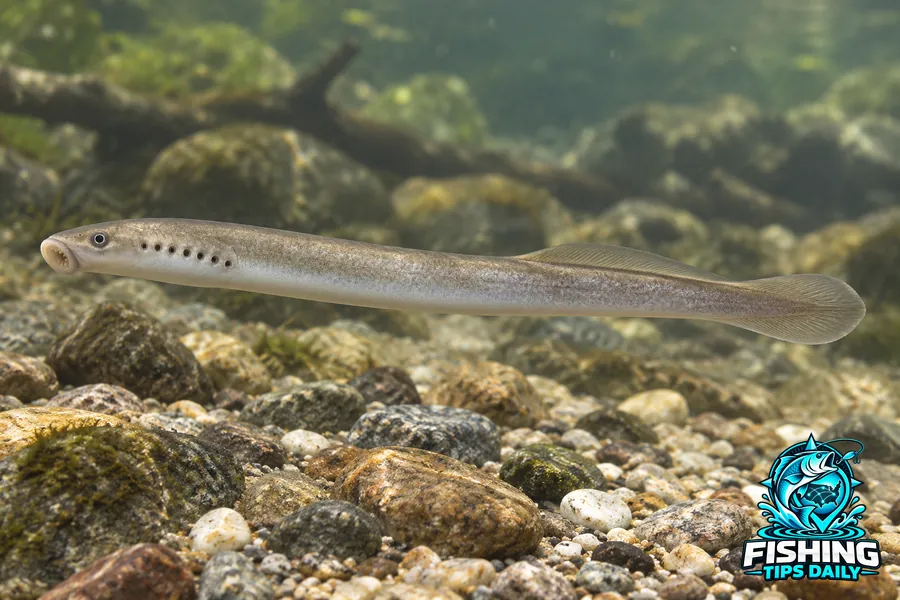
Range and Identity
Ichthyomyzon fossor occurs in northern North American freshwater systems, including the Great Lakes and parts of the Mississippi drainage. The brook-lamprey identity matters because nearby lamprey species can have very different adult feeding habits. An eel-like shape alone does not establish either species or life stage.
Habitat and Behavior
Larvae occupy fine sediments in quieter parts of streams, where they filter small suspended material. Adults use cleaner flowing habitat around reproduction, including gravel riffles. A sediment sample and a spawning observation therefore describe different portions of the same life cycle.
Food and Life History
Transformation produces a nonfeeding adult rather than a fish parasite. Energy accumulated during larval growth supports the final reproductive period. The compiled maximum is seventeen centimeters total length. That upper value should not be used to estimate maximum weight or the duration of an individual’s larval life.
Field Note
Identify whether the observation concerns a larva or transformed adult. Feeding mode and immediate habitat change substantially across those stages.
All Lakes With Northern Brook Lamprey
Browse lakes and reservoirs with documented Northern Brook Lamprey records, listed alphabetically. Records do not establish current abundance or public access. Check the evidence and managing authority for the water you choose.
No published lakes are currently linked to this species in our confirmed records.