
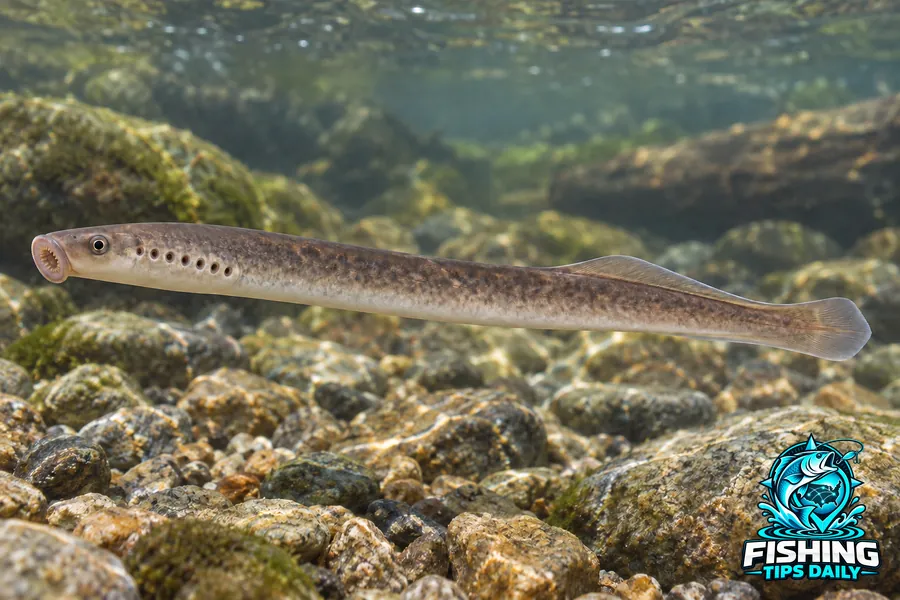
Regional Identity
The species is Ichthyomyzon greeleyi. Its distribution extends through parts of the Ohio River basin from the northeastern United States toward northern Alabama. A precise stream locality is useful when comparing lampreys that share a similar elongated body form.
Different Life Stages
Larvae occur in sand, mud and debris in pools and backwaters. Adults are associated with cleaner gravel and rock in flowing streams. Both sediment types can be important within one life cycle, so a coarse-riffle-only description would omit the larval habitat.
Spawning and Length
Spawning occurs in swift water with larger stones, with timing varying among localities. The compiled maximum is twenty centimeters total length. A nonparasitic adult should not inherit host-feeding claims from another lamprey merely because both possess an oral disc.
Include the Fine-Sediment Nursery
Larval sediment and adult spawning gravel serve different stages. Preserve both when describing Mountain Brook Lamprey stream habitat.
All Lakes With Mountain Brook Lamprey
Browse lakes and reservoirs with documented Mountain Brook Lamprey records, listed alphabetically. Records do not establish current abundance or public access. Check the evidence and managing authority for the water you choose.
No published lakes are currently linked to this species in our confirmed records.