
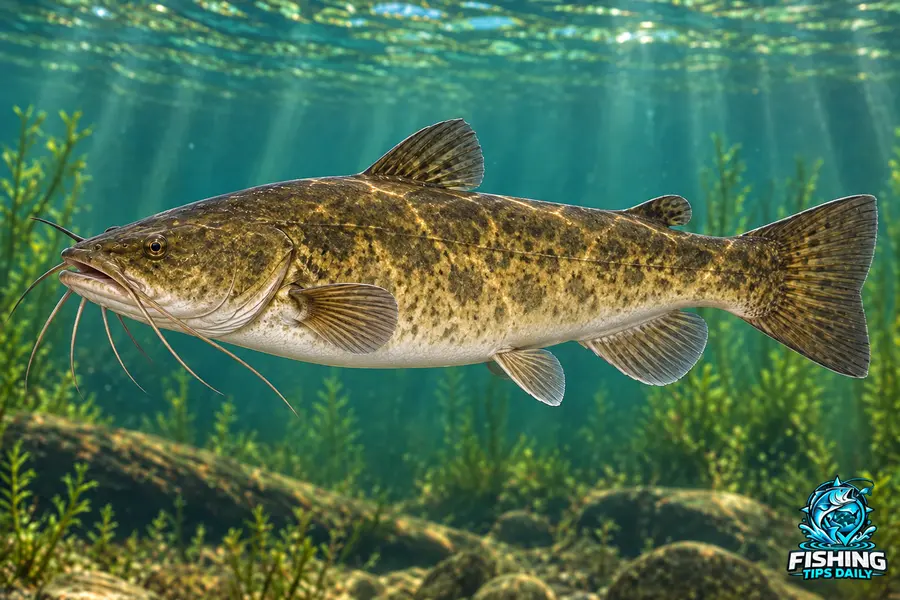
Identification
The body is commonly yellow-brown and mottled, with a tail that is only slightly notched. The lower jaw projects beyond the upper. These features separate Flathead Catfish from blue and channel catfish, both of which have conspicuously forked tails.
Cover and Feeding
Large fish use deep pools and log cover, frequently moving into shallower feeding areas at night. Younger fish also occur in riffles and runs and eat aquatic insects. Fish become increasingly important as the predator grows, although other animal foods are recorded.
Nesting
Males guard nests in cavities and protected cover and fan the eggs with their fins. Texas observations place spawning in the warmer months. The compiled maximum length and weight are reference values, not a statement of the current local angling record.
Look for the Lower Jaw
A projecting lower jaw, broad head and lightly notched tail form a useful combination for recognizing this large catfish.
All Lakes With Flathead Catfish
Browse lakes and reservoirs with documented Flathead Catfish records, listed alphabetically. Records do not establish current abundance or public access. Check the evidence and managing authority for the water you choose.
Showing 1–24 of 852 lakes · Page 1 of 36
- A. J. Jolly Lake Campbell, KY
- Aberdeen Lake Monroe, MS
- Alamo Lake La Paz, AZ
- Albemarle Lake East Carroll, LA
- Aliceville Lake Pickens, AL
- Allatoona Lake Cherokee, GA
- Amistad Reservoir Val Verde, TX
- Amory Pool Monroe, MS
- Anacoco Lake Vernon, LA
- Apache Lake Maricopa, AZ
- Aquilla Lake Hill, TX
- Arkabutla Lake DeSoto, MS
- Atoka Reservoir Atoka, OK
- B A Steinhagen Lake Jasper, TX
- B. Everett Jordan Lake Chatham, NC
- Badin Lake Montgomery, NC
- Baldwin Lake Randolph, IL
- Ballinger City Lake Runnels, TX
- Bankhead Lake Tuscaloosa, AL
- Bardwell Lake Ellis, TX
- Barnett Lake Jefferson, AR
- Barren River Lake Allen, KY
- Bartholomew Lake Ouachita, LA
- Bartlett Reservoir Maricopa, AZ