
Live Bait Fishing
Live-bait fishing uses the movement and scent of a permitted organism. The rig should deliver the bait while leaving enough freedom for useful motion and a clear hook.
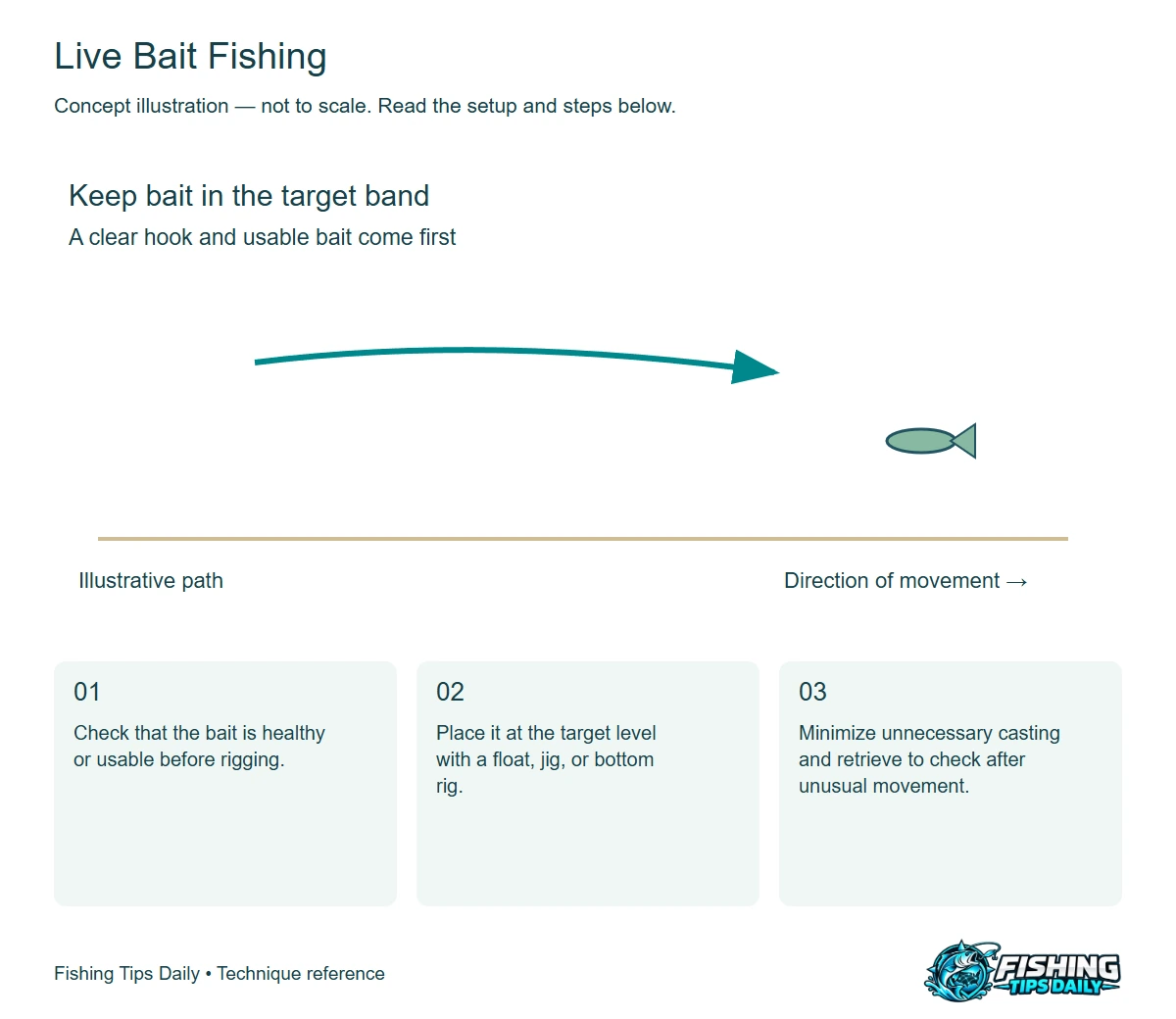
Build a setup that does the job.
Use legal bait obtained and transported according to local rules. Keep it in suitable water or storage conditions. Select hook size and placement for the bait and presentation, not maximum bait volume.
Make the first test close enough to observe. Check the connection, the hook opening, and whether the offering follows the intended path. Correct a fouled or poorly balanced setup before adding distance.
How to fish it, step by step.
- Check that the bait is healthy or usable before rigging.
- Hook lightly through appropriate firm tissue without blocking the gap.
- Place it at the target level with a float, jig, or bottom rig.
- Minimize unnecessary casting and retrieve to check after unusual movement.
- Replace damaged bait and dispose of leftovers according to local rules; never release bait into another water.
A useful first test.
For panfish, a short worm piece often presents a cleaner hook than a long dangling worm. For a minnow, test whether the attachment causes spinning before making repeated casts.
Keep the productive detail repeatable: position, depth, speed, or pause. Change one of those at a time so you can tell what improved the presentation.
Variations—and what changes.
Minnows, worms, leeches, and other baits differ in care and permitted use. Cut bait and prepared bait are natural or manufactured alternatives, not live bait.
Read the symptom before changing everything.
Bait loses movement quickly
Check handling, water quality, and overly damaging hook placement.
Frequent bait theft
Reduce bait size and check hook exposure.
Know when to change methods.
If the offering cannot reach the target, repeatedly snags, or demands equipment you cannot control comfortably, choose another presentation from this family. Keep the location clue you learned; changing a rig does not require starting the whole search over.
Use tackle and bait permitted on the water, and plan safe access and fish handling. The illustrations explain concepts; they do not replace equipment instructions or current local rules.