
Chumming & Feeding a Swim
Chumming introduces permitted attractant or small food items to concentrate fish near a presentation. It can be prohibited or restricted, and more feed is not necessarily more effective.
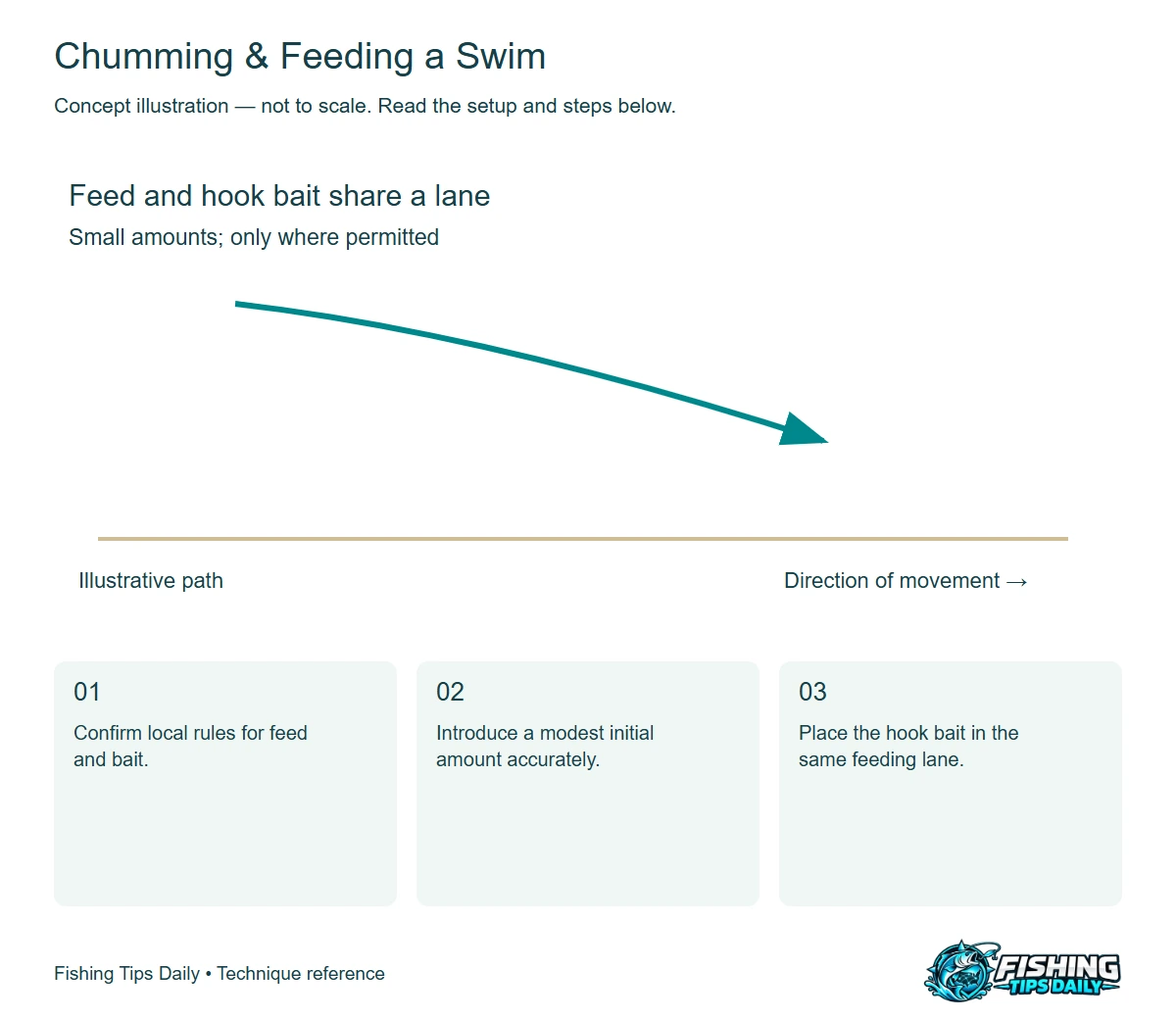
Build a setup that does the job.
Choose allowed feed appropriate to the target and conditions. Begin with a small amount and keep the hook bait distinguishable and accessible. Measure what you use so changes are repeatable.
Make the first test close enough to observe. Check the connection, the hook opening, and whether the offering follows the intended path. Correct a fouled or poorly balanced setup before adding distance.
How to fish it, step by step.
- Confirm local rules for feed and bait.
- Identify where current will carry it.
- Introduce a modest initial amount accurately.
- Place the hook bait in the same feeding lane.
- Watch the response and add small amounts only when evidence supports it.
A useful first test.
For carp in still water where feeding is allowed, keep a small consistent area rather than scattering bait across the entire shoreline. Compare response before adding more.
Keep the productive detail repeatable: position, depth, speed, or pause. Change one of those at a time so you can tell what improved the presentation.
Variations—and what changes.
Groundbait, loose feeding, and scent trails are different delivery methods. None overrides local rules or responsible cleanup.
Read the symptom before changing everything.
Fish feed elsewhere
Check where the feed actually settles or drifts.
Plenty of feeding but few takes
Reduce feed quantity and check hook-bait placement.
Know when to change methods.
If the offering cannot reach the target, repeatedly snags, or demands equipment you cannot control comfortably, choose another presentation from this family. Keep the location clue you learned; changing a rig does not require starting the whole search over.
Use tackle and bait permitted on the water, and plan safe access and fish handling. The illustrations explain concepts; they do not replace equipment instructions or current local rules.