
Bottom Fishing
Bottom fishing holds or works bait near the bed of a lake or river. The useful choices are position, weight control, bait condition, and how the hook responds to a take.
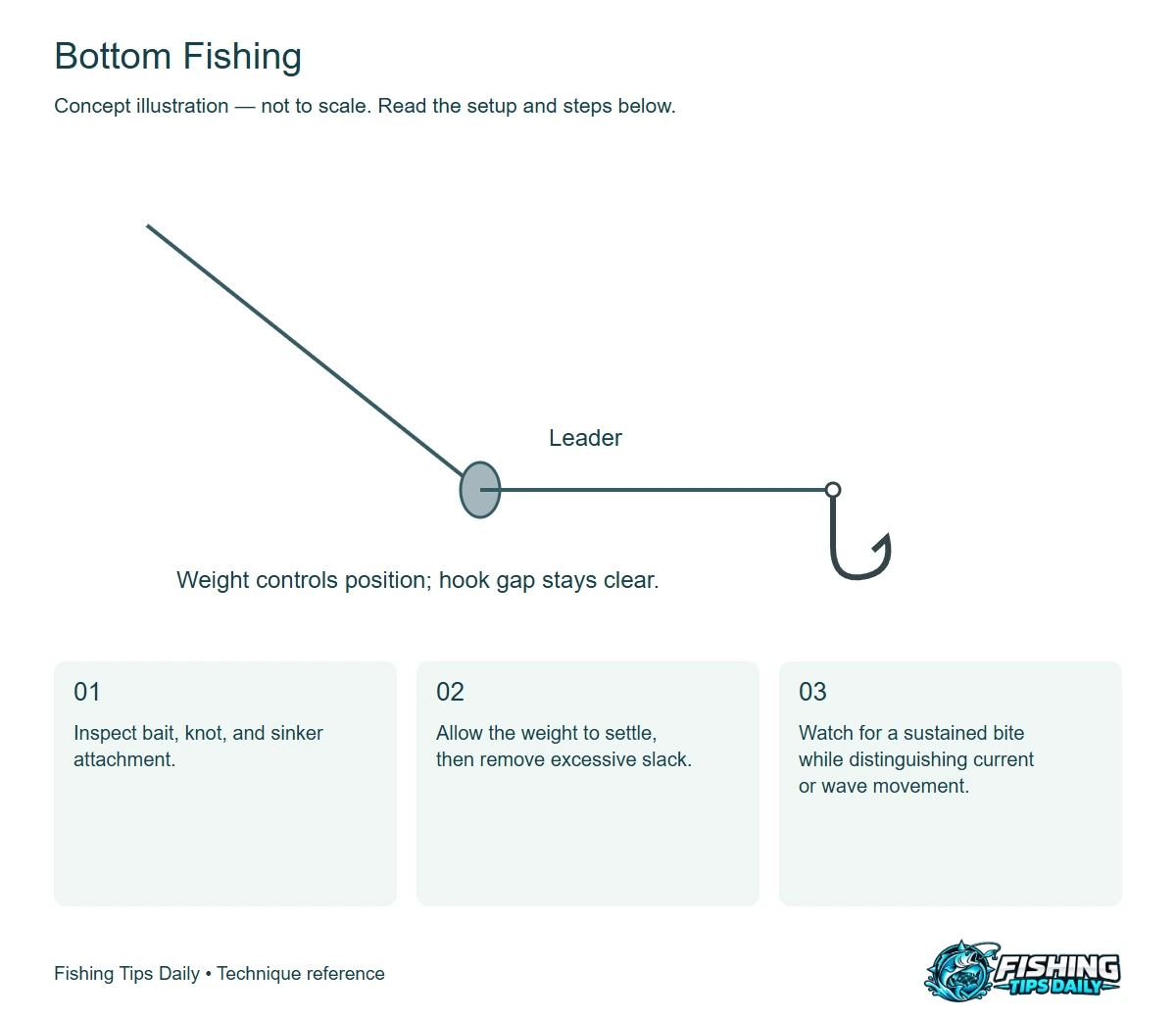
Build a setup that does the job.
Use a slip-sinker or suitable fixed rig with legal bait, enough weight to control position, and a hook sized to the bait and target. Keep the hook point and gap clear.
Make the first test close enough to observe. Check the connection, the hook opening, and whether the offering follows the intended path. Correct a fouled or poorly balanced setup before adding distance.
How to fish it, step by step.
- Inspect bait, knot, and sinker attachment.
- Cast smoothly to the selected feature.
- Allow the weight to settle, then remove excessive slack.
- Watch for a sustained bite while distinguishing current or wave movement.
- With a circle hook, let pressure load and reel steadily; other hooks may require a different response.
A useful first test.
For channels or blue catfish, compare fresh cut bait on two parts of an edge sequentially. Check bait after a missed bite before leaving it in place for another long soak.
Keep the productive detail repeatable: position, depth, speed, or pause. Change one of those at a time so you can tell what improved the presentation.
Variations—and what changes.
Slip-sinker, three-way, and elevated-bait arrangements address different bottom and current conditions. They do not require identical leaders or sinkers.
Read the symptom before changing everything.
Rig rolls continuously
Change weight, position, or current lane.
Bait hides the point
Reduce the piece or use a proportionate hook.
Know when to change methods.
If the offering cannot reach the target, repeatedly snags, or demands equipment you cannot control comfortably, choose another presentation from this family. Keep the location clue you learned; changing a rig does not require starting the whole search over.
Use tackle and bait permitted on the water, and plan safe access and fish handling. The illustrations explain concepts; they do not replace equipment instructions or current local rules.