
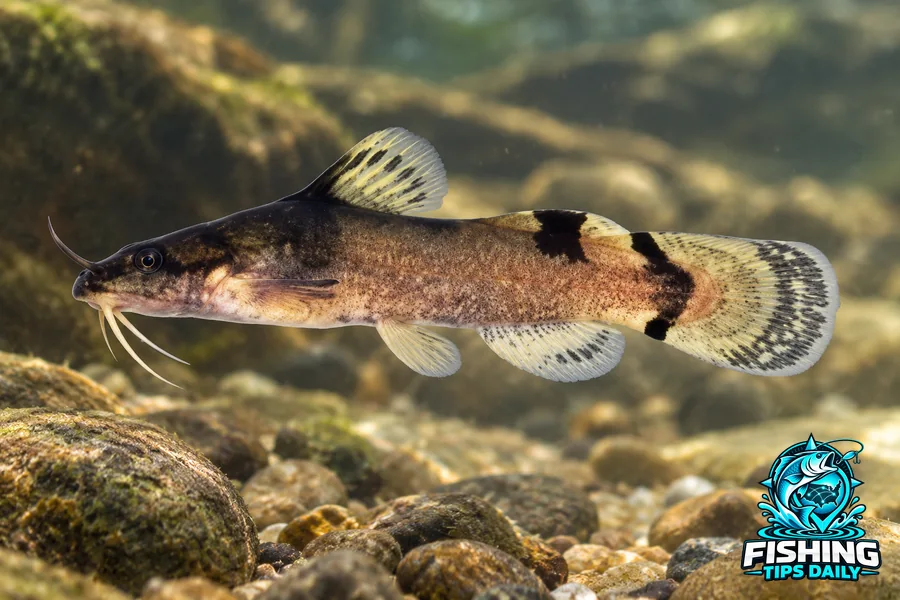
Range and Identity
Noturus flavipinnis is retained as the scientific identity. Historical locality lists include particular upper Tennessee tributaries. Those records should retain dates rather than being presented as a newly verified assessment of which populations are currently present or absent.
Habitat and Behavior
Adults occupy quiet pools and backwaters, with slab rocks, bedrock and roots represented as cover in clear creeks. The sheltered position matters. A nearby riffle can occur within the same reach without being the specific habitat occupied by the observed fish.
Food and Life History
The upper reference is fifteen centimeters total length, with 7.8 centimeters as common. An independently supported maximum mass, complete feeding list and detailed reproductive sequence were not established in the short summary checked. Another madtom does not supply those facts merely through a shared genus.
Field Note
Keep exact tributary and collection date with the original determination. Historical occurrence is valuable evidence, but it should not become an unsupported claim about current abundance or unchanged distribution throughout a drainage.
All Lakes With Yellowfin Madtom
Browse lakes and reservoirs with documented Yellowfin Madtom records, listed alphabetically. Records do not establish current abundance or public access. Check the evidence and managing authority for the water you choose.
No published lakes are currently linked to this species in our confirmed records.