
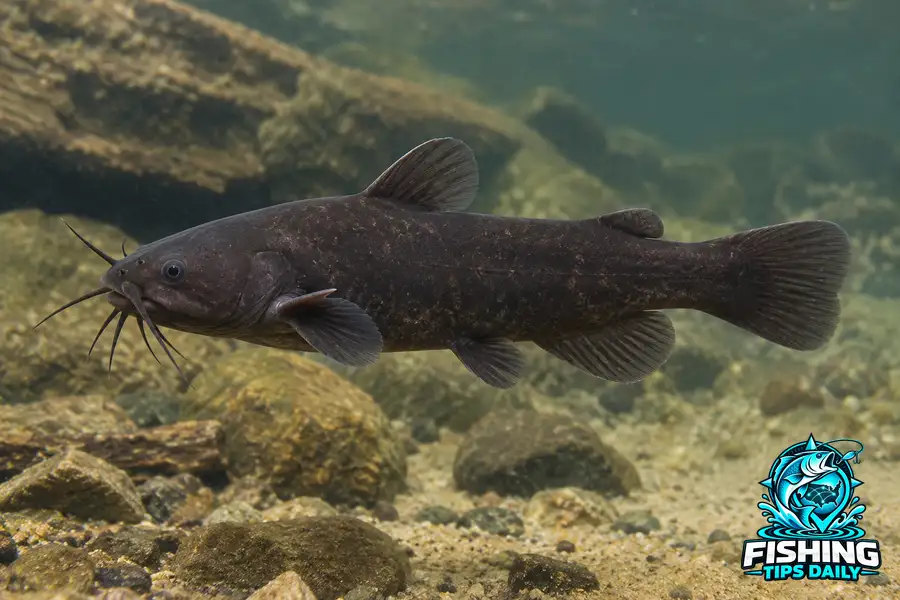
Identification
The upper body is dark, with numerous small brownish spots visible on closer inspection. Its tail is straight-edged to slightly rounded. A photograph of the whole fish and fins is more useful than color alone when separating small catfishes.
Size and Weight
Published maximum total length is 15 cm, approximately 5.9 inches. A life-history study also cites a maximum standard length of 12.4 cm, measured without the tail. No dependable maximum body weight was established.
Habitat and Feeding Research
Clear flowing springs and streams are characteristic habitat. A study of 298 fish from an Alabama tributary documented association with undercut banks, root masses and wood. Stomach-content work confirmed a diet comparable with other madtoms, but detailed prey proportions were not verified here.
Observation and Fishing Context
This small native catfish is primarily a subject for stream observation and identification. The checked research does not establish a recreational bait recommendation. Its sheltered habitat can make it easy to miss during a casual look into a creek.
Shelter Along the Stream Edge
Roots and woody debris create protected spaces within a flowing stream. Black Madtom’s recorded association with those features highlights the importance of more than the open gravel bed when considering small-fish habitat.
All Lakes With Black Madtom
Browse lakes and reservoirs with documented Black Madtom records, listed alphabetically. Records do not establish current abundance or public access. Check the evidence and managing authority for the water you choose.
Showing 1–3 of 3 lakes · Page 1 of 1
- Crooked Creek Reservoir Evangeline, LA
- Dubuisson Lake St. Landry, LA
- Lake Martin St. Martin, LA