
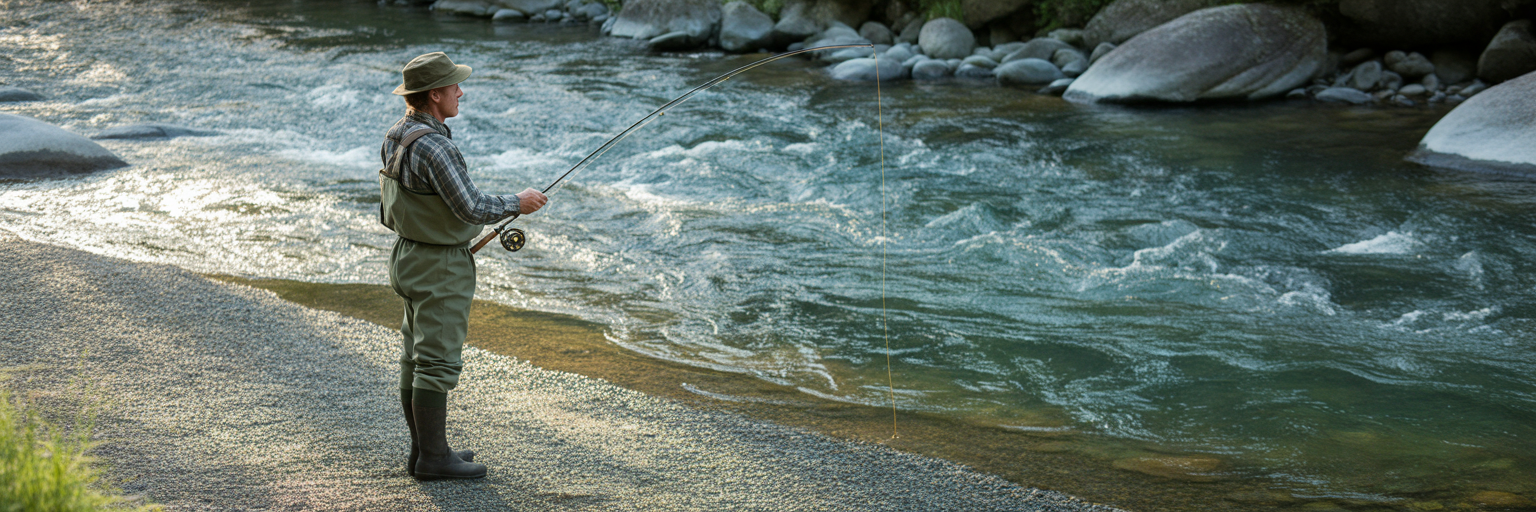
Biologists studying coldwater streams have long observed a simple rule of survival: a wild river trout cannot afford to burn more calories swimming against the current than it takes in from drifting insects. Learning to read river water turns an intimidating sheet of moving current into a predictable map of resting lanes and feeding zones.
Why Learning to Read River Water Puts More Trout in Your Net
The Energy Versus Food Rule
When you first step up to a moving stream, the water can look like one big, uniform conveyor of rapids and flat stretches. Once you understand how trout manage their daily energy budget, figuring out how to find river trout gets much easier. Because river current never stops pushing downstream, a trout has to constantly balance the calories it gets from eating a passing bug against the muscular effort required to hold its position.
Think of a trout like a shopper standing right next to a moving grocery store conveyor belt, or a traveler resting just off the edge of a moving airport walkway. Instead of fighting the heavy main current all day, smart trout park themselves in slower, softer water right beside the fast lane. They let the brisk current deliver aquatic insects, nymphs, and small baitfish right to their nose, darting out just a few inches to grab a meal before sliding right back into their calm resting cushion.
The Three Non-Negotiable Needs of River Trout
As detailed in the Missouri Department of Conservation guide on wild trout behavior, stream trout survive by balancing three strict requirements. First, they need overhead protection from birds of prey like ospreys, eagles, and herons. Second, they require physical relief from exhausting heavy current so they do not burn out their energy reserves. Third, they must sit near a steady food lane that funnels drifting bugs within easy striking distance.
When you spot at least two of these three elements overlapping in one spot, you have found productive trout water. Too many beginners make the classic mistake of marching straight up to the bank and firing a cast blindly into the dead center of the river. Experienced stream anglers know that roughly 80 percent of a waterway holds very few fish because it lacks either overhead cover or current relief, while a small percentage of structural zones holds almost all the active trout. Mastering these current dynamics is the cornerstone of our complete guide on how to fish for trout in a river across public waters nationwide. Reading a stream simply comes down to finding calm resting spots tucked right next to fast food lanes.
Spotting the Big Three River Features of Riffles, Runs, and Pools
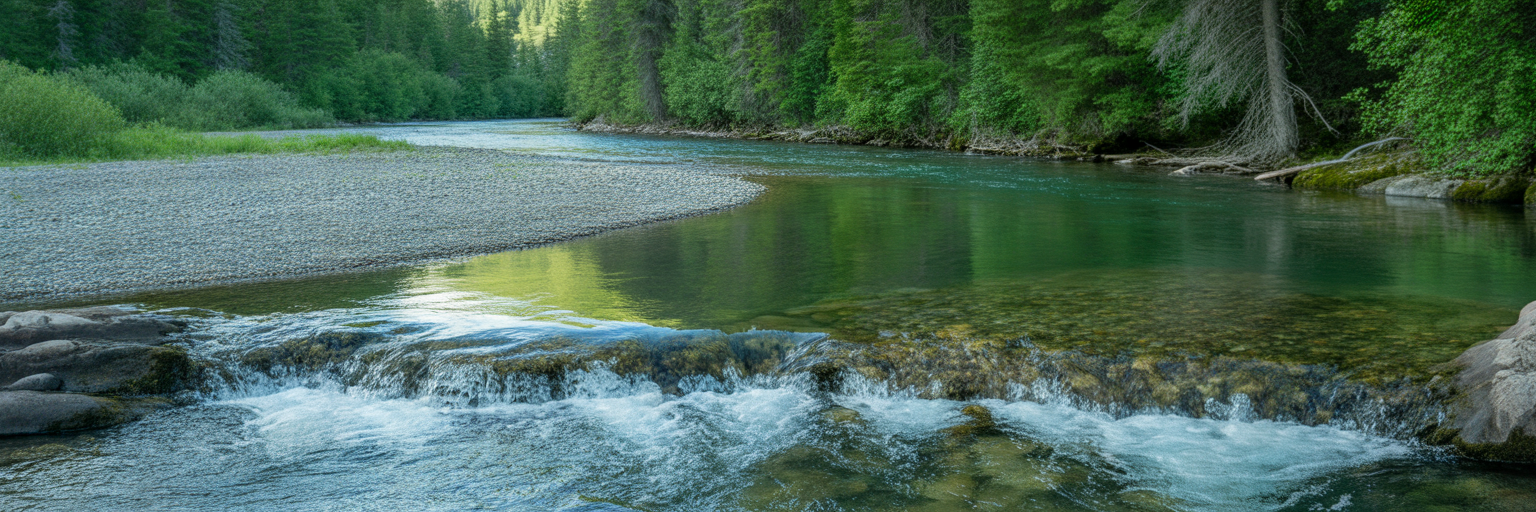
Now that you know why trout seek out low-effort feeding stations, you can zoom out and look at the broad architecture of the stream. Almost every trout river breaks down into a repeating sequence of three major water types: riffles, runs, and pools.
Riffles as the Stream Bug Factory
Riffles are shallow, ankle-to-knee-deep sections where fast water dances briskly over gravel and cobble, creating a choppy surface. These well-oxygenated stretches serve as the primary bug factory for the entire river, housing the mayflies, caddisflies, and stoneflies that trout eat every day. Skip casting into the skinniest whitewater in the center of a riffle. Focus instead on the deeper outside margins and the exact drop-off lip where that fast gravel shelf dumps into deeper water below.
Runs as the Most Forgiving Water for Beginners
Directly below a riffle, the riverbed typically deepens into a trench known as a run. Runs are waist-to-chest-deep channels with moderate, steady current and a marching surface chop. If you want reliable action all day long, runs offer the absolute best trout holding water for a new angler to target. That broken surface texture acts like a security blanket for fish, cutting overhead glare and hiding your bankside silhouette from spooky trout. To present nymphs or worms cleanly as the current slows from the riffle into the run, check out our beginner breakdown on drift bait control so your offering moves at the exact speed of the water.
Breaking a Pool into Head, Belly, and Tailout
Downstream of a run, the river often widens and carves out a deep, dark pool with very slow current. While deep pools shelter the biggest trout in the system, the slow, glassy middle section gives fish plenty of time to inspect your lure or bait and reject unnatural line drag. Rather than firing casts randomly into the deep dark water, divide every pool into three distinct zones: the fast-entering head where food pours in, the deep middle belly where fish rest or sulk, and the shallowing tailout where water speeds up before the next riffle. Focusing your casts on the turbulent head and the funneling tailout will produce far more strikes for a beginner than dredging the dead center of the belly.
Comparing Macro River Features for Trout Anglers
| River Feature | Typical Depth and Flow | Surface Appearance | Primary Value to Trout | Best Target Zone for Beginners |
|---|---|---|---|---|
| Riffle | Ankle to knee deep with fast flow | Choppy whitewater and broken ripples over cobble | High dissolved oxygen and heavy insect production | Deeper outside edges and the downstream drop-off lip |
| Run | Waist to chest deep with moderate flow | Steady marching chop that breaks overhead glare | Balanced current speed with constant drifting food | Along the main current seam and near bottom boulders |
| Pool (Head and Tailout) | Waist to overhead deep with slowing flow | Turbulent entry tapering into a smooth, gliding exit | Concentrated food funnel at entry and easy ambush at exit | The frothy inflow chute and the shallowing downstream lip |
| Pool (Center Belly) | Overhead deep with very slow flow | Dark, flat, and glassy surface | Maximum depth safety from predators and cold thermal refuge | Deep bottom structure during midday or bright sun |
This breakdown is based on standard freshwater stream hydrology and coldwater trout habitat patterns observed across North American freestone and tailwater rivers.
When you piece these three features together on the water, the river starts making complete sense. Riffles produce the food, runs provide comfortable all-day feeding lanes, and pools demand careful targeting right at their entry and exit points.
Pinpointing Micro-Holding Water in Seams, Eddies, and Current Breaks
Identifying a run or a pool puts you in the right neighborhood, but catching fish consistently requires finding the exact square-foot micro-spots where individual trout actually park.
Following Bubble Lines Along Current Seams
A current seam is the visible boundary line where a fast current and a slower current rub together. As water pushes down a river, friction along the grassy bank or around big rocks slows one side down while the main channel keeps racing by. When you start fishing river seams and eddies, look for surface bubble lines, floating leaves, and trails of white foam. As highlighted in Trout Unlimited resources on reading river currents, these foam lines act as a neon target strip showing the exact lane where the stream collects and funnels drifting insects. Trout sit just inside the slower edge of that seam and pick off food gliding down the bubble line.
Fishing the Transition Line on River Eddies
Whenever fast current swings past a protruding shoreline point, a fallen log, or an exposed boulder, the water curls around the obstacle and spins backward upstream in a lazy circle called an eddy. New anglers often cast straight into the dead center of that swirling slack water. The flat middle of an eddy rarely holds active trout, and dropping your line across conflicting currents guarantees immediate tangles. Instead, aim your cast right onto the eddy line, which is the sharp transition seam between the main downstream flow and the rotating backwater where trout wait to ambush disoriented bait.
Reading Surface Clues Above Submerged Pocket Water
Some of the best holding spots in a river are completely invisible at first glance. Submerged boulders, bedrock ledges, and scooped depressions on the riverbed create a dead-water cushion right on the bottom. Friction slows water down as it scrapes over rock, allowing a trout to hold effortlessly right on the gravel beneath surface water that looks way too fast from the bank. You can locate these hidden underwater breaks by scanning the surface for five reliable clues:
- A smooth, raised glassy pillow of water right on the surface, which always forms just upstream of a submerged boulder as moving current piles up against its front face.
- A subtle V-shaped wake flaring outward on the surface, indicating a shallow rock or submerged log sitting just inches below the waterline.
- A boiling, swirling flat spot immediately downstream of a surface disturbance, which marks the calm pocket directly behind an underwater obstacle where trout rest.
- A crisp line of tiny white bubbles that stays in the exact same lane for twenty or thirty feet, revealing a drop-off ledge or channel groove carved into the riverbed.
- A sudden dark green or brown color change next to lighter tan water, showing where a shallow gravel bar drops off into a sheltered bottom trough.
When you spot a visible surface foam line drifting directly over an underwater boulder pillow, you are looking at the single highest-percentage target in any trout stream.
Matching Trout Holding Water to Flow, Depth, and Overhead Cover
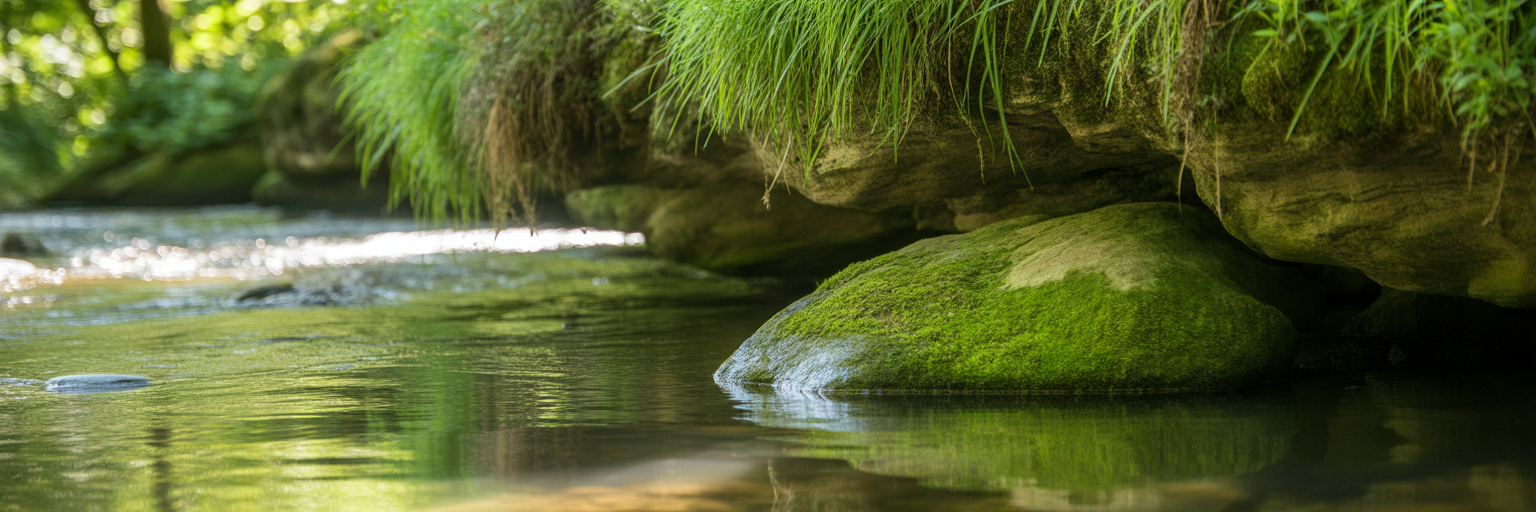
Even if you spot a textbook current seam or boulder pocket, that spot might sit completely empty on a given afternoon depending on water volume, temperature, and bright sunlight.
Adjusting to High Runoff Versus Low Summer Flows
Rivers change shape constantly throughout the fishing season. During high, stained spring snowmelt runoff or right after a heavy summer thunderstorm across American trout waters, the main channel turns into a roaring firehose. Fighting that heavy central flow takes far too much work, so trout abandon the middle of the river and push tight against the banks. You will catch them inches from dry land in flooded grass edges, soft inside river bends, and wide slack eddies behind shoreline tree trunks.
Late summer brings the exact opposite challenge with low, gin-clear flows. Skinny water warms up rapidly and exposes fish to overhead predators, forcing trout to crowd into the deepest pool bellies and highly oxygenated, choppy riffle transitions. When fishing these shallow tailouts or glassy summer slicks, downsizing your approach with recommendations from our guide on choosing clear-water lures for wary river trout helps you draw strikes without spooking fish in tight quarters.
How Water Temperature and Overhead Cover Dictate Active Spots
Water temperature and sunlight also move trout around inside the exact same run over the course of a single day. Cold early-morning water keeps a trout’s metabolism sluggish, pinning fish near the bottom of deeper, slower water where they barely have to fin to stay in place. Once midday or afternoon sun warms the stream by even two or three degrees and sparks an insect hatch, those same trout slide upstream into brisker, shallower riffle corners and active feeding seams.
Never overlook the pulling power of physical and visual cover. Undercut grassy banks, overhanging willow or alder branches, sunken root wads, and surface chop glare give trout the safety they crave. A mediocre current seam tucked beneath a shady undercut bank or tangled logjam will almost always outfish a textbook mid-river seam baking under bright midday sun. Let these observations dictate your tackle adjustments on the bank. Reading a fast, deep boulder run means pinching on an extra split shot or tying on a heavier inline spinner to punch down into that calm bottom cushion, while approaching a shallow, sunlit tailout calls for lighter fluorocarbon line and smaller baits.
Where Trout Shift Based on River Flow and Weather Conditions
| Stream Condition | Primary Trout Holding Zone | Zones to Skip | Recommended Presentation Adjustment |
|---|---|---|---|
| High and Stained Flow (Post-Rain or Runoff) | Tight to shoreline banks, soft inside bends, and large eddies | Fast mid-river chutes and heavy whitewater riffles | Add split shot or use larger, high-vibration spinners close to shore |
| Low and Gin-Clear Flow (Late Summer) | Deep pool bellies, shaded undercut banks, and choppy riffle heads | Shallow, flat tailouts and exposed mid-depth runs in bright sun | Downsize line diameter, make longer casts, and use subtle natural baits or small lures |
| Cold Morning Water (Under 45 Degrees F) | Deep, slow runs and bottom depressions behind large boulders | Fast, shallow gravel riffles and skinny bank water | Bounce rigs slowly right along the riverbed with minimal rod movement |
| Mild Afternoon with Cloud Cover | Riffle drop-offs, shallow feeding seams, and pool tailouts | Stagnant dead-water backwaters with no current flow | Cover active feeding lanes briskly at mid-depth or near the surface |
These seasonal and daily movement patterns reflect coldwater trout metabolic responses to water temperature, dissolved oxygen levels, and light penetration.
Building a Simple Bank-Side Approach Plan Before Your First Cast
Knowing exactly where trout sit does you no good if you scare them out of the run before your bait ever hits the water. Putting a simple bank-side routine into practice is one of the most effective beginner trout fishing tips for turning spotted holding water into bent rods.
The Stop and Scan Rule
Resist the urge to walk right up to the water’s edge when you arrive at a stream. Stop 15 to 20 feet back from the riverbank and keep trees or streamside brush behind your back. Standing tall right on a high bank frames your silhouette against the bright sky and sends vibrations through the ground, sending nearby trout scurrying under rocks before you even pull line off your reel. Spend two quiet minutes standing back in the cover mapping out the current seams, foam lines, submerged boulder pillows, and shady bank undercuts.
Working Upstream Using the Trout Blind Spot
Once you pick your targets, plan your route so you approach from downstream and cast upstream. Because river trout must face upstream into the current to pass water smoothly over their gills and watch for food drifting down toward them, their natural blind spot is directly behind their tail. Slipping into position downstream of a run lets you stand much closer to feeding fish without ever entering their cone of vision.
Dissecting a Run with the Near-to-Far Casting Grid
Always fish the closest holding water first before stepping a single boot into the river. Wading straight out into the channel to reach a mid-river boulder often means trampling right over the biggest trout in the pool, which was sitting quietly in the soft seam two rod lengths from your shore. Make short, stealthy casts to the near-bank margin, shoreline eddies, and undercut ledges right at your feet before reaching out toward the center of the stream.
Follow this four-step bank-side grid routine on every new stretch of river you fish:
- Pause 15 feet back from the bank against background bushes or trees and scan the surface for two full minutes to locate the main current seam, foam lines, and boulder pillows.
- Walk quietly downstream of the target run or pool so you can approach the trout from behind their tails while keeping your shadow completely off the water.
- Cast to the closest soft-water margin and near-bank structure first while still standing on dry ground, making several clean drifts through the nearest lane before taking a step forward.
- Fan your casts systematically outward toward the main mid-river seam and work progressively upstream from the tailout toward the head of the run, ensuring any hooked trout is pulled downstream into water you have already fished.