
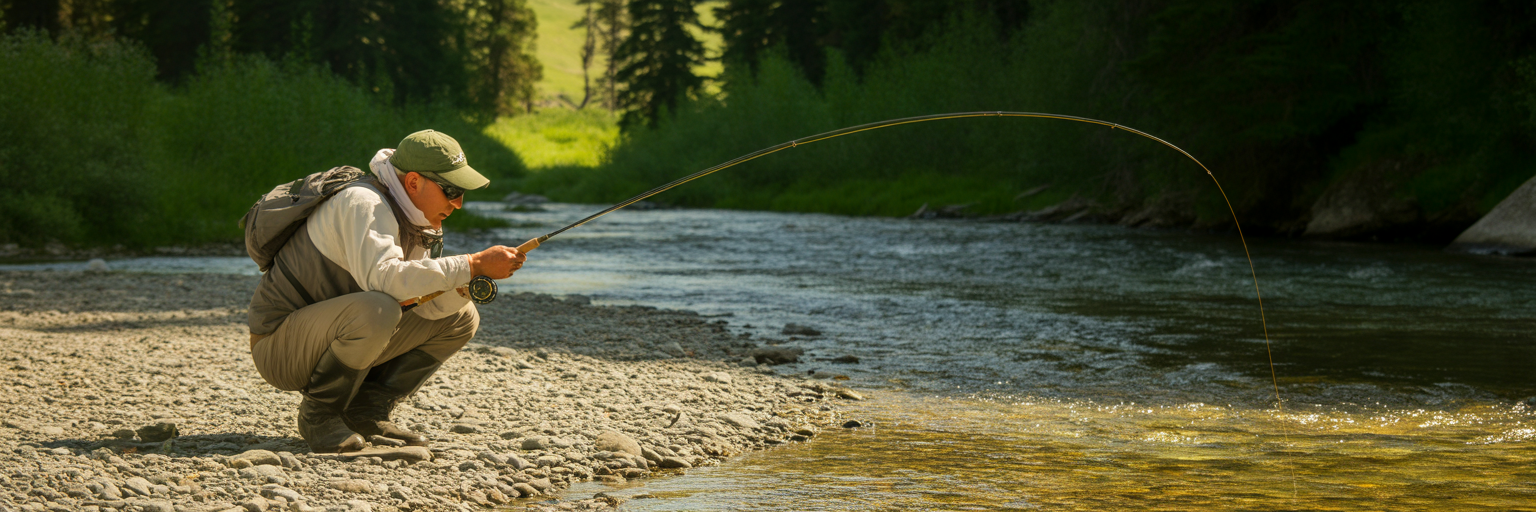
Because light bends as it passes from air into water, a trout holding in a shallow run has a near-panoramic window of the riverbank before a lure ever hits the surface. Learning to outsmart that built-in warning system comes down to choosing compact, natural presentations that blend seamlessly into moving current. When you tie on the right clear-water lures, you stop advertising your presence and start triggering strikes from fish that usually bolt at the first splash.
Why Clear-Water Lures Matter for Spooky River Trout
The Visual and Lateral-Line Advantage in Gin-Clear Flow
Stepping up to a gin-clear stream puts you at an immediate tactical disadvantage. River trout survive by relying on sharp overhead vision to spot avian predators and a hyper-sensitive lateral line that registers the faintest unnatural pressure waves in the current. Tossing a standard, heavy, or overly flashy bait into low, transparent water is the equivalent of ringing an alarm bell. The heavy splash and aggressive water displacement send wild browns and rainbows bolting straight under undercut banks or deep boulder pockets before you even close your bail.
Why Downsizing to Ultralight Profiles Changes the Game
Beating that defensive instinct requires solving the core paradox of clear-water fishing. Your presentation must remain muted enough not to alarm a resting fish, yet carry just enough visual and vibrational presence for a trout to track it in moving flow. One of the most reliable ultralight trout fishing tips is scaling down to compact profiles under two inches and weights between 1/32 oz and 1/16 oz. That tiny footprint softens the surface entry splash to a whisper and produces subtle hydrodynamic vibrations that mimic real aquatic prey rather than an intruder. When we break down how to fish for trout in a river on our foundational guide, downsizing your tackle is always the first step toward matching the heightened caution of shallow-water fish. Stealth starts at your workbench long before your first cast ever leaves the rod tip.
Selecting Lure Sizes, Colors, and Metallic Finishes
Matching Natural River Forage with Muted Hues
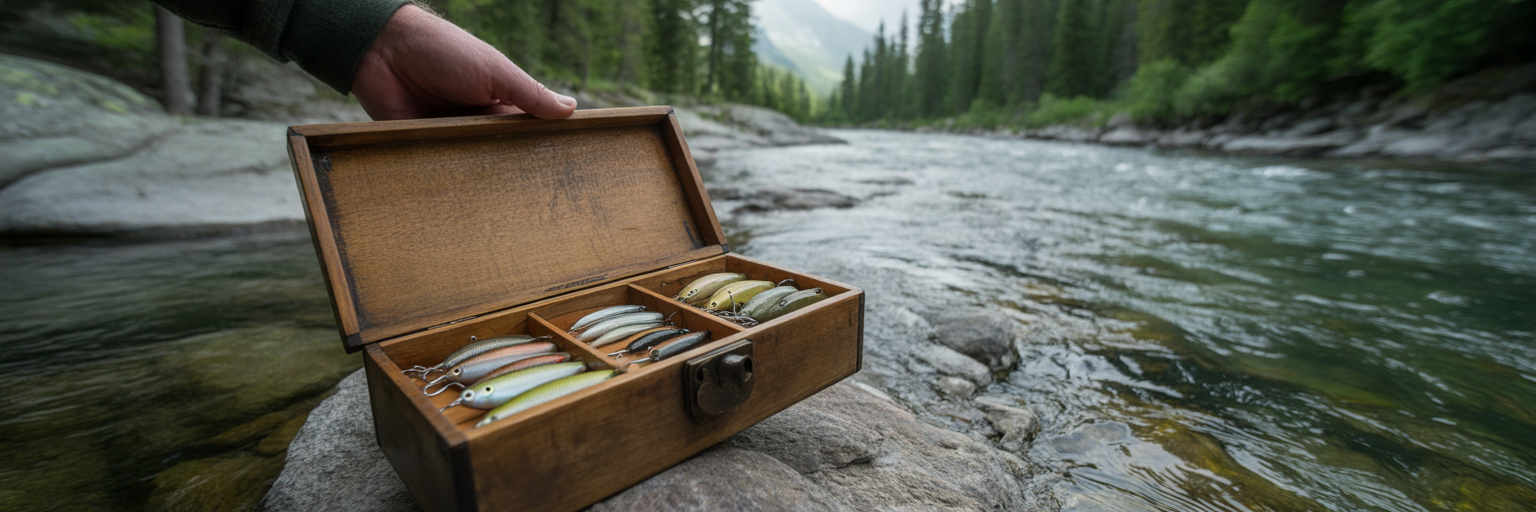
Once you have the right compact size, visual realism takes over. In transparent streams where visibility exceeds six feet, trout have plenty of time to inspect a meal before committing. Bright fluorescent attractors that work wonders in stained spring runoff often look unnatural and plastic in low, clear flows. Instead, the most consistent trout lures for clear water rely on organic, muted shades like olive, dark brown, translucent smoke, and matte black. These earthy tones blend directly into the cobbled riverbed, closely imitating the stonefly nymphs, mayfly larvae, bottom-hugging sculpins, and juvenile fry that trout feed on daily.
Pairing Metallic Blades and Spoons to Overhead Light
Selecting metallic finishes requires reading the sky and the streamside cover. As highlighted in a technical breakdown by K2 Fishing on the optical science of lure color and flash, how overhead sunlight interacts with water clarity dictates whether a metallic reflection triggers a strike or spooks a predator. A reliable field rule is to pair subtle silver or polished nickel with bright, direct sunlight to mimic the natural, quick glint of real baitfish scales. Save muted gold, brushed brass, or hammered copper for shaded bank timber, steep canyon walls, or overcast skies where softer, warmer reflections stand out without glaring. Adding a tiny touch of contrast, such as a subtle red gill dot or dark parr-mark bars on a translucent body, gives a trailing trout a clean focal point to lock onto without blowing its cover.
| Light and Water Condition | Recommended Body Color | Ideal Metallic Finish | Target River Forage |
|---|---|---|---|
| Bright Direct Overhead Sun | Translucent Smoke or Light Olive | Subtle Silver or Polished Nickel | Juvenile Minnows and Emerald Shiners |
| Shaded Timber or Canyon Walls | Dark Brown or Mottled Olive | Muted Gold or Brushed Brass | Bottom Sculpins and Dace |
| High Overcast Skies | Matte Black or Amber | Hammered Copper | Stonefly Nymphs and Crayfish |
| Low-Light Dawn or Dusk Riffles | Olive Back with Pearl Belly and Red Gill Dot | Two-Tone Silver and Copper | Wounded Baitfish and Emerging Insects |
Dialing In Fluorocarbon Leaders and Terminal Stealth
Even the most realistic paint job will fail if it is towed behind a thick, glowing rope of fishing line. Line stealth is completely inseparable from lure selection. Spool up with a low-visibility fluorocarbon leader, which bends light at nearly the same refractive index as water. For open, sandy or gravel runs, a delicate 2-to-4-pound test leader keeps your presentation invisible and lets micro baits swim freely. When you are probing jagged river rock or targeting heavy brown trout near logjams, step up to a 0.22 mm to 0.30 mm fluorocarbon tippet for abrasion resistance. Always tie your line directly to the lure eye or split ring rather than clipping on a bulky snap swivel that ruins the balance of a 1/32 oz bait. Before stepping into the current, run through this quick five-point tackle inspection:
- Hook Point Sharpness: Drag the hook point lightly across your thumbnail; if it slides instead of biting immediately, touch it up with a fine hook file or swap it for a fresh single micro hook.
- Blade Tarnish Control: Check your spinner and spoon surfaces to ensure bright silver blades are not throwing harsh mirror glares, and rub overly shiny brass blades with a pinch of stream mud to dull the finish.
- Knot Compactness: Tie a tight Clinch or Davy knot and trim the tag end flush so it does not catch tiny bits of drifting algae that kill your lure action.
- Leader Abrasion Check: Run your thumb and forefinger down the last three feet of your fluorocarbon leader before every new pool, retying immediately if you feel a single rough nick from river rocks.
- Hardware Streamlining: Strip off extra factory split rings or oversized treble hooks that weigh down the tail of the lure and cause unnatural fouling on the cast.
Working Inline Spinners and Micro Spoons Without Spooking Fish
The Swing-and-Pause Method for Inline Spinners
Tying on the right hardware only gets you halfway home if you crank it back like a winch. Mechanical, high-speed steady retrieves look stiff and unnatural to pressured river trout holding in clear water. According to Game & Fish Magazine, inline spinners and casting spoons generate distinct flash profiles and sonic vibrations in moving water that must be matched to the speed of the current. Even the best inline spinners for trout will get ignored if they are ripped straight past a fish’s nose. Instead, use the swing-and-pause method. Cast quartering upstream or straight across the flow, and flick your rod tip or turn the reel handle quickly the millisecond the lure touches down to engage the blade. Let the current sweep the spinner across the run on a semi-tight line, then pause your retrieve for a heartbeat right as the lure approaches a deep boulder pocket or current seam edge, allowing the blade to helicopter downward where big trout wait.
Mastering the Lift-and-Fall Retrieve with Micro Spoons
When you switch over to 1/32 oz or 1/16 oz micro spoons, vertical flutter is your greatest asset. Rather than winding the spoon in a straight line, work it with a crisp lift-and-fall cadence. Raise your rod tip six to ten inches with a sharp twitch to make the spoon dart upward and flash, then drop the tip back down slightly to create a controlled slack-line fall. That wobbling, free-falling descent perfectly imitates a stunned or dying minnow tumbling through the current. Because the vast majority of clear-water strikes happen on that downward flutter, pairing your reel with a sensitive blank is critical. Reviewing our breakdown on rod power and action will show you why an ultralight rod with a fast, responsive tip helps you detect the subtle tick of a trout inhaling a falling spoon before it spits the hook.
Avoiding Common Metal-Lure Mistakes in Heavy Flow
The fastest way to ruin a clear pool with metal lures is dragging an inline spinner slowly straight downstream against heavy current. Holding a spinner stationary against brisk flow forces the blade to thump violently and spin at max RPM, sending out harsh acoustic vibrations that send trout darting for cover. To keep your metal presentations lifelike and subtle, build these four rod-tip habits into every retrieve:
- Feather the Spool Before Entry: Drop your index finger lightly against the spool lip a split second before the lure hits the water to straighten the line in midair and eliminate slack-line belly.
- Hold a 45-Degree Rod Angle: Keep your rod tip pointed at a clean 45-degree angle to the water during the retrieve so you have a built-in shock absorber for sudden strikes and instant slack control on the drop.
- Vary Your Pause Lengths: Alternate between a one-second hesitation in shallow riffles and a three-second helicopter drop in deeper plunge pools to read how far trout are willing to travel for a meal.
- Follow the Lure to the Bank: Never rip your spinner abruptly out of the water at the end of a swing; trail it smoothly into the shallow slack water right at your feet, as wary trout often shadow a bait all the way to the bank before striking.
Presenting Small Hard Baits and Unweighted Micro-Jigs
The Twitch-and-Hover Cadence for Minnow Plugs
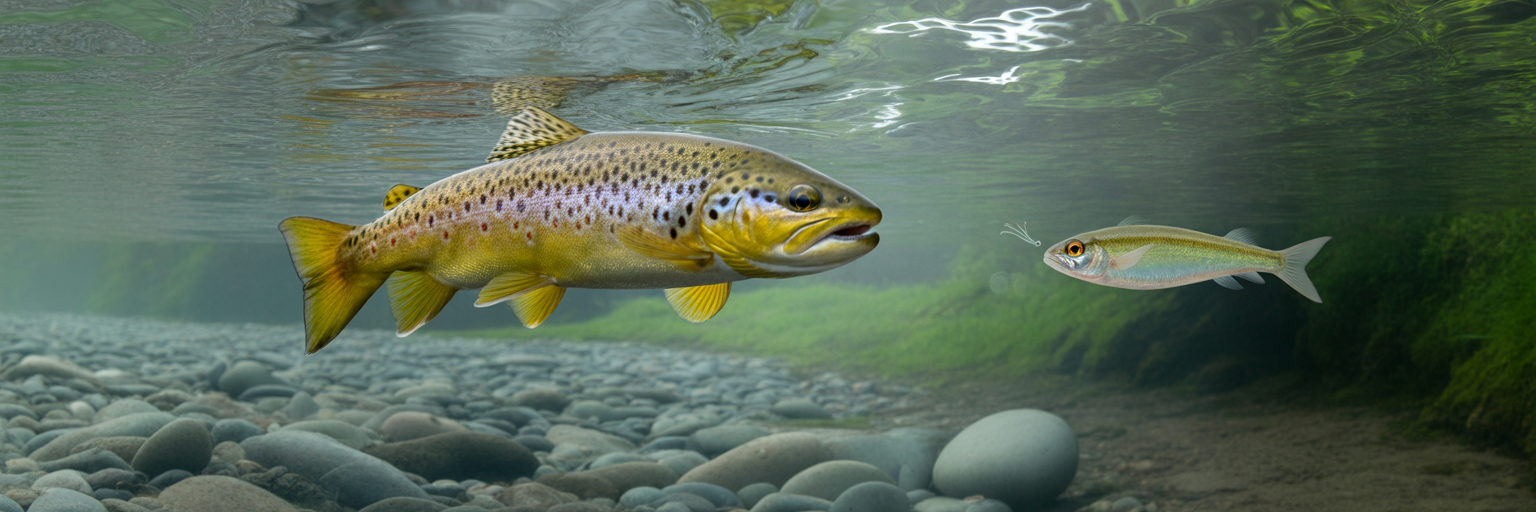
When metal flash stops drawing attention, hard-bodied minnow plugs offer a realistic profile that can sit right in a trout’s kitchen. Working small hard baits for trout under two inches comes down to mastering the twitch-and-hover cadence. Tie on a suspending or slow-sinking minnow plug and cast it across a slow tailout or alongside a submerged logjam. Use two or three sharp, erratic wrist snaps to make the plug dart side-to-side like a panicked baitfish, then stop reeling completely for a dead-still three-to-five-second pause. While a spinner sinks like a stone when you stop turning the handle, a suspending minnow plug hangs neutrally in the gentle current, quivering right in front of the trout until a hesitant follower loses its patience and strikes.
Controlling Running Depth with the Countdown Method
In gin-clear rivers, running depth matters far more than the paint pattern on your lure. If your plug or jig rides two feet above a bottom-hugging brown or rainbow trout in brisk water, that fish will rarely risk rising into bright overhead exposure where ospreys and eagles hunt. To put your bait directly at eye level, use the countdown method. On your first cast into a new pool, let your sinking minnow or jig drop on a semi-tight line while counting aloud: one-one-thousand, two-one-thousand, three-one-thousand, until you feel the bait tick the bottom gravel. On your next cast, subtract one or two seconds from that total before starting your retrieve. You will keep your lure riding inches above the rocks right in the active feeding zone without losing tackle to bottom snags.
Switching to Dead-Drifted Micro-Jigs for Hesitant Followers
Every clear-water angler eventually runs into the frustration of watching two or three trout shadow a hard bait out of a pool only to turn away at the last second. Instead of cycling through ten different plug colors, downsize to an unweighted or 1/32 oz marabou or soft-plastic micro-jig. As we cover in our foundational guide to soft plastic lures, tiny soft tails undulate naturally even when you apply zero rod action. Cast the micro-jig upstream and let it drift dead-natural at the exact speed of the current, keeping just enough tension to feel the bite. To a pressured trout that just refused a rattling plug, a silent, dead-drifted jig looks indistinguishable from a real nymph or emerging larva washing downstream.
| Lure Category | Ideal Weight and Size | Best River Feature | Primary Action Style |
|---|---|---|---|
| Inline Spinner | 1/32 oz to 1/16 oz (1 to 1.5 in) | Riffle Corners and Current Seams | Quartering Swing with Brief Helicopter Drop |
| Micro Spoon | 1/32 oz to 1/16 oz (1 to 1.75 in) | Deep Plunge Pools and Eddy Drop-Offs | Crisp Rod-Tip Lift and Controlled Slack Fall |
| Suspending Minnow Plug | 1/16 oz to 1/8 oz (1.5 to 2 in) | Logjams, Undercut Banks, and Tailouts | Erratic Wrist Snaps with 3-to-5-Second Hover |
| Marabou or Soft Micro-Jig | Unweighted to 1/32 oz (1 to 1.5 in) | Slick Glides and Shallow Pocket Water | Countdown Sink with Drag-Free Dead Drift |
Matching Casting Angles and Retrieve Speeds to Bright Shallow Current
Approaching from the Trout’s Blind Spot and Managing Shadows
Understanding how to fish clear rivers consistently means paying as much attention to your feet and posture as you do to your knot. In moving water, trout almost always face upstream into the current so they can funnel drifting food into their mouths while expending minimal energy. That predictable orientation creates a reliable blind spot directly behind the fish’s tail. By working your way upstream and approaching pools from directly downstream or at a quartering-upstream angle, you stay completely hidden from the trout’s forward cone of vision. Keep your personal shadow off the water at all costs, crouch low when crossing exposed gravel bars, use streamside brush to break up your silhouette against the sky, and wade slowly so you never push warning wakes upstream before your lure hits the water.
Dialing In Retrieve Speeds on Upstream and Quartering Casts
Casting upstream into a trout’s blind spot requires a quick adjustment to your reeling cadence. Because the river current is washing your lure straight back toward your boots, a lazy retrieve will leave your line slack and your lure tumbling lifelessly along the bottom. You must reel just fast enough to stay slightly ahead of the current velocity. That steady pickup maintains subtle line tension and gives a micro spinner or minnow plug enough water resistance to swim naturally without ripping the bait past the fish’s nose at an unnatural clip.
Pinpoint Target Casting Beyond the Holding Lie
Never drop a lure directly on top of a trout’s head in shallow, clear water. Always aim for a landing zone at least three to four feet upstream of the holding lie so the bait has time to sink to the proper depth and settle into a natural rhythm before entering the strike zone. If a fish is tucked tight against a shallow gravel bar or undercut bank, try feathering your cast so the lure lands softly on the wet bank gravel and slides silently into the current, keeping the entry splash completely out of the water. Put these pieces together on your next trip by following this five-step approach at every clear run:
- Scan the Tailout First: Stop twenty feet back from the water’s edge and polarize the shallow tailout and near-bank seams before stepping onto the gravel bar, since easily spooked fish often hold in ankle-deep water right at the bottom of a pool.
- Pick a Low-Profile Casting Lane: Position yourself downstream of the target water with bushes or dark timber behind your back, dropping to one knee if you have to cast across an open, sunlit bank.
- Check Your Sun and Shadow Angles: Locate the sun before making a false cast to ensure neither your body shadow nor the flash of your moving rod blank sweeps across the holding water.
- Land the Lure Well Upstream: Place your cast three to four feet above the prime boulder or seam edge, feathering the line right before touchdown so the lure slips quietly through the surface film.
- Engage the Retrieve Immediately: Close your bail with your hand as the lure touches down and match your reel speed slightly above the current pace so your very first pass through the feeding lane looks completely alive.