
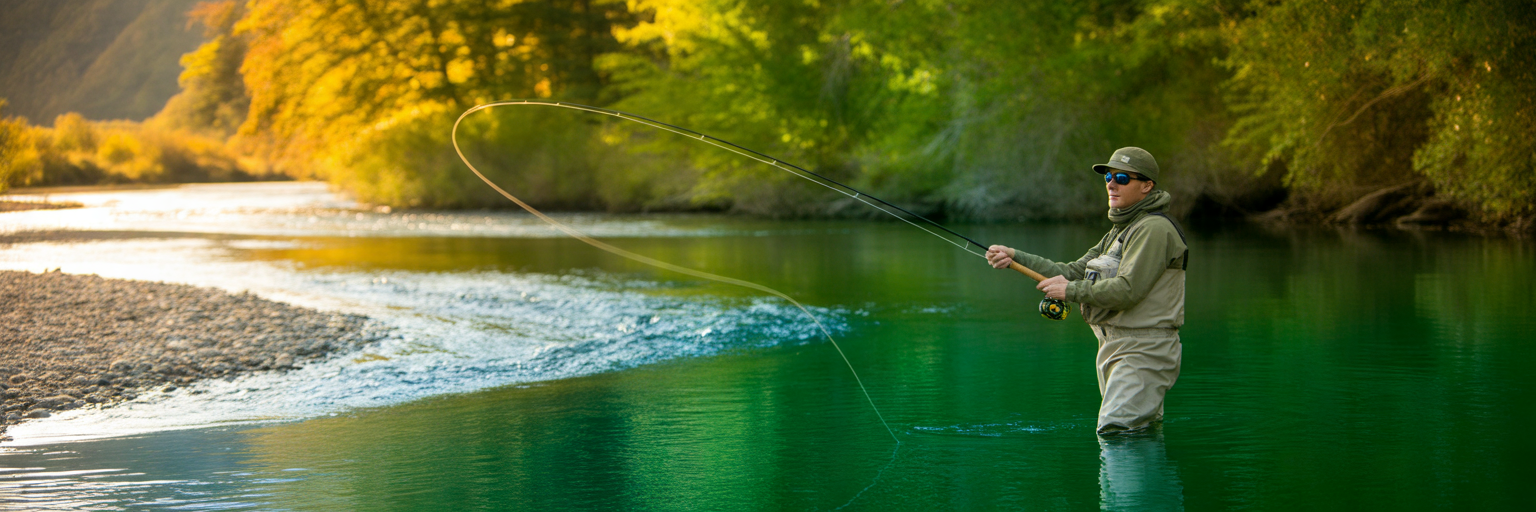
Stream trout spend their entire lives solving a simple math problem: how to burn fewer calories fighting the current than they gain from eating drifting insects and baitfish. Once you understand that single rule of river economics, reading moving water and putting your bait right in front of feeding fish becomes much easier.
How to Fish for Trout in a River by Reading the Current
Deciphering that calorie math is the real secret to how to fish for trout in a river consistently. When you start reading river currents for trout, stop looking at the whole river as one big sheet of moving water. Think of trout as lazy opportunists. They want to park in gentle, cushioned water right next to a faster current that acts like a food conveyor belt.
Breaking Down the Riffle, Run, and Pool Sequence
Most trout streams follow a repeating pattern of riffles, runs, and pools. Riffles are the shallow, choppy sections dancing over gravel and small cobble. That broken surface pumps oxygen into the water and knocks aquatic insects loose from the rocks, making riffles the primary grocery store of the river. Just downstream, the bottom drops out into a transition run where the current stays brisk, yet the extra depth gives active trout security from overhead predators like ospreys and herons. Finally, the run dumps into a deep, slow pool. Fish slide into these pools to rest, hide from midday sun, and pick off stray morsels settling toward the bottom.
Pinpointing Micro-Structures and Current Seams
Inside those larger features, your best targets are smaller micro-structures. Look for distinct current seams where a fast chute rubs against slower bank water, usually marked by a trail of tiny foam bubbles. That bubble line collects drifting nymphs and funnels them right to waiting trout. Pay close attention to dark undercut banks where tree roots hold the soil together over washed-out hollows, along with midstream boulders. A big rock splits the flow, creating a quiet hydraulic pillow directly in front of the stone and a soft, swirling eddy right behind it.
Keep water levels in mind as you scan. High, heavy flows push trout tight against the banks where friction slows the current. When summer flows drop low, those same fish slide out into mid-stream depressions and deeper central slots. Whenever you walk up to a new bend, take two minutes before unclipping your hook: locate the main bubble line, spot the nearest depth transition, and check our stream-reading guide for visual examples of where to drop your very first cast.
Choosing Productive Trout Water by Season and Flow
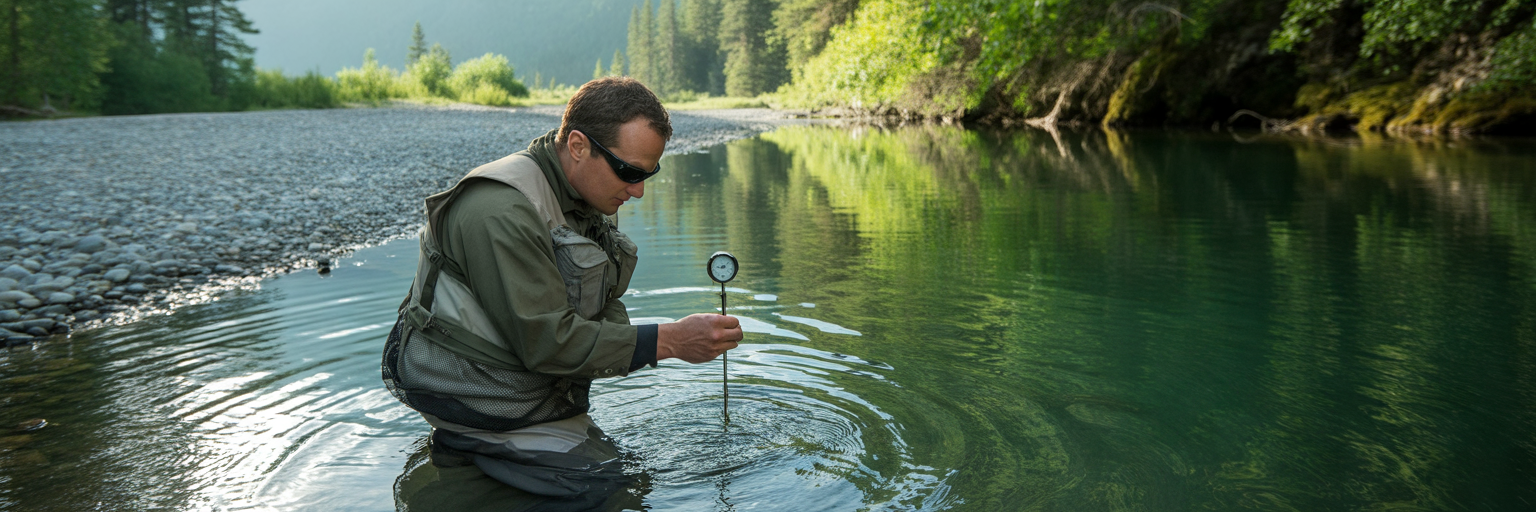
Knowing how to spot a great seam only pays off if the water flowing through it is comfortable for the fish. River trout are coldwater creatures whose body temperatures and appetites rise and fall directly with the thermometer.
Water Temperature Windows and Seasonal Holding Shifts
Clipping a basic stream thermometer to your vest will save you hours of casting over empty gravel. As highlighted in the New York State Department of Environmental Conservation stream guide, trout feed most actively when water temperatures sit between 50°F and 65°F. During the dead of winter and early spring, when readings plunge below 45°F, a trout’s digestion slows to a crawl. You have to skip the brisk riffles and target slow, deep wintering pools where fish hug the bottom to conserve energy. Once summer pushes water toward 68°F, dissolved oxygen drops fast, forcing trout out of slack water and right into frothy, oxygenated riffles or the cold mouths of spring-fed tributaries.
| Water Temperature | Season / Condition | Primary Holding Water | Trout Feeding Activity |
|---|---|---|---|
| Below 45°F | Winter / Early Spring | Deep, slow pools and slack tailouts | Low metabolism, slow bottom-hugging bites |
| 50°F to 65°F | Prime Spring / Autumn | Current seams, transition runs, and banks | Peak feeding window, active chasing and rising |
| 66°F to 68°F+ | Peak Summer Warmth | Heavy riffles, shaded banks, cold tributaries | Stressed, brief early morning feeding windows |
Checking Flow Gauges and Finding Public Access
Before you load the truck, pull up your local river gauges online to check the discharge in cubic feet per second. A slight bump in flow that turns the river a stained green color often triggers a feeding binge because trout feel hidden from predators and bank erosion washes worms into the current. If the gauge spikes vertically and the water looks like chocolate milk with floating logs, stay home or find a smaller headwater creek that drains faster.
Finding legal places to step into the river across the United States is simple if you know where to look. County highway bridge crossings often provide public right-of-way easements, while state wildlife management areas and national forests offer miles of open bank. You can also search waters on Fishing Tips Daily by state or distance to connect local rivers with their specific wild or stocked trout populations before you burn gas.
Stealth, Wading Safety, and Approaching Clear Water
Once you pick the right river and confirm the water temperature is prime, your next hurdle is getting into casting position without blowing every trout out of the run. Because trout hold facing upstream to watch food drift toward them and allow water to flow naturally over their gills, their blind spot is directly behind their tails. Working your way from downstream to upstream lets you sneak close without entering their field of vision.
Wild river trout in clear water will bolt at the slightest unnatural flash. Leave the bright white shirts in the closet and wear muted olive, brown, or drab gray clothing that melts into the streamside brush. Use high banks or streamside boulders to break up your silhouette, and check the sun angle so your shadow or rod flash never sweeps across a holding lie. A pair of copper or amber polarized sunglasses is mandatory gear here, cutting surface glare so you can spot submerged boulders and hovering fish long before they spot you.
Occasionally, overhanging alder branches or a tight bend will block an upstream cast. In those tight spots, sneak well above the target lie, stay back off the bank, and let the current carry your bait or lure downstream underneath the brush into the undercut bank.
Smart wading protects both your catch rate and your safety. Never wade into water you can easily cast to from dry gravel, since every step pushes underwater pressure waves straight toward wary fish. When you do step in, shuffle your boots across the slick cobble rather than lifting your feet high, and lean on a collapsible wading staff in heavy flows. Bracing against cold currents and slick rocks all afternoon beats up your calves and lower back, so looking into passive recovery methods for athletes after a strenuous trip can help keep your legs fresh for the next morning’s hike.
- Confirm the sun is not directly at your back casting a shadow over the run.
- Scan the shallow water right at your feet before stepping in, as trout often hold inches from the bank.
- Test your footing on algae-slick rocks before shifting your full body weight.
- Make two or three short casts from the dry bank before entering the tailout of a pool.
Simple River Trout Rigs for Spinning and Fly Gear
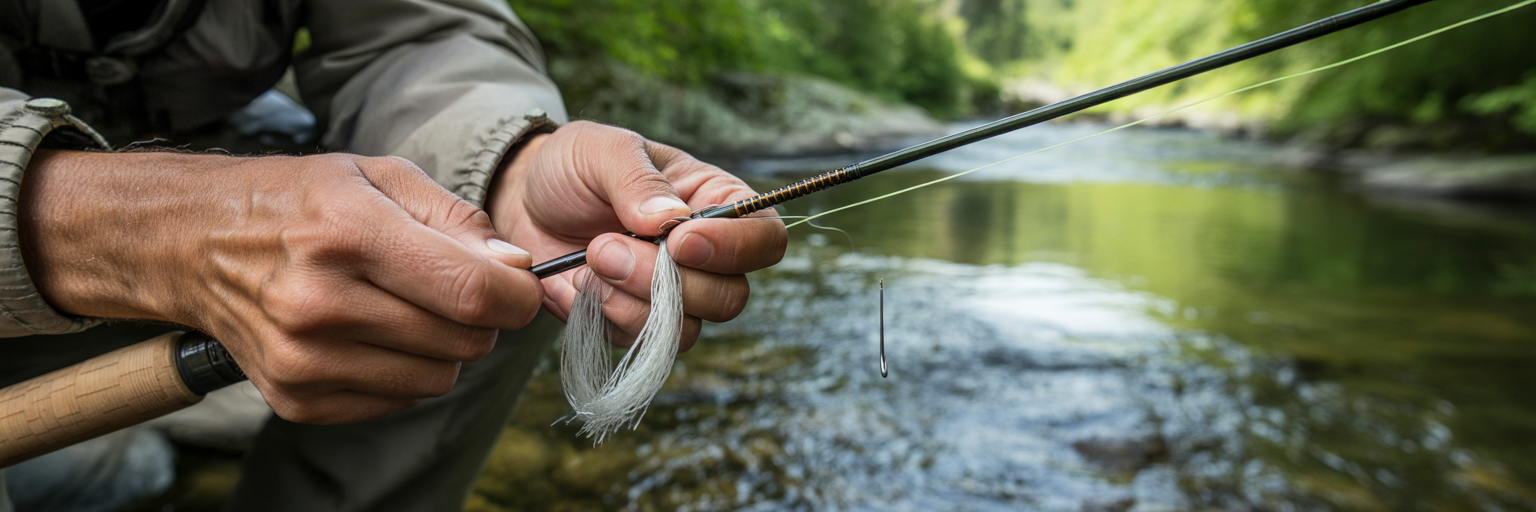
Staying hidden gets you in range, and tying simple, tangle-free river trout fishing rigs keeps your offering in the strike zone when you cast. Most river anglers rely on one of two workhorse setups: a 5.5- to 6.5-foot ultralight spinning rod spooled with 4- to 6-pound test line for tight, brush-choked creeks, or a versatile 9-foot 5-weight fly rod for picking apart wider seams and runs.
The Bottom-Bouncing Split-Shot Rig for Spinning Gear
When trout are hugging the gravel, a bottom-bouncing drift rig on spinning tackle is tough to beat. You can build it on the bank in two minutes:
- Tie a tiny size 12 or 14 black barrel swivel to the end of your 6-pound main line to stop spinning baits from twisting your spool into a bird’s nest.
- Attach an 18- to 24-inch section of 4-pound fluorocarbon leader to the open eye of the swivel for near-invisibility in clear water.
- Pinch one or two small, removable split shot onto the leader roughly 12 to 18 inches above the end of the line.
- Tie on a fine-wire size 8, 10, or 12 hook so your bait retains a buoyant, lively drift.
Your weight adjustment comes down to one simple feel check: you want the split shot ticking gently against the rocks once every two or three seconds. If you never touch bottom, pinch on another shot. If you hang up on every single cast in a shallow tailout, strip the weight down to a single micro-shot or drift a bare hook.
Adjustable Indicator Nymph and Dry-Dropper Setups
Fly anglers can match that same bottom contact using an adjustable strike indicator rig. Tie a weighted beadhead nymph to the end of a 9-foot 4X or 5X tapered leader, and clip a small yarn or air-lock indicator onto the leader at roughly one and a half times the water’s depth. In shallower pocket water, swap the plastic indicator for a bushy, high-floating dry fly and tie an 18-inch piece of fluorocarbon tippet right to the bend of the dry fly’s hook, suspending a small nymph below it.
Before you start fishing either rig, grab your leader between your hands and give it a firm pull to stretch out the tight memory coils left from the spool. Get in the habit of running your thumb and forefinger down the last two feet of fluorocarbon every ten minutes to check for rough nicks from sharp river rocks.
Matching Baits, Lures, and Flies to Current Conditions
With your rig dialed in for the depth of the run, the next decision is choosing what goes on the hook. Matching your offering to water clarity and current speed separates a quiet walk in the woods from a busy afternoon with the net.
Drifting Natural Baits for Cold or Pressured Trout
When cold water locks jaws shut or heavy weekend traffic makes fish skeptical of flashy hardware, the best baits for river trout are the real thing. Redworms, pinched pieces of nightcrawlers, single cured salmon eggs, and crisp mealworms carry natural scent that convinces sluggish trout to bite. The secret to bait fishing in current is how you thread the hook. Pass a fine-wire hook once or twice cleanly through the collar of a worm so it hangs straight. If you bunch the worm up into a crooked loop, it will spin like a helicopter blade in the current, twisting your leader and spooking every smart fish in the pool. Natural bait excels when you want to thoroughly soak a deep hole, while artificial lures let you cover a half-mile of pocket water much faster to locate aggressive fish.
Throwing Spinners, Spoons, Soft Plastics, and Flies
When water warms up and trout are willing to chase, tying on trout spinning lures for rivers lets you trigger reaction strikes. Inline spinners in 1/16- to 1/8-ounce sizes, compact wobbling spoons, and 2-inch soft plastic trout worms rigged on 1/32-ounce jigheads are staples in every vest. Let water clarity dictate your metal finish: throw gold or copper blades when rain stains the river or when fishing tannic, tea-colored creeks, and switch to silver or muted painted blades on sunny days in clean flows. If you are facing ultra-low water where fish bolt at the splash of heavy metal, check out our clear-water trout lure guide to see how downsizing to subtle soft plastics saves the trip.
Fly anglers do not need a degree in entomology to pick winners. Carry three proven categories: a high-floating Elk Hair Caddis or Stimulator for surface rises, beadhead Pheasant Tail and Hare’s Ear nymphs in sizes 12 through 18 for bouncing the bottom, and olive or black Woolly Buggers for stripping through deep runs and undercut banks.
| River Condition | Natural Bait Choice | Spinning Lure Choice | Fly Pattern Choice |
|---|---|---|---|
| Cold & Clear (Spring/Winter) | Single salmon egg or mealworm | 1/16 oz silver spoon or micro-jig | Size 16 to 18 beadhead Pheasant Tail nymph |
| Slightly Stained / Higher Flow | Whole nightcrawler piece | 1/8 oz gold or copper inline spinner | Size 8 to 10 olive or black Woolly Bugger |
| Low & Clear (Summer/Fall) | Small redworm on unweighted hook | Pink or white trout worm on 1/32 oz jig | Size 14 to 16 Elk Hair Caddis with midge dropper |
Pay close attention to fish that follow your lure right to your wading boots and turn away at the last second. That refusal tells you the trout want to eat, yet something about the speed or size looked wrong. Drop down one lure size or swap a flashy spinner for an unweighted plastic worm and cast right back to the same seam.
Casting Angles and Drift Control for Natural Presentations
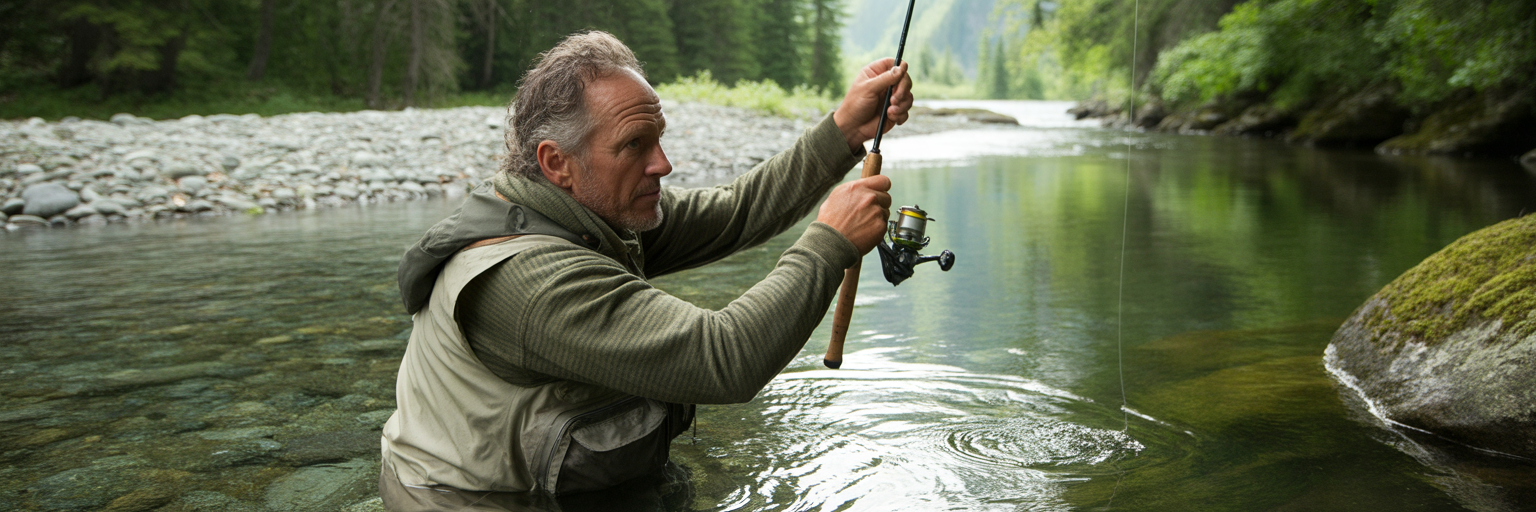
Even the most realistic bait or hand-tied nymph will get ignored if the river current drags it unnaturally across the seam. River water travels at different speeds: the center chute races along while the bank edges and bottom friction layer move much slower. If fast mid-stream water grabs the belly of your line and yanks your bait faster than the water directly surrounding the hook, trout instantly spot the fake.
To beat that drag with both spinning and fly tackle, build the habit of throwing a quartering-upstream cast at roughly a 45-degree angle above your target lie. Dropping your rig upstream gives your split shot, jig, or weighted nymph enough time to sink down into the slower bottom layer before it drifts past the fish’s nose.
Spin-Fishing Drift Control and Rod Tip Management
Once your bait hits the water on a spinning rod, flip the bail closed with your hand and raise your rod tip to a 45- to 60-degree angle. Holding the rod high keeps the bulk of your monofilament or fluorocarbon up off the fast near-bank currents. As the rig tumbles back toward you, turn the reel handle just fast enough to gather the slack line without pulling the bait out of its natural path. You want a slight bow in the line that lets you feel the weight ticking the rocks while the bait floats completely free.
Fly Line Mending for Drag-Free Seams
With thicker floating fly line resting on the surface, managing different current speeds requires an upstream mend. As soon as your line lands across a fast center current into a slower far seam, lift your rod tip and flip a semi-circle of line upstream over the fast water. That simple flick buys you several extra seconds of dead-drift before the fast current catches up and pulls your indicator off course. You can also throw a reach cast by leaning your rod tip upstream in mid-air right before the fly touches down, pre-setting that upstream belly before the line ever hits the surface.
Rarely will a drifting trout slam your rod tip down like a lake bass. Most river bites feel like a subtle tick, a spongy weight, or a sudden pause in your line or indicator. Because rocks don’t bite back, set the hook with a quick flick of the wrist every single time your line hesitates.
Landing, Handling, and Releasing River Trout Safely
Before you wet a line on any new stretch, double-check the local proclamation book or state fish and wildlife app. Trout river rules in the United States frequently change from one highway bridge to the next, shifting between general bait waters, artificial-lures-only sections, barbless hook mandates, and strict slot limits.
When you hook a solid trout in brisk current, resist the urge to horse it straight upstream against the heavy flow. Keep your rod tip up to cushion the thin leader, let the drag work, and walk downstream below the fish if the bank allows. Using the current to tire the trout makes it much easier to slide the fish into calm, ankle-deep slack water where you can scoop it with a rubberized mesh landing net that will not scrape off its protective slime coat or split its tail fins.
Even if you plan to keep legal stocked fish for the skillet, you will inevitably catch wild or undersized trout that need to go back cleanly. As outlined in the Oregon Department of Fish and Wildlife trout guidelines, following a few simple handling habits ensures released trout survive to fight another day:
- Submerge your hands in the cold river before touching the fish so dry skin does not strip away its protective mucus layer.
- Keep the trout underwater inside the net bag while backing the hook out with a pair of hemostats or needle-nose forceps.
- Never squeeze the soft belly or slide your fingers inside the fragile red gill plates.
- If a trout swallows a baited hook deep in its throat, do not yank it out; snip the leader as close to the hook eye as possible and release the fish, as the wire will rust out naturally.
To send a tired fish home, cradle it gently upright in a slow seam facing upstream so fresh, oxygenated water washes through its gills. Wait until the trout kicks firmly out of your loose grip on its own power rather than tossing it into dead slack water. Pack a thermometer in your vest, take two quiet minutes to read the bubble lines on your next stream bend, and put these river mechanics to work on your very next cast.