
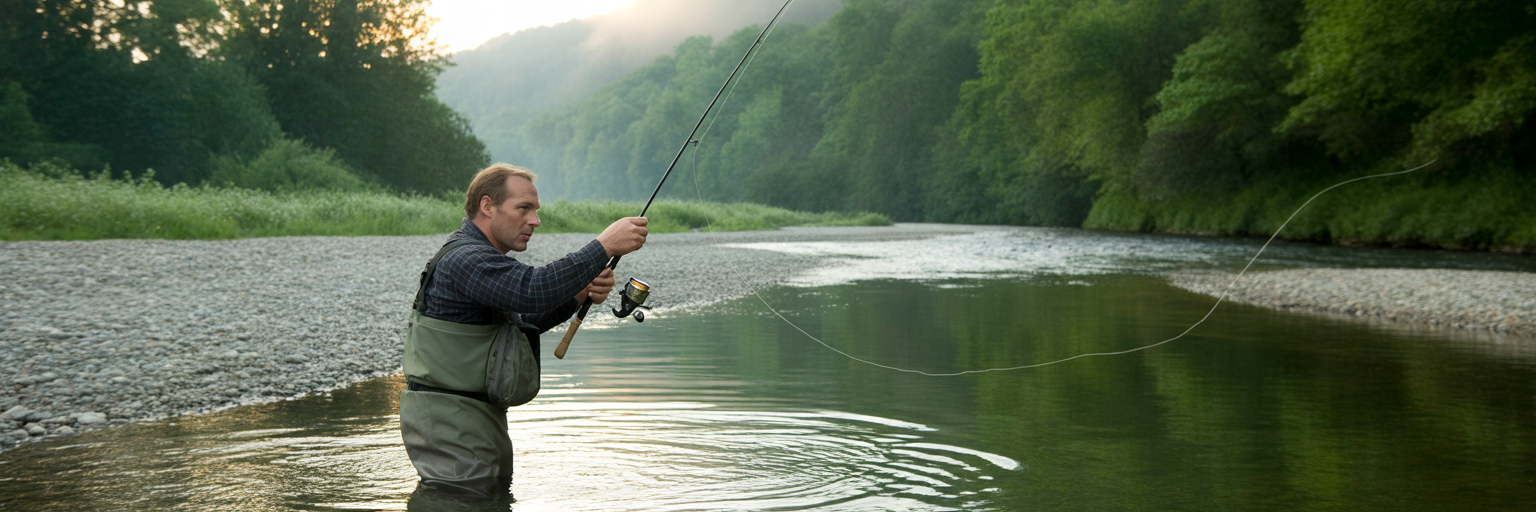
Stream trout spend their entire lives facing into the current, judging the speed and movement of every morsel washing downstream before deciding whether to burn energy chasing it. Mastering drift bait control is the difference between watching your line drag past empty water and putting natural bait right on the nose of a feeding fish.
Why Drift Bait Control Matters for River Trout
Successful drift fishing for trout comes down to one simple rule: your bait must travel at the exact same speed as the water surrounding it. River trout tuck themselves near the riverbed facing upstream, waiting for dislodged aquatic insects, earthworms, and fish eggs to tumble straight into their feeding lanes. Because these fish watch thousands of natural food items drift past every single day, they instantly spot anything moving at an unnatural angle or speed.
When you are first learning how to fish for trout in a river, the biggest hurdle is overcoming line drag. If faster surface currents grab your main line and pull your bait faster than the water near the bottom, the presentation looks fake. Even recently stocked rainbows and browns will recognize that unnatural pull and let your offering pass right by without opening their mouths.
Surface Speed vs. Bottom Friction
A river does not flow at one uniform speed from top to bottom. Think of a stream like a conveyor belt where the top layer runs on high speed while the bottom layer drags against the floor. Friction from gravel, cobble, and submerged boulders slows down the water right along the streambed. This slower bottom cushion is exactly where trout hold to conserve energy, and your bait has to match that sluggish bottom pace rather than the brisk surface chop pushing against your fishing line.
Breaking the Habit of Over-Casting
Stand on any popular trout bank on opening weekend and you will see beginners casting, reeling in five seconds later, and firing another cast right back out. Frantic casting keeps your bait riding high in the fast upper water column where trout rarely feed. Keeping your bait down in the strike zone through patient, controlled drifts catches far more fish than bombarding the river with constant splashes. When you let your offering settle into that slower bottom cushion and travel smoothly with the current, wary stream trout have every reason to bite.
Upstream Positioning and Casting Angles for Natural Presentation

Understanding how bottom friction slows the current only helps if you put yourself in the right spot to take advantage of it. Before you even touch your bail, think about your approach to the water. Since every trout in the river faces upstream, you should always walk and wade upstream into the flow. Moving from downstream to upstream ensures that your boot vibrations, bank shadows, and any silt you kick up wash harmlessly behind the fish rather than drifting straight into their forward cone of vision.
The 45-Degree Upstream Cast
Once you sneak into position beside a promising run, aim your cast at a 45-degree angle upstream and across the current. Casting straight across or downstream never gives light terminal tackle enough time to sink before the current sweeps it away. That 45-degree upstream angle buys your split shot and bait precious seconds to drop through the faster surface layers, hitting the productive bottom zone right as the rig drifts into the prime holding water directly in front of you.
Reading Current Seams and Boulders
Putting that cast on target requires reading trout river currents to locate high-percentage ambush points. Look for current seams where a fast chute rubs against slower water, the calm cushion directly behind an exposed boulder, and deeper eddies where trout rest while watching food wash past. We put together a full guide on how to read trout streams before your first cast so you can spot these holding lies from the bank.
While it is tempting to heave a long cast to the far bank, short 20-to-30-foot casts across a single current lane give you vastly better control than reaching across three conflicting current speeds. When you use our fishing location tools on Fishing Tips Daily to scout new waters, look for public access points with open backcast room and clear riffle-to-pool transitions that make upstream positioning easy.
- Approach from downstream: Stay low on the bank or wade quietly against the current so you remain in the trout’s blind spot.
- Isolate a single current seam: Pick one distinct speed transition or boulder cushion within 30 feet rather than casting across the entire river.
- Execute the 45-degree upstream cast: Drop your bait upstream of the target zone so it sinks to the riverbed right as it enters the holding lie.
Line Slack Management to Feel Subtle Strikes
Dropping your bait on a 45-degree upstream angle sets up the drift, but what you do with your rod and reel over the next ten seconds determines whether you actually hook fish. Learning how to drift bait effectively means finding the semi-tight line sweet spot. You need just enough tension in your line to feel what is happening down near the rocks, yet enough slack so your rod tip never pulls the bait off its natural track.
High-Rod Tracking and Gathering Slack
As soon as your bait hits the water, close your bail with your hand and lift your spinning rod tip to the 10 o’clock or 11 o’clock position. Holding your rod high keeps as much monofilament or fluorocarbon off the fast surface water as possible, preventing the current from grabbing a big loop of line and dragging your bait downstream. Lead your rod tip downstream at the exact walking pace of the floating foam bubbles on the surface. As the rig drifts closer to your standing position, turn the reel handle slowly just to gather the loose belly of slack line without pulling the sinkers forward.
Distinguishing Bottom Ticks from Trout Bites
Tell-tale feedback travels right up that semi-tight line when your rod is held high. Split shot bouncing across gravel creates a rhythmic, predictable tap-tap or a tiny flick in the line where it enters the water. A trout bite feels completely different. Sometimes it registers as a spongy, heavy weight as if you snagged a wet leaf, while other times your line suddenly jumps sideways or stops dead in the middle of a smooth glide.
Beginners often wonder whether to use a small drift bobber or bounce the bottom strictly by feel. Clipping on a tiny foam float is a great training tool in uniform runs because it shows you visually when your bait is dragging, whereas fishing without a float gives you a stealthier, cleaner drift in shallow, gin-clear riffles. Combining high-rod tracking with sharp line watching ensures you set the hook on every subtle take.
Split-Shot Placement and Weight Adjustments
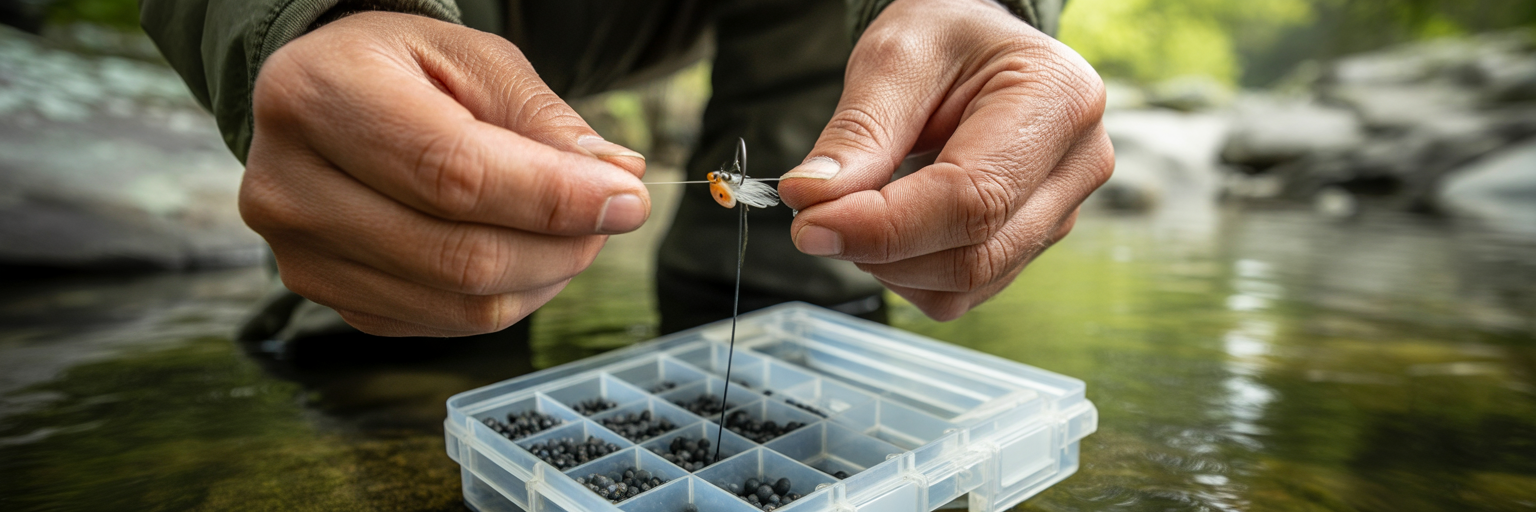
Even the sharpest high-rod tracking cannot save a drift if your terminal tackle is too heavy or too light for the depth and flow. Dialing in your trout split shot setup follows a simple Goldilocks rule: you should feel your weight lightly ticking the rocks once every few seconds. If your rig wedges into the bottom on every cast, take off a shot or drop down a size. If your line glides all the way through the run without ever bumping bottom, pinch on more weight until you make contact.
Where you place that weight on your line matters just as much as how heavy it is. Clamping your split shot 12 to 18 inches above the hook lets the lead ride along the gravel while allowing a piece of garden worm, salmon egg, or mealworm to tumble and flutter naturally in the slower bottom current right at eye level with feeding trout.
Spacing Micro-Shot vs. Single Heavy Weights
Instead of pinching one heavy, round BB sinker onto your line, space two or three smaller micro-shot about two inches apart. A single bulky weight acts like an anchor that drops straight into V-shaped crevices between river rocks. Spaced micro-shot distribute the weight along the line, sliding smoothly over cobble and reducing frustrating snags while giving you a much more fluid drift.
Adjusting Leader Length for Boulders and Tailouts
You can adapt to changing bottom structure in seconds simply by sliding your split shot up or down the line. In fast, rocky pocket water, slide your lowest shot 8 to 10 inches from the hook to keep the bait on a short leash so it does not wrap around submerged boulders. When you move down into slower, silty pool tailouts, slide the shot up to create an 18-to-24-inch gap so the bait wafts gently above the soft bottom. Always pinch removable split shot firmly with your fingers or pliers so they stay put, but avoid crushing them so hard that you nick your thin 4-to-6-pound fluorocarbon leader. Before heading to the stream, review our first river trout trip gear checklist to make sure your vest is stocked with assorted micro-shot sizes.
| Water Type | Bottom Structure | Recommended Weight Setup | Distance from Hook |
|---|---|---|---|
| Fast Pocket Water | Large boulders and heavy cobble | 2 to 3 medium micro-shot spaced apart | 8 to 10 inches |
| Moderate Riffle Run | Mixed gravel and baseball-sized rock | 2 small removable split shot | 12 to 15 inches |
| Deep Slow Pool | Sand, silt, and scattered stone | 1 tiny micro-shot or BB sinker | 18 to 24 inches |
| High Stained Flow | Undercut banks and slow current edges | 3 medium shot clustered for fast drop | 10 to 12 inches |
These rigging specifications are based on standard spinning tackle using 4-to-6-pound fluorocarbon or monofilament line in typical North American freestone and tailwater trout streams. Notice how faster, turbulent water requires both heavier total weight and a shorter distance to the hook, whereas calm water demands lighter shot pushed further up the line for maximum stealth. Listen to what the bottom feedback tells your rod hand and adjust accordingly.
Adapting Cast Distance and Retrieve Timing to Changing Current
Once you have your split shot dialed in for one stretch of water, the river will inevitably change right around the next bend. Walking upstream takes you from brisk, choppy riffles into deep, slow-moving pools within a matter of yards. When you step up to a fast, oxygenated riffle, shorten your casts and add a micro-shot to punch through the turbulence. As soon as you transition into a slow, glassy pool, strip off that extra weight and lengthen your casts so you do not spook fish holding in calmer, clearer water.
Working the End-of-Drift Swing
One of the easiest ways to hook bonus fish is to stop reeling in too early at the end of your pass. When your bait drifts past your standing position and travels downstream, your line naturally comes tight against the current. This tension causes your bait to swing across the stream and lift off the bottom toward the surface, mimicking an aquatic insect swimming up to hatch. Trout often follow a drifting bait for ten feet before deciding to eat, and that sudden upward rise triggers aggressive reaction strikes. Let your bait hang straight below you and count to three at the end of every swing before reeling in for the next cast.
Managing Conflicting Current Lanes
Sometimes the best-looking pocket sits on the far side of a fast channel right in front of your boots. Casting across a fast near-bank chute into a slow far-bank pocket causes the fast water to grab the middle of your line, forming a wide downstream belly that yanks your bait right out of the strike zone. You can solve this by wading one safe step closer to the seam to keep your rod tip over the fast water, or by giving your rod tip a quick upstream flick mid-drift to flip that belly of line back upstream.
Put all of these river trout fishing tips into practice on your next outing by following a simple 3-cast adjustment habit at every new spot:
- Cast 1 (Test Bottom Contact): Make a 45-degree upstream cast into the seam and focus strictly on feeling for that light, occasional tick of split shot against the gravel.
- Cast 2 (Refine Angle and Mend): Adjust your weight or leader length if needed, cast again, and keep your rod at 10 o’clock while flicking out any downstream line belly.
- Cast 3 (Work the Full Seam and Swing): Track the drift smoothly all the way past your boots, let the bait swing up toward the surface at the tailout, and pause for a full three-second count before retrieving.