
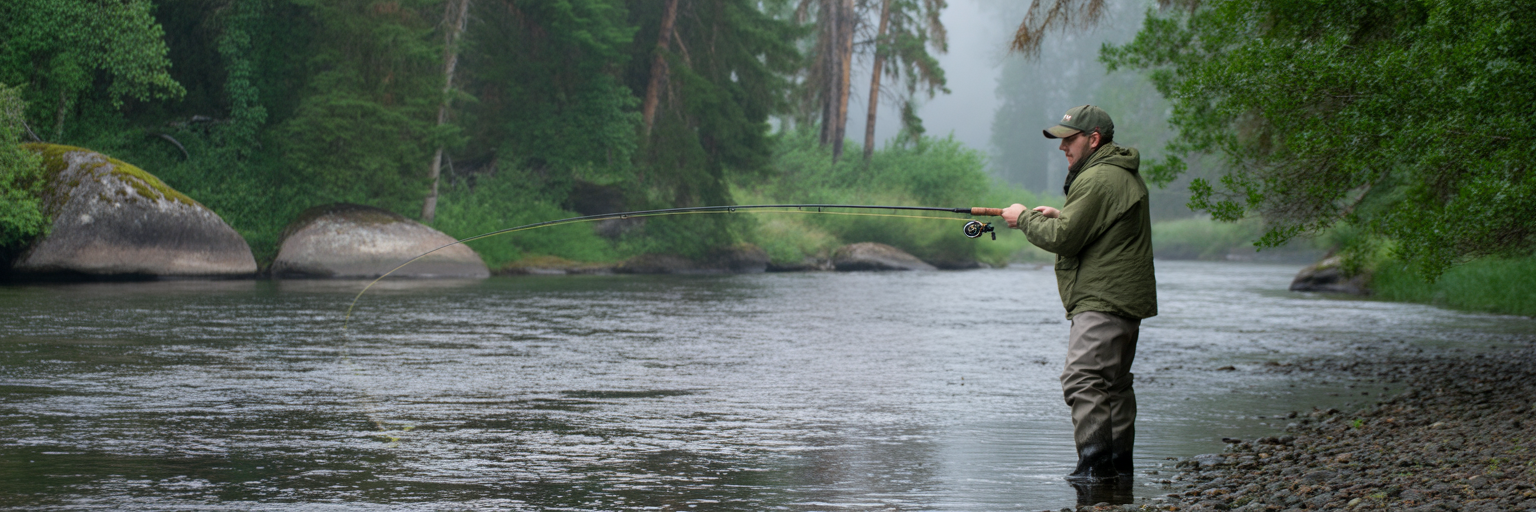
Since 1889, the United States Geological Survey has monitored stream flows across the country, giving modern anglers real-time hydrographs right on their phones. Yet many weekend fishermen still pack up and stay home at the first sign of brown water, missing out on some of the heaviest feeding windows of the season. Mastering river trout fishing after rain turns those washed-out Saturday mornings into some of your most productive days on the water.
Why River Trout Fishing After Rain Rewards Smart Timing
We have all been there. You spend all week organizing your tackle box, only to wake up Saturday morning after a Friday night downpour and assume your favorite stream is ruined. Writing off high water too quickly is a classic mistake. If you understand how trout react to runoff, you can catch the prime window for river trout fishing after rain, which opens right as the water crests and starts to drop.
The Post-Storm Feeding Trigger
Heavy runoff acts like a massive food conveyor belt. Rising water sweeps across dry ground, washing terrestrial insects, earthworms, grubs, and scuds straight off the banks and into the current. At the same time, that murky water provides a thick ceiling of security. Low visibility drastically reduces the threat of overhead predators like ospreys, herons, and anglers.
This combination of abundant food and heavy cover flips a biological switch. Larger, normally nocturnal or cautious trout feel completely confident moving out of deep mid-river refuges and sliding into shallow edges to feed aggressively without burning excess energy.
Tinted Water vs. Unfishable Mud
Success comes down to separating productive stained water from unfishable mud. A stream that looks like thick chocolate milk is tough to fish, while water with a slight stain or green tea tint is an angler’s dream. Building on the fundamentals in our guide on how to fish for trout in a river gives you the baseline skills to adjust when storms roll through.
Key Takeaway: Post-rain runoff concentrates both washed-in food and big, confident fish right along the shallow margins for anglers who time the drop.
Reading Flow Gauges and Water Clarity Before Wading In
Catching aggressive fish in swollen streams starts before you even leave the driveway. Smart anglers rely on data and bankside checks to stay safe and verify conditions before making a cast, and reading river flow gauges is your best first filter.
Decoding the USGS Hydrograph Curve
When you pull up your local USGS river gauge on Saturday morning, ignore the raw cubic-feet-per-second (CFS) number for a minute and look closely at the shape of the graph curve. Every river handles volume differently, so the trend line tells the real story.
A sharp vertical spike means dangerous currents, floating branches, and unsettled silt that shuts down the bite. You want to see a flattening crest or a steady downward slope. Once that line peaks and tilts down, sediment starts settling from the bank edges inward, triggering the feeding window covered in our breakdown on timing the trout bite after rain in streams.
The Bankside Boot Test and Wading Rules
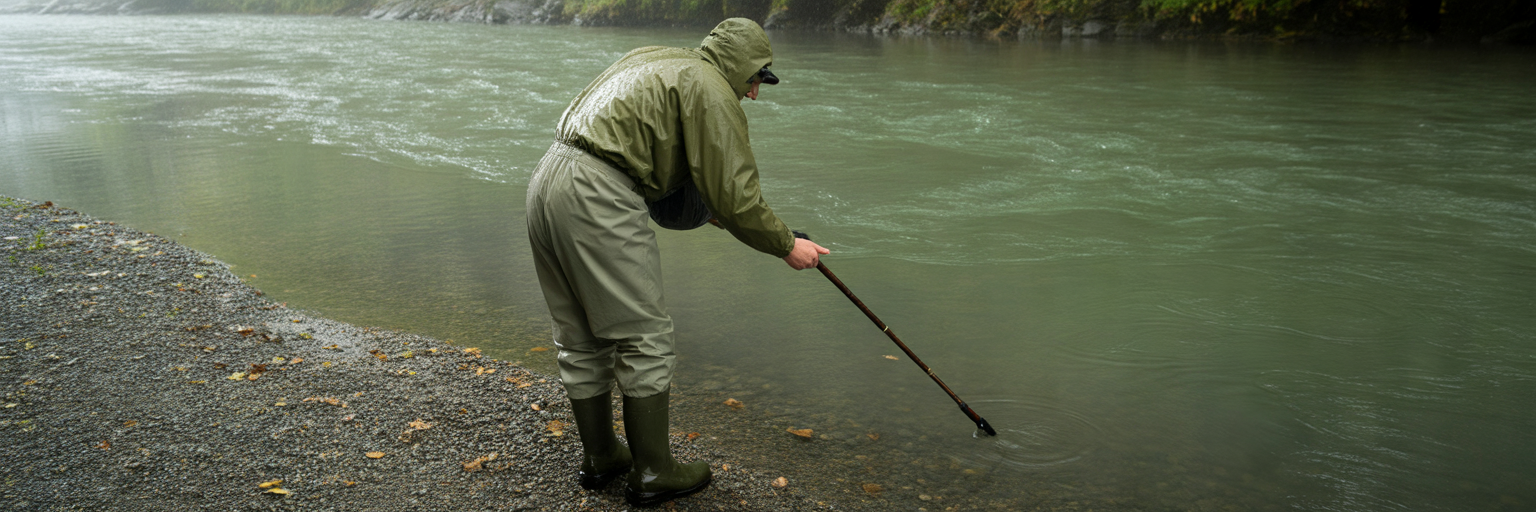
Once you park and walk down to the river, run a quick visual check. If the water looks like thick chocolate milk and carries leaves, sticks, and foam balls down the middle, keep your rod in the truck. If you see a green tea tint or a slightly milky stain with clean edges, you are in business. Step into calf-deep water right at the edge and look down: if you can clearly see your wading boot, trout have enough visibility to track a bait.
As highlighted in Outdoor Life’s high-water trout safety guidance, checking boot visibility and staying shallow keeps you out of trouble when turbid flows hide uneven river bottoms. Follow these four strict high-water safety rules every time you fish after a storm:
- Stay on the bank whenever possible: The best holding lies are right at your feet anyway, so keep your boots on dry dirt or gravel.
- Keep wading strictly knee-deep or shallower: High velocity doubles the push against your legs, and stepping past your knees in dirty water invites a fall.
- Always use a folding wading staff: Probe hidden drop-offs, scoured holes, and slick bowling-ball rocks before shifting your weight.
- Unclip chest pack or wader straps before crossing: Never cross moving water with tight gear straps that could trap water if you slip.
Before tying on a lure, run a quick three-point checklist: confirm a dropping hydrograph trend, verify at least one foot of edge clarity, and map out safe bank access along your stretch.
Where Trout Hold When Currents Rise and Mud Settles
Once you verify the river is safe and fishable, your next job is finding where the fish moved. Trout live by a strict energy-conservation rule: they refuse to burn more calories fighting the current than they gain from eating. While trout might hold briefly in their normal mid-river spots as flows first bump up, heavy velocity quickly forces them out of main-channel riffles. Putting proven high water trout tactics to work means ignoring the churning center of the river and hunting for low-velocity shelter.
High-Percentage Bank Lies and Flooded Margins
When the main channel turns into a firehose, trout slide straight toward the shoreline. Focus your search on flooded grass undercuts, the soft water on inside river bends, calm eddies behind boulders or submerged logs, and the walking-speed seam where fast main current rubs against slow bank water.
Never step directly into the river when you walk up to a hole. In high, stained flows, big trout sit in ankle- to knee-deep water right where anglers normally stand to cast. Pause back in the streamside brush and apply the observation habits from our guide on reading trout streams before your first cast so you do not spook fish holding inches from the dirt.
Spotting Clarity Seams and Feeder Creeks
Beyond soft currents, always keep your eyes peeled for clarity seams. Small spring seeps and steep, rocky feeder creeks drain much faster than the main valley river. Where these clearer side flows dump into the muddy main stem, they create a distinct two-tone water seam. Trout stack up right inside that clearer pocket, resting in clean water while watching the muddy edge for washed-in worms and nymphs.
Look for these four surface cues to pinpoint hidden bankside holding pockets:
- Swirling foam lines: Bubbles collecting in a slow circle mark a classic reverse current eddy where food collects and spins.
- Stationary grass tips: Flooded bank grass that stands upright or sways gently instead of laying flat signals dead-slow bottom water underneath.
- Slack wedges behind shoreline trees: Trunks and root wads jutting into the flow carve out V-shaped cushions of calm water directly downstream.
- Distinct color lines: A sharp border between brown main-stem water and green feeder water shows you the exact ambush seam.
Key Takeaway: Ignore the middle 80 percent of the swollen channel and make every single drift within two rod lengths of the bank.
Selecting High-Visibility Baits, Lures, and Flies for Stained Water
Knowing where trout sit is half the battle, and helping them find your hook in dirty water is the other half. When you are fishing stained water for trout, suspended sediment shrinks a fish’s visual window from several yards down to just a few inches. To get bit, you have to appeal to their sense of smell and their lateral line, which acts like an underwater radar strip that feels water displacement and thumping vibrations.
Natural and Scented Baits for Turbidity
When visibility drops below a foot, scent is king. The best trout baits after rain match the exact natural forage getting flushed off muddy banks. Whole nightcrawlers and lively redworms top the list because they release a heavy natural scent trail while wriggling in the current. Cured salmon eggs and brightly colored, garlic- or anise-scented soft-plastic trout worms also shine here, letting trout track down the meal by smell before they ever see the hook.
High-Vibration Hardware and High-Contrast Flies
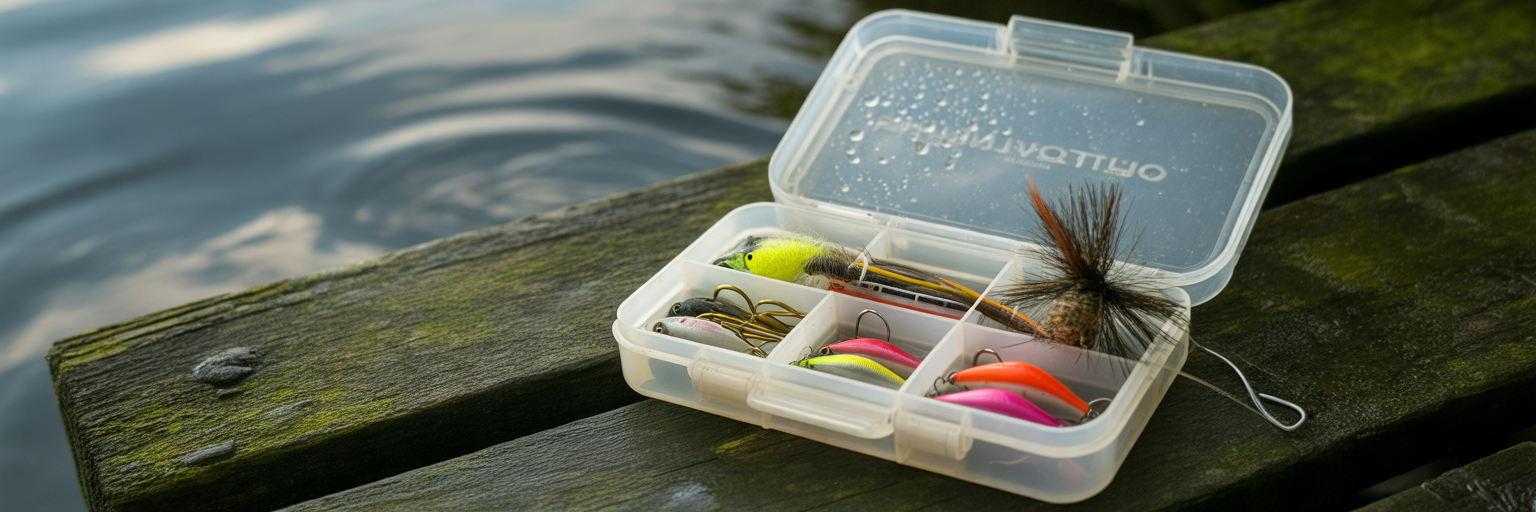
As the river settles into a moderate stain with one to two feet of visibility, aggressive reaction baits take over. For spin anglers, inline spinners fitted with wide, cupped Colorado blades are unbeatable because they spin slower and push way more water than thin willow blades. Compact rattling crankbaits and heavy spoons in metallic gold, copper, chartreuse, fluorescent pink, or matte black also stand out well. Keeping an all-in-one assortment like the PLUSINNO 137-Piece Fishing Lure Kit in your vest ensures you have bright spinners and spoons ready as water colors shift throughout the afternoon.
Fly anglers should leave the tiny midges at home and upsize to meaty patterns that push water. Tie on weighted black or olive conehead woolly buggers, heavy rubber-legged stoneflies, pink or red San Juan worms, and bright egg patterns. As noted in Field & Stream’s spring runoff tips, switching to dark silhouettes or gaudy fluorescent patterns helps trout spot and track offerings in off-color water.
| Offering Category | Top Post-Rain Choices | Primary Sensory Trigger | Best Water Clarity Stage |
|---|---|---|---|
| Natural & Scented Baits | Whole nightcrawlers, redworms, cured salmon eggs, scented dough | Strong scent trail and natural texture | Heavy stain (6 to 12 inches visibility) |
| Spinning Lures | Colorado-blade inline spinners (gold/copper), rattling crankbaits | Lateral-line thump and flash | Moderate green stain (1 to 2 feet visibility) |
| Subsurface Flies | Black conehead woolly buggers, San Juan worms, rubber-leg stoneflies | Water displacement and dark silhouette | Transitioning green tea (1 to 3 feet visibility) |
Key Takeaway: Leave subtle imitations in the box after a storm and prioritize pungent scent, thumping blade vibration, and high-contrast silhouettes.
Rigging and Presentation Adjustments as Runoff Clears
Tying on the right bait will not put fish in the net if your rig rockets past their nose at ten miles an hour. Standard long casts across the river fail miserably in high water. Fast mid-stream currents immediately grab your line, creating a wide downstream belly that rips your bait out of the strike zone before a cold or cautious trout will move an inch.
The Short-Leash Bank Presentation
To keep your offering in front of fish, switch to a short-leash presentation. Walk softly along the shoreline, staying back from the lip of the bank so your footsteps do not vibrate through the mud. Instead of casting out, pitch your rig just five to ten feet ahead of you or drop it straight down along undercut grass and flooded tree roots.
Hold your rod tip high to keep almost all of your line off the water surface. By guiding the bait or fly on a tight, vertical leash right through soft bank pockets, you slow the drift down to a natural walking speed and give trout plenty of time to turn and eat.
Adapting Terminal Tackle as Water Drops and Clears
Heavy water demands sturdier terminal tackle. Step up your fluorocarbon or monofilament main line or leader tippet to 6- to 8-pound test (2X to 3X for fly anglers). Stained water easily hides thicker line, and you need that extra backbone to horse a good trout away from submerged roots and flooded brush piles. Pinch an extra split shot or two about 8 to 12 inches above your hook so your rig punches straight through turbulent surface seams and stays near the bottom where current is slowest.
As the weekend progresses and the river transitions from brown to green to clear, scale your rigging back down. Shed a split shot so you stop snagging bottom, lengthen your leader, swap loud colors back to natural silver or olive tones, and gradually extend your casts toward mid-river seams as trout slide back out into the main channel.
| Runoff Stage | Line / Tippet Strength | Weight / Split Shot Setup | Target Casting Distance |
|---|---|---|---|
| Muddy Crest (Dropping Edge) | 6 to 8 lb mono/fluoro (2X to 3X tippet) | 2 to 3 heavy split shot placed 8 inches above bait | Underhand pitch (5 to 10 feet along bank) |
| Green Tea Drop (Prime Window) | 6 lb fluorocarbon (3X to 4X tippet) | 1 medium split shot or weighted jig/conehead | Short quartering cast (10 to 20 feet into seams) |
| Clearing Tail-Out | 4 lb fluorocarbon (4X to 5X tippet) | Micro shot or unweighted natural drift | Standard cross-current cast (20 to 35 feet) |
Key Takeaway: Match heavy flows with stout line, extra split shot, and tight bankside drifts, then lighten your rig step by step as the water clears.
Backup Plans When Your Main Trout River Is Blown Out
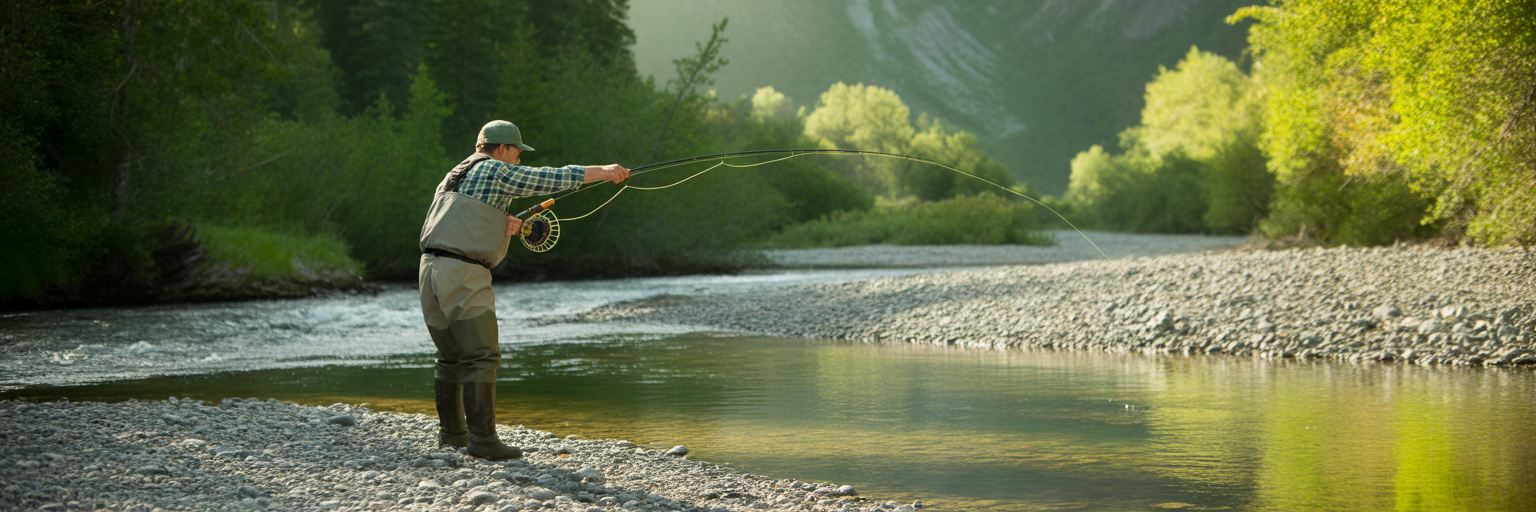
Sometimes a Friday deluge dumps so much rain that your favorite valley river is completely unfishable for the entire weekend. Instead of canceling your trip, a quick geographic pivot or a change in footwork can save your Saturday.
Pivoting to Headwaters and Dam-Controlled Tailwaters
When the main river stem is blown out, your first option is driving upstream within the same watershed toward high-gradient, rocky headwater creeks. Because these smaller mountain or hill-country streams drain tiny basins with granite or gravel bottoms rather than muddy farm valleys, they shed water fast and often clear up hours or days before the main river.
Your second move is heading to a dam-controlled tailwater. Bottom-release reservoirs act like giant settling ponds that trap incoming mud from the upper watershed while releasing steady, clear, fishable water below the dam. If you need a fast Saturday morning backup spot, you can use Fishing Tips Daily to search nearby mapped waters by state or distance and match those backup streams with local species and gear recommendations.
The Five-Cast Mobility Strategy
If you decide to stick it out on a marginal, heavily stained river, ditch the habit of camping on one deep hole for an hour. Because a trout’s visual range is only a foot wide in dirty water, they will not swim across a pool to chase your lure. You have to bring the bait directly to their nose.
Use the five-cast mobility strategy: step up to a soft bank eddy, make five or six precise drifts right along the dirt edge, and immediately walk to the next calm pocket upstream or down. Covering dozens of small bank pockets lets you intercept active feeders without wasting time on empty water.
- The headwater hike: Move up the watershed to steep, rocky tributaries that flush mud and drop into shape fast.
- The tailwater switch: Drive below a bottom-release dam where the reservoir traps upstream runoff sediment.
- Five-cast bank hopping: Pitch five tight drifts into each soft shoreline pocket and keep moving until you find stacked fish.
Key Takeaway: Staying flexible with backup waters and mobile bank hopping after a storm often puts you on the biggest trout of your season while everyone else stays home.