
A sudden summer downpour can double a small stream’s flow volume in less than an hour, flushing thousands of earthworms and terrestrial insects straight into the current. Knowing when that surge shifts from an unfishable mudslide to a prime feeding window is the secret to catching your biggest trout of the season.
What Triggers the Trout Bite After Rain in Streams
Nothing wakes up a sluggish creek faster than fresh runoff. A timed trout bite after rain happens because runoff acts like a conveyor belt of easy protein. Sheet water sliding off the banks washes earthworms, beetles, and ants into the creek while the faster current dislodges stonefly and mayfly nymphs from the gravel bottom. At the same time, cool rainwater lowers summer water temperatures and increases dissolved oxygen, which energizes heat-stressed fish.
Rain also changes stream visibility in the angler’s favor. As we explain in our seasonal trout fishing tips, a slight stain in the water column acts like a protective ceiling that hides trout from herons, ospreys, and shadows on the bank. While a light, steady rain sparks an immediate feeding frenzy, a torrential cloudburst dumps too much silt at once and shuts down the bite.
The Three Stages of Post-Storm Runoff
Every rain event pushes a stream through three distinct phases. During the initial rising stage, trout feed aggressively as the first wave of worms and drowned bugs arrives before heavy mud ruins visibility. Once the creek hits peak flood stage, the current becomes dangerous and fills with debris, forcing fish to hunker down on the bottom just to hold their position. The magic happens during the settling phase when water levels start dropping and the mud thins out into a greenish tint. Trout move to the edges and binge on stranded food before the stream turns low and gin-clear again.
Reading Rainfall, Flow Gauges, and Water Clarity
Guessing when a creek will clear based on the clock usually leads to wasted drives. Smart anglers rely on reading stream flow gauges hosted online by the USGS to track cubic feet per second (CFS) and gauge height in real time. When you look at a stream’s hydrograph chart after a storm, you will see a sharp vertical spike representing the runoff surge. Wait until that line rounds off at the peak and begins a steady downward slope. That falling limb on the graph tells you the heaviest silt is settling out and water pressure is stabilizing.
How Catchment Terrain Affects Clearing Speed
Even with a gauge, you have to factor in the surrounding land. High-gradient mountain headwaters in the Appalachians or the Rockies run over bedrock and boulders, meaning they flush rainwater quickly and often clear within a few hours. Limestone spring creeks also recover fast because their flow comes mostly from filtered underground aquifers. On the other hand, wide valley rivers winding through plowed farm fields or red clay soils absorb massive amounts of fine sediment and can stay muddy for several days after a half-inch rain.
The Water Clarity Rule of Thumb
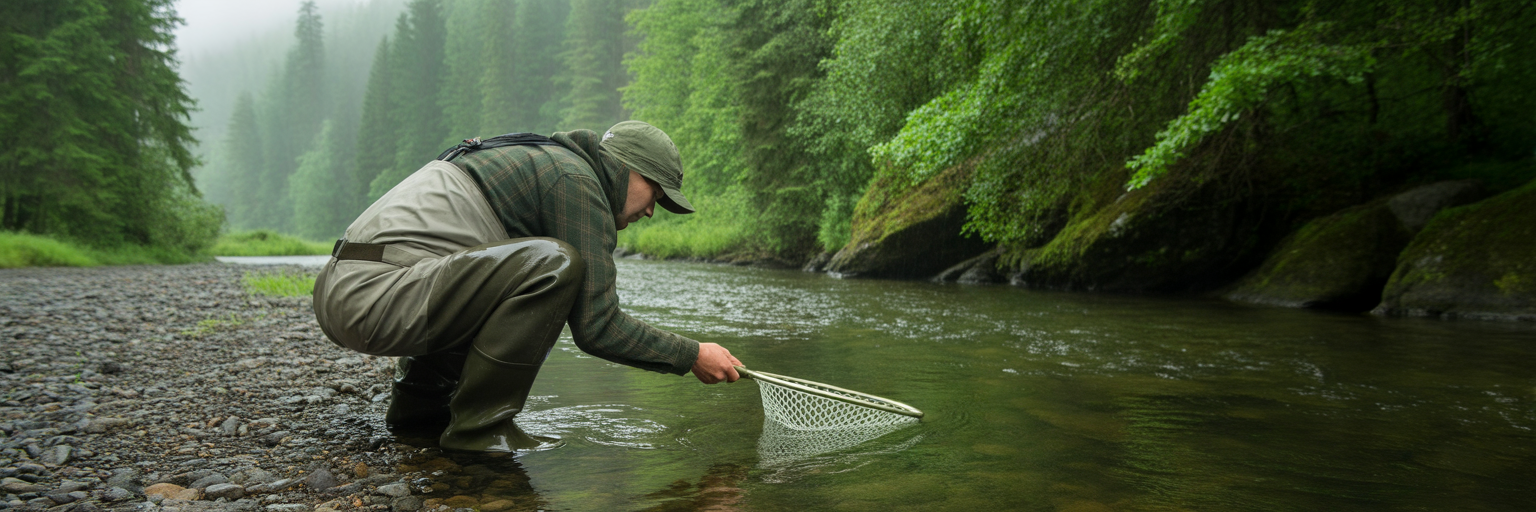
When you arrive at the bank, step into the shallows and look down at your boots to judge conditions for fishing stained water trout. The sweet spot is 12 to 24 inches of visibility, which looks like green tea and triggers confident, aggressive strikes. According to Outdoor Life’s guide to high-water trout fishing, visibility under six inches resembles chocolate milk and makes it nearly impossible for fish to track down a moving bait, which is why waiting for the dropping phase on the flow gauge is so important. If your primary river is completely blown out, you can use the location-mapping tools on our fishing waters directory to quickly find cleaner, higher-elevation tributaries or regulated tailwaters nearby.
| Runoff Phase | Water Visibility | Hydrograph Trend | Trout Behavior and Actionability |
|---|---|---|---|
| Early Rise | 18 to 36 inches | Climbing steadily | Active feeding on initial flush of worms and insects; fish near usual seams |
| Peak Flood Stage | Under 6 inches | Cresting at maximum CFS | Fish hunker down on bottom or tight to banks to survive current; skip fishing |
| Prime Settling Drop | 12 to 24 inches | Falling steadily after peak | Aggressive feeding along soft edges and mudlines; prime time to cast |
| Low Clear Recovery | Over 36 inches | Returning to baseline flow | Trout become spooky again and return to mid-stream riffles; downsize tackle |
Where Trout Hold When Stream Currents Rise
Once you find fishable green water, you have to adjust where you cast. Fighting heavy mid-channel current burns far too many calories for a trout. When water volume doubles, fish abandon their usual mid-stream riffles and central runs, sliding toward the friction of the banks where the flow is much softer.
Effective high water trout tactics depend on ignoring the middle of the creek and targeting specific shoreline refuges where food collects naturally:
- Flooded grassy banks: Rising water submerges turf and weeds along the shore, pulling earthworms and crickets directly out of the soil for waiting trout.
- Inside river bends: While the outside bend takes the brunt of the flood force, the shallow inside curve slows down and creates a wide lane of gentle walking-speed current.
- Reverse-current eddies: Indents in the shoreline spin water backward against the main flow, creating a circular conveyor belt that traps drifting nymphs and drowns terrestrial bugs.
- Cushions behind streamside boulders: Large rocks along the bank break the heavy current and form a calm pocket of slack water directly downstream where trout can rest without effort.
- Submerged root wads and logjams: Tangled wood along the bank acts like a windbreak against the current while offering heavy overhead security.
Targeting Tributary Mouths and Mudlines
Feeder creeks are magnets for big trout after a storm because smaller mountain brooks almost always clear up hours before the main river does. Where a clear tributary dumps into a muddy main stem, it creates a distinct, visible color seam. As highlighted in Game & Fish Magazine’s breakdown of muddy-water trout hunting blinds, trout treat this transition line as a natural ambush seam, resting comfortably in the clearer tributary water while watching worms and baitfish tumble out of the dark current. Instead of firing long casts across the river, use our guide to choosing the right rod length to pick a setup that lets you drop short, accurate pitches within a foot or two of overgrown banks.
Best Baits, Lures, and Presentations for Stained Water
Even when you put your cast right on the bank, stained runoff changes how a trout finds your offering. Reduced visibility forces fish to rely less on sharp eyesight and much more on their lateral line to feel water displacement and their sense of smell to track down food. Choosing the best baits for muddy streams means picking tackle that pushes water, throws off flash, or leaves a strong scent trail.
High-Vibration Lures and Natural Baits
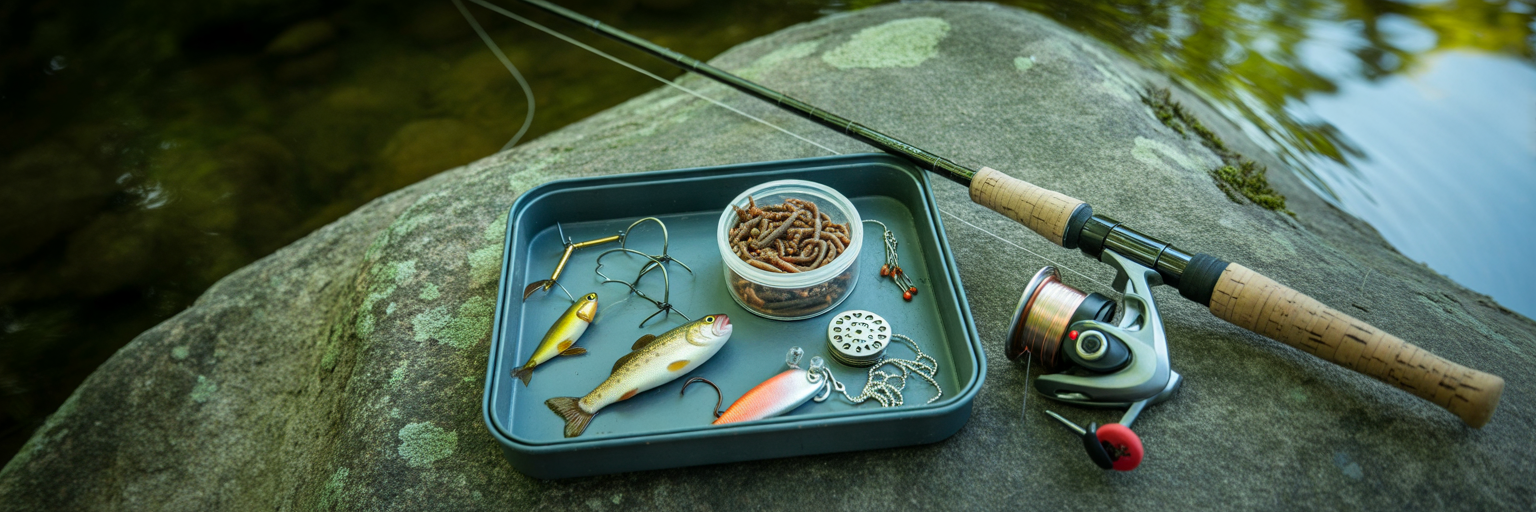
When throwing hardware in stained water, swap out narrow willow-leaf spinners for inline spinners equipped with wide Colorado blades. That rounded blade thumps hard against the current, sending out vibrations a trout can feel from several feet away. Bright gold or chartreuse spoons, small crankbaits with a tight kicking wobble, and bulky black or fluorescent pink streamers also stand out against a dark background. If you prefer bait or finesse presentations, whole nightcrawlers, cured salmon eggs, and garlic-scented dough baits match the exact scent profile of a flooded creek. You can also rig scented pink or chartreuse trout worms by following our guide on soft plastic lures to imitate natural worms washed out of the dirt.
Adjusting Your Rig and Retrieve Speed
Because a trout’s strike window shrinks to a foot or two in murky water, fast retrieves will blow right past their nose before they can react. Pinch an extra split shot onto your line so your bait gets down near the bottom in heavier seams, and slow your retrieve or drift speed way down. Review our breakdown of rod power and action to make sure your rod has enough backbone to handle heavier split shot rigs and pull big fish away from submerged shoreline brush. Make three or four repeated casts into the exact same pocket before moving on. Before you make your first cast into runoff, run through this quick rigging checklist:
- Upsize your leader to 6-pound or 8-pound test fluorocarbon or monofilament so you have the abrasion resistance needed around hidden limbs and rock edges.
- Add enough split shot weight to tick the bottom steadily without hanging up every second.
- Check your hooks and spinner blades after every few casts to clear away dead leaves, pine needles, and wood debris tumbling in the current.
- Rinse and dry your metal lures thoroughly after the trip, and follow these tips on how to extend the life of your fishing lures so fine abrasive silt does not ruin your swivels, blades, and hook points.
Safety Rules and Knowing When to Skip the Stream
Catching a heavy brown trout in stained water is a rush, but no fish is worth taking a swim in a flooded creek. Never step into high, fast, or opaque water where you cannot see your feet. Muddy runoff hides sudden drop-offs, shifting gravel bars, and rolling bowling-ball boulders that will knock your legs out from under you in seconds. Staying on the bank is the smartest play during high water, yet even the shoreline demands caution. Heavy rain saturates soil and erodes undercut streambanks from beneath, meaning a grassy ledge that held your weight last week can suddenly collapse into deep current. Keep an eye upstream as well, since rising crests frequently sweep heavy tree limbs and whole logs down the channel.
Part of being a seasoned angler is recognizing when to pack up and walk away. If there is an active flash-flood warning in the watershed, or if the stream looks like thick brown pea soup with clumps of white foam racing down the middle, skip the creek altogether. Keep a backup plan in your truck by pivoting to a nearby stocked lake, calm farm pond, or small impoundment where runoff settles quickly. With a little patience, a quick check of the local flow gauges, and short casts tight to the soft shoreline edges, you can turn a rainy weekend forecast into your best trout outing of the year.