
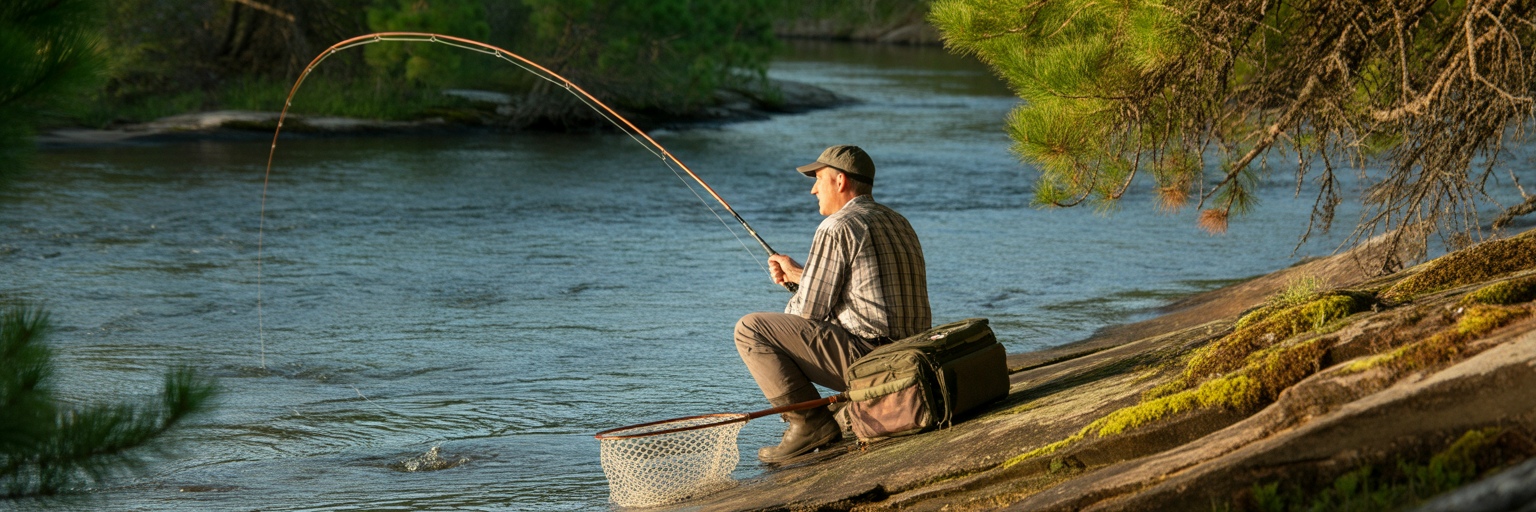
Because trout are cold-blooded fish, a two-degree shift in water temperature alters their feeding habits far more than any date on a calendar. Learning how to read these subtle environmental cues is the fastest way to turn a quiet day on the bank into a consistent catch.
Core Trout Fishing Tips Based on Water Conditions
The most practical trout fishing tips always start with water temperature and daylight hours, which scientists call photoperiod. Together, these two factors dictate a cold-blooded trout’s metabolism. Whether a fish is willing to sprint across a pool to smash a spinner or prefers to wait lazily for an easy drift comes down to how warm or cold that water feels.
Everything in a stream revolves around the balance between dissolved oxygen and current speed. Trout treat moving water like a grocery store conveyor belt. They tuck into slow-water pockets where they burn the fewest calories while watching helpless insects and baitfish drift right past their noses.
Overhead light and water clarity also govern how safe trout feel from aerial predators like herons and ospreys. As highlighted in state agency guidance from the Missouri Department of Conservation, clear water and low flows push trout to school in deeper holes, making polarized sunglasses essential for spotting submerged structure. Bright midday sun drives fish into heavy bank shade, whereas low light or a slight stain gives them the confidence to cruise the shallows. Keep in mind that rain-fed freestone streams warm and cool rapidly with passing weather, while dam-controlled tailwaters maintain steady temperatures all year. Before tying on a rig, clip a stream thermometer to your vest and take two minutes to check the water temperature first.
Reading the Water Across Streams, Rivers, and Lakes
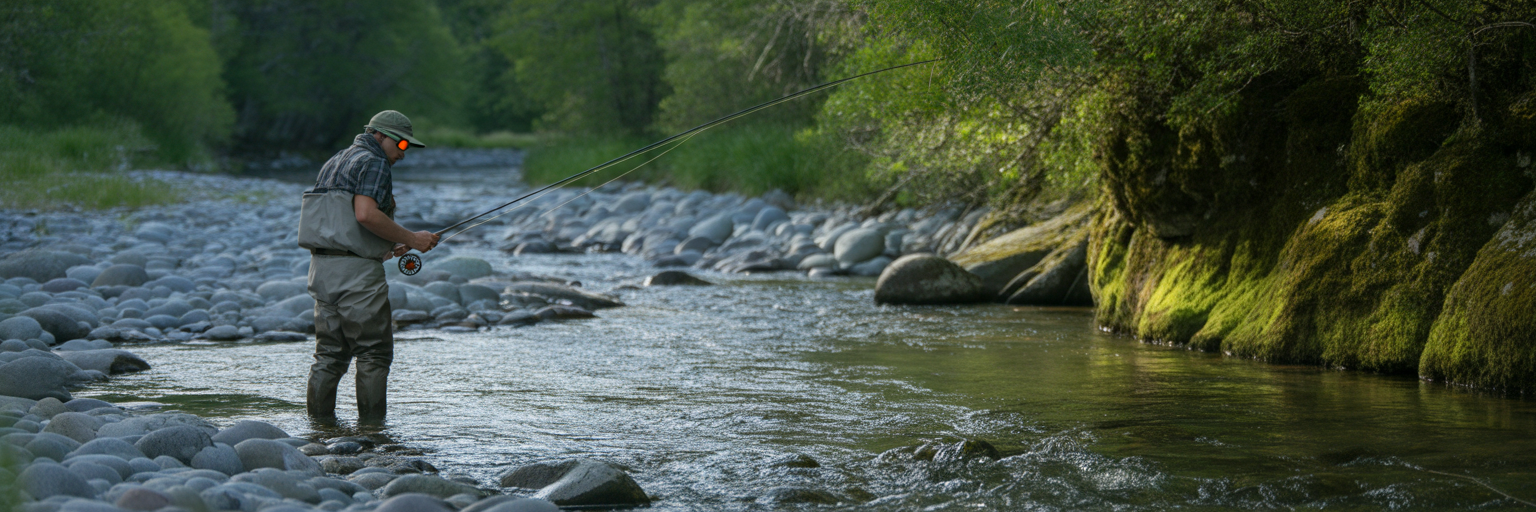
Once you know how water conditions affect fish behavior, your next step is locating the physical structure where trout actually hold. Moving streams and calm lakes require completely different search strategies because the food delivery system changes entirely.
Pinpointing Lies in Moving Streams and Rivers
Success in reading trout streams comes down to spotting subtle breaks in the flow. Look first for current seams where fast and slow water meet, creating a distinct line of bubbles and floating debris. Trout also love the soft cushion of water directly in front of or behind exposed boulders, along with deep swirling eddies and undercut grassy banks. By sitting just inches outside the heavy main current, a trout can rest effortlessly while darting out to intercept passing nymphs and minnows.
Locating Cruising Trout in Lakes and Ponds
Still waters like lakes and ponds lack a current conveyor belt, forcing trout to actively cruise along drop-offs, submerged timber, weed lines, and cold spring seeps to find meals. Watch your thermometer closely on lowland rivers and shallow ponds during warm months. When water temperatures climb toward 68 degrees Fahrenheit (20 degrees Celsius), dissolved oxygen drops sharply and trout must retreat to cold-water refuges like shaded tributary mouths or deep lake thermoclines. Before heading out, you can use our interactive fishing waters database to look up nearby mapped lakes and rivers by state or distance, see whether a waterway holds stocked or wild trout, and match your trip plan to the exact water type. Whenever you step up to unfamiliar water, scan for the intersection of overhead cover, comfortable current, and a steady food source.
Adjusting Your Approach Through All Four Seasons
Knowing where trout hide sets the stage, but mastering seasonal trout fishing means adjusting your target depth, retrieve speed, and lure profile as water temperatures rise and fall across the calendar. Here is how to figure out how to catch trout through all four thermal windows.
In spring, when water warms into the 42 to 55 degree Fahrenheit range, trout slide into active feeding lanes and warming shallow shelves. Keep your eyes peeled for cleared gravel nests, known as redds, where rainbow and cutthroat trout spawn. Always avoid walking on redds or casting directly to spawning fish so the next generation can thrive. Summer brings 55 to 65 degree water, pushing trout into bubbly, well-oxygenated riffles and deep pocket water. Focus your summer trips around early morning and late evening low-light windows when fish feed aggressively near the surface.
Fall cools the water back toward the 40s and 50s, triggering a heavy pre-winter feeding surge as brown and brook trout prepare to spawn. Larger profile lures, streamers, and active bait drifts shine right now. Once winter drops water temperatures below 42 degrees, a trout’s metabolism bottoms out. Slow your presentation way down and target deep, slow-moving pools with dead-drifted baits placed right in front of the fish’s nose.
Sudden spring cold fronts or high mountain elevations can easily blur these seasonal lines. Just as we explain in our guide on adjusting to spring cold fronts, a rapid temperature drop shuts down shallow chasers and demands a slower, deeper presentation.
| Season | Typical Water Temp | Primary Holding Zones | Best Presentation Speed and Depth |
|---|---|---|---|
| Spring | 42°F to 55°F | Active current seams, warming shallow shelves, tailouts | Moderate drift near bottom to mid-column |
| Summer | 55°F to 65°F | Oxygenated riffles, shaded banks, deep lake thermoclines | Brisk retrieves in low light; deep and slow at midday |
| Fall | 45°F to 58°F | Main river channels, tributary mouths, submerged cover | Active, erratic retrieves with larger profiles |
| Winter | 33°F to 42°F | Deep, slow-moving pools and soft inside bends | Dead-drifted right along the bottom |
When unexpected weather rolls through during your trip, run through this quick field checklist:
- Drop one level deeper into slower pools whenever a cold front arrives overnight.
- Cut your retrieve speed in half if trout follow your lure without striking.
- Downsize your bait profile during bright, high-pressure skies after a storm.
- Move to shallow, sun-warmed banks during brief afternoon warmups in early spring or late fall.
Setting Up Your Rod, Reel, Line, and Terminal Tackle
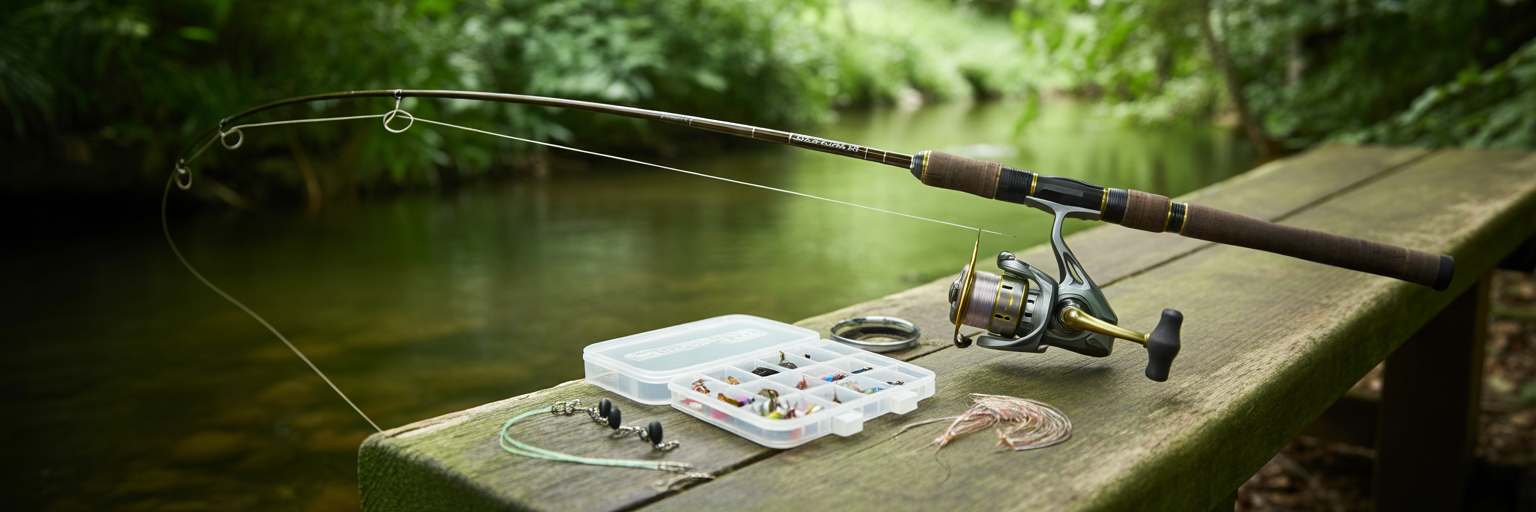
Matching your seasonal depth and speed adjustments is much easier when you leave bulky bass gear at home and build a balanced ultralight trout setup. For bank and stream spinning anglers, a 6-to-6.5-foot ultralight or light-action rod paired with a smooth 1000-to-2000-size spinning reel is ideal. As we break down in our foundational freshwater rod guide, this flexible rod length improves casting accuracy with tiny weights while absorbing sudden headshakes near the net. Spool your reel with 4-pound test monofilament or fluorocarbon line to reduce water drag in fast current and feel the lightest ticks.
If you want to try fly fishing, keep your starter kit simple. A 9-foot, 5-weight or 6-weight moderate-action fly rod paired with a weight-forward floating line handles everything from tiny dry flies and weighted nymphs to small streamers.
Follow these three steps to rig your spinning terminal tackle for a natural bottom drift:
- Tie on a light-wire hook: Use a size 8 to 12 single hook for live bait, or a small size 14 treble hook when molding floating dough bait.
- Space your split shot properly: Pinch one or two small split shot weights 12 to 24 inches above your hook so the weight ticks along the rocks while your bait floats naturally in the strike zone.
- Match leader strength to clarity: Drop down to a 2-to-4-pound fluorocarbon leader in gin-clear water to stay invisible, or step up to 6-pound test when fishing around heavy timber and stained high flows.
Before making your first cast of the morning, run your thumb and forefinger along the last three feet of line to check for tiny rock nicks and wind knots that cause heartbreak on a big fish.
Choosing Beginner-Friendly Baits, Lures, and Flies
With your rod rigged and balanced, the final piece of the puzzle is tying on an offering that matches what trout are eating right now.
High-Confidence Natural Baits and Lures
Some of the best trout baits for consistent action are natural and prepared classics like garden nightcrawlers, single salmon eggs, mealworms, and floating dough baits. Threading these onto a light-wire hook lets them tumble effortlessly with the current just like dislodged natural food. When you want to cover more water with artificials, tie on a 1/16-to-1/8-ounce inline spinner, a small casting spoon, a mini crankbait, or a 1-to-2-inch soft plastic trout worm rigged wacky style or on a tiny jighead. You can explore more ways to rig and twitch micro plastics through pocket water in our complete breakdown of soft plastic lures. Beginners who want a ready-made assortment can also grab a multi-species starter box like the PLUSINNO 137-Piece Fishing Lure Kit, which packs small spoons, spinners, and plastics into one convenient tray.
Always adapt your lure selection to water clarity and fishing pressure. On heavily pressured or clear streams, downsize your lures and lengthen your leader. When spring rain stains the water, switch to bright gold or fluorescent spinner blades that push heavy water. Much like the tactics shared in our muddy water lure guide, strong blade vibration helps fish track down your offering when visibility drops.
Three Foolproof Fly Patterns for Any Water
Fly anglers can cover the entire water column from bottom to surface by carrying just three reliable patterns:
- Beadhead Pheasant Tail Nymph (sizes 14 to 18): Drifts near the streambed to imitate the aquatic insect larvae that make up the bulk of a trout’s daily diet.
- Olive or Black Woolly Bugger (sizes 8 to 12): Stripped through mid-depth pools and runs to mimic swimming leeches, minnows, and fleeing crawfish.
- Elk Hair Caddis (sizes 14 to 16): Floats high on choppy currents for exciting surface strikes during evening insect hatches.
Turning Bites into Hookups and Practicing Safe Releases
Getting a trout to bite in moving water is only half the battle because they can inhale and spit out a drifting bait in a split second before you ever feel a tug on your rod tip. Instead of waiting for a heavy yank, watch the exact spot where your line enters the water. The moment your line twitches, hesitates, or stops abruptly during its drift, set the hook with a crisp upward flick of your wrist.
Take a second before casting to pinch down your hook barbs with needle-nose pliers, or buy barbless single hooks from the start. Barbless points actually penetrate faster on light line while making unhooking quick and painless.
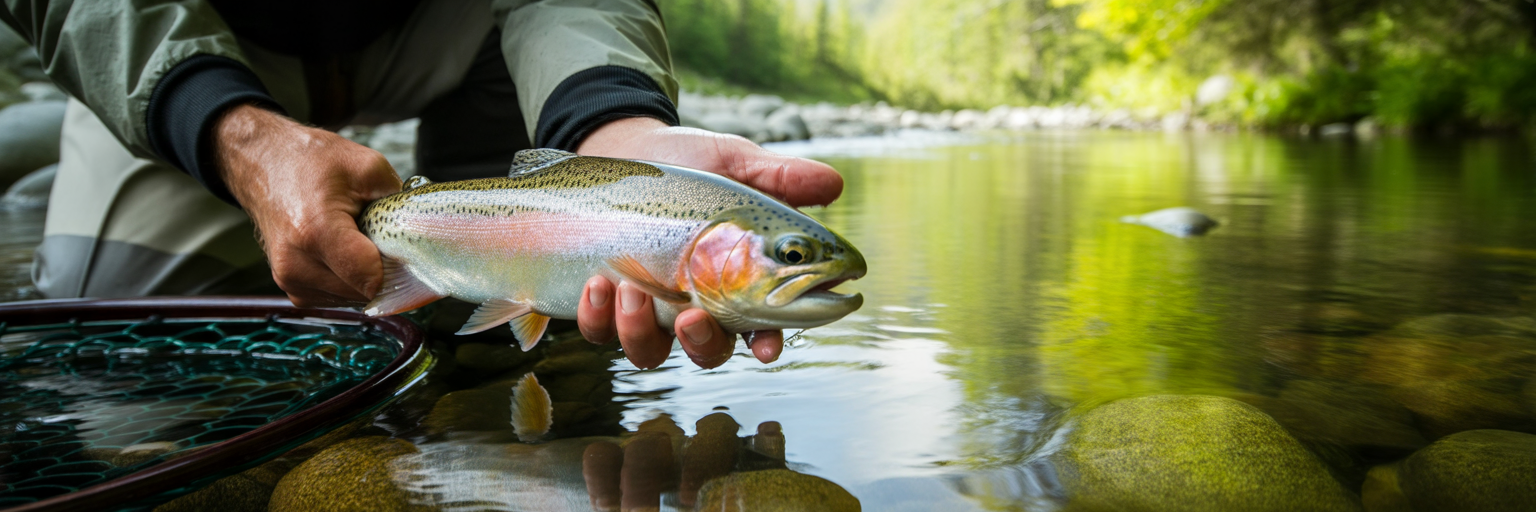
As outlined in the conservation guidelines from the South Carolina Department of Natural Resources, using barbless hooks, wetting your hands before touching a fish to protect its external mucus layer, and keeping total air exposure under 20 to 30 seconds greatly improves survival rates. Scoop your catch with a soft rubberized mesh net rather than dragging it onto dry bank rocks. When releasing a tired trout, hold it gently upright facing into a slow current until it kicks away strongly on its own, leaving your local fishery healthy and thriving for your next trip.