Prepared bait is not one recipe
Manufactured bait may float, sink, cling to a hook, or need a separate holder. Floating trout dough and catfish dip bait are useful examples of why the label matters. A jar of scented material does not tell you how to rig it or which fish it suits.
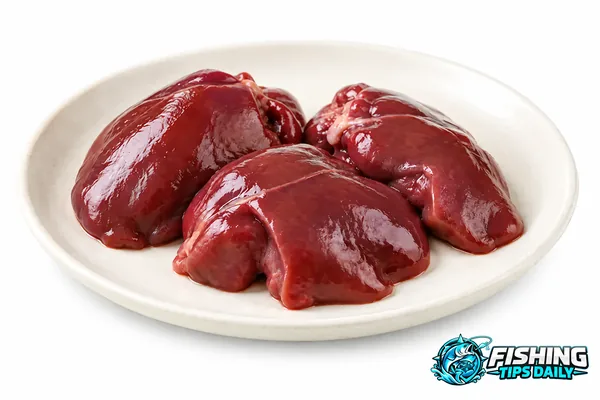
Chicken liver is included here as a familiar alternative, but it is natural bait rather than manufactured dough or punch bait. Keep that distinction in mind when reading rules that treat bait, scent, and artificial lures differently.
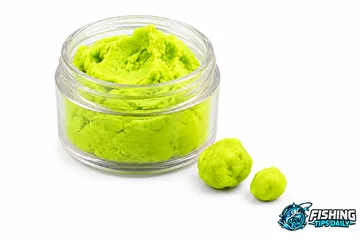
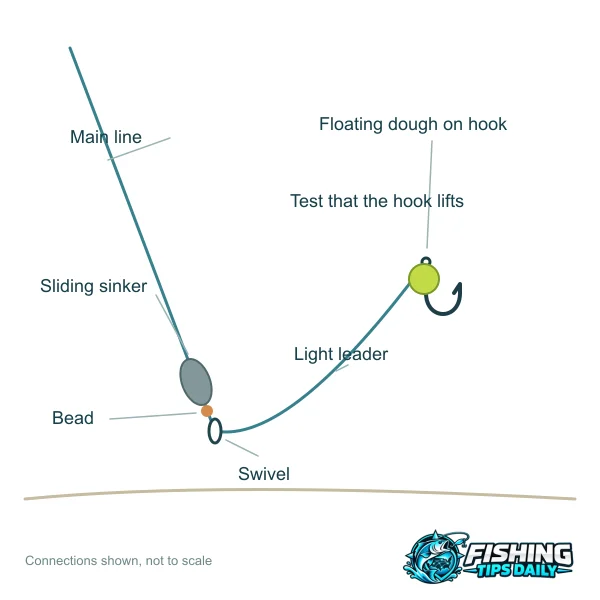
Floating dough: check the complete rig
A small portion of floating dough can lift a suitable hook above bottom on a leader behind a weight. Whether it actually rises depends on the amount of bait, the hook, and the leader. Test the baited hook in shallow water before assuming it floats.
The leader limits how far it can rise; it is not a precise depth guarantee in current or around cover. Where permitted, this can be a practical stocked-trout presentation over a relatively clean bottom. It is not a universal answer for wild trout or deep suspended fish.
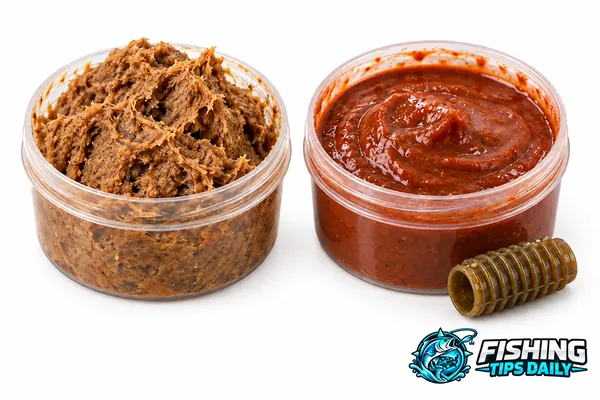
Punch bait and dip bait hold differently
Punch bait is usually firmer and often contains material that helps it cling. Dip bait is softer and typically needs a compatible tube, sponge, or other carrier. Use the manufacturer’s intended holder and a hook arrangement permitted on the water.
A forceful cast can shed bait. Start with a controlled cast and inspect the holder after a soak or missed bite. Warmth, current, and repeated casting change how long a load remains useful.
Store it for the next trip
Keep containers closed, follow storage instructions, and keep bait separate from food. Avoid leaving wrappers, bait tubs, or discarded holders on the bank. Strong scent does not replace a location where the target fish are feeding.