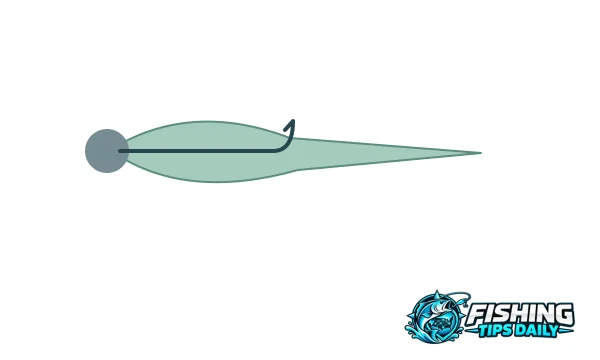
A jig is a weighted hook, not one particular lure
The head places weight close to the hook. Dress it with hair, a skirt, soft plastic, or permitted natural bait and it becomes a particular presentation. A tiny crappie jig and a heavy skirted bass jig share that idea without serving the same job.
Choose hook size and strength for the body and fish, then head shape and weight for the route. A bulky bass trailer on a fine crappie hook is a mismatch even if you can force it onto the shank.
Three places to fish a jig
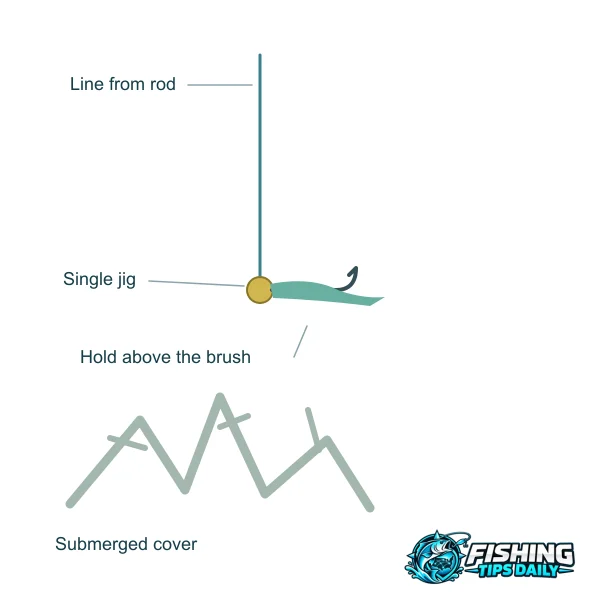
On bottom, short drags and controlled lifts help you feel transitions. Beside cover, a placed cast and measured fall can keep the offering close to a target. Above bottom, a steady swimming retrieve or nearly still vertical presentation reaches suspended fish.
The name “jig” does not require nonstop bouncing. Sometimes the useful movement is a small change, followed by enough time for the lure to return to the feeding level.
Weight buys control, but it also changes the fall
Light heads fall more slowly and can be easier for small fish to take. Heavier heads reach depth and resist wind or current better. Too much weight can wedge into rock, bury in silt, or pull a small plastic down faster than intended.
Keep the same target in mind when experimenting. If a lighter jig never reaches a deep school, its gentle fall is not helping. If a heavy one dives straight into brush, improve the path or reduce weight.
Read the line as well as the rod
A bite may feel like a tap, unexpected weight, or sudden slack during the fall. Watch the line and know roughly how long bottom should take to reach. React to a change with the hook-setting motion suitable for that hook and fish, avoiding an excessive jerk on soft-mouthed crappie.