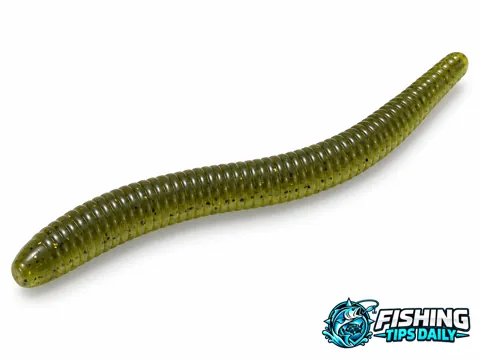
Soft-plastic wormIts rig controls the fall and hook position.Paddletail swimbaitThe tail moves during a swimming retrieve.
Shape is the beginning, not the whole presentation
A soft-plastic worm can fall weightless, slide behind a bullet weight, or sit above a drop-shot weight. A paddletail adds a kicking tail during movement. A craw or creature bait gives a jig trailer bulk and moving appendages. Tubes and compact stick baits offer other profiles for a smaller presentation.
The same body may appear on several rigs. Choose the route and depth first, then the body and hook arrangement that can travel there. A realistic-looking plastic rigged crooked can fish worse than a simple one rigged straight.
Texas, wacky, and jighead: choose the route
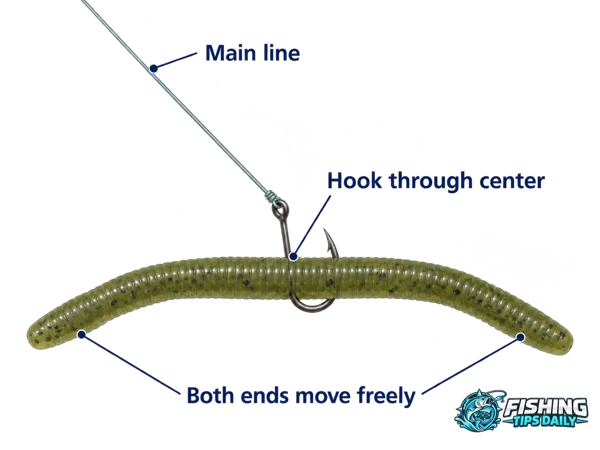
A Texas-rigged worm has its point lightly protected in the plastic and suits many cover situations. A wacky worm is hooked through the middle, or attached using a suitable ring system, so both ends move on the fall. Its exposed hook prefers a more open lane.
A jighead adds weight directly at the hook. Thread the plastic to lie straight with the hook exiting at the intended spot. Too much plastic bunched against the head or a bent body can spoil the action.
Use the fall as part of the retrieve
Many bites come while a plastic sinks. Watch where the line enters the water, control unnecessary slack, and allow the lure to reach the chosen level. Repeatedly snapping the rod can keep it moving above fish that would respond to a slower fall.
Weight changes speed and feel. Add enough to cast and control the lure, then decide whether more weight actually helps. A lighter weight may fall more naturally but becomes difficult to manage in strong wind or deep water.
Look after the soft material
Keep plastics in compatible packaging; some materials react when mixed. Discard torn bodies responsibly rather than leaving fragments in the water. Check that a damaged bait has not slid down over the hook bend.
Recognize the offering
See what you are tying on.
Soft-plastic worms
Flexible worm-shaped plastics that can be rigged several ways. The rig changes how the same bait falls and moves.
A useful starting situation
Bass beside wood, grass openings, docks, and quieter edges.
Give it the right action
Try a Texas rig around cover or a wacky rig in more open water. Let the bait fall, then use small lifts and pauses.
Paddletail swimbaits
A soft fish-shaped lure with a tail that kicks as it moves. Small and large versions serve different fish.
A useful starting situation
Searching a feeding depth or swimming beside an edge.
Give it the right action
Use enough jighead weight to reach the zone, then retrieve steadily. Scale the profile down for smaller fish.
Picture the next cast
Put the idea on the water.
These are starting situations to try, not reports of a guaranteed bite.
01
A bass beside a dock post
Present a weightless or lightly weighted worm down the shady side. Watch the fall before moving it. An open lane allows a wacky presentation; a snag-filled corner favors a protected hook.
02
Fish following bait along a point
Swim a paddletail at the feeding level using a jighead heavy enough to control. Count it down consistently so you can repeat a productive pass.
03
A rocky bottom with reluctant bites
Try a compact plastic on a suitable finesse head and move it in short, controlled steps. If it continually wedges between rocks, adjust the head shape, weight, or casting angle.
A practical starting routine
Make the first casts count.
Make one deliberate adjustment at a time so you know what changed.
Lay the hook against the plastic and mark mentally where it should exit.
Thread or skin-hook the body according to the rig, keeping the bait straight.
Test the fall and action at your feet before the first long cast.
After a bite or snag, straighten the body and check the hook point again.
Before you switch everything
A problem worth fixing.
Plastic spins instead of swimming
Re-rig it straight and check that the tail is not bent or trapped.
Repeatedly missing bites
Inspect the hook gap and how much plastic blocks it. Match the hook to the body.
No sense of where the lure is
Reduce slack, improve casting position, or increase weight only as much as needed.
See the arrangement
A closer look at the rig.
Texas rig: protected hook point for suitable coverWacky rig: a middle-hooked worm for open lanesDrop shot: hook above the weight
Illustrations show the arrangement; hook size, weight, and leader length must suit your fish, depth, cover, and local rules.