Skip to content
Know the tackle. Make the cast.

Crankbait Fishing Guide

Pick the running depth first. Then give the fish a reason to bite.

See practical examples ↓
Hard-bodied crankbait with a diving bill
Crankbaits · Representative illustration

A diving bill does more than change the shape

A lipped crankbait uses water pressure against its bill to dive and wobble. Body shape, bill design, line, retrieve speed, and casting distance all affect the path. The depth printed on a package is a useful starting point, not a guarantee that every cast reaches that number.

Watch a lure beside the bank before fishing it. Notice how quickly it rises when you stop and whether it tracks straight. That short check makes it easier to picture what is happening at the far end of a cast.

Four styles worth recognizing

Squarebills are often used for shallow cover and controlled contact with wood or rock. Rounded, longer bills appear on many deeper-diving models. Flat-sided bodies commonly have a tighter wobble; they still need a suitable running depth. Lipless crankbaits have no diving bill and usually sink, so countdown and retrieve speed become especially important.

Choose between those jobs before choosing a paint pattern. A deep diver that continually buries in shallow muck is a poor match, even if its color looks exactly like the local forage.

Contact should be deliberate

Occasional contact with a clean, hard bottom can change a crankbait’s rhythm. Ease off when it starts digging or lodging rather than forcing it through. A floating lure may back away when tension is relaxed; a sinking lipless bait behaves differently.

Treble hooks grab vegetation, clothing, and landing nets readily. Use a lure that stays above thick weeds or fish an outside edge. Check hook points and the first few feet of line after repeated contact.

Where jerkbaits fit

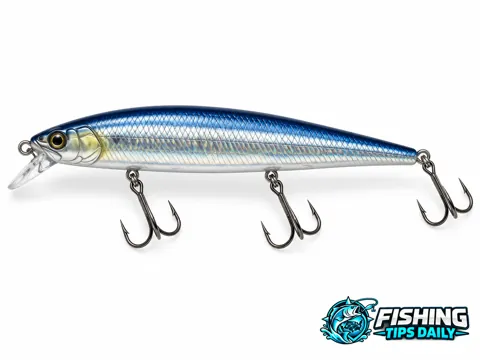
A hard minnow-shaped jerkbait belongs in the same broad hard-bait conversation, but its useful rhythm is often twitch, pause, and recover slack. Some float, some suspend, and some sink. Test the actual lure rather than assuming the word “jerkbait” tells you what it does at rest.

Picture the next cast

Choose a running path, not just a color.

These are starting situations to try, not reports of a guaranteed bite.

01

A rocky bank for bass

Start with a shallow runner that occasionally ticks rock. Cast at an angle along the bank to keep it in the useful depth longer. If every retrieve ends with weeds, move outward or use a shallower-running model.

02

A reservoir ledge

Choose a diving range that can reach the top or shoulder of the ledge. Make a long enough cast for the bait to dive before crossing it. If it never reaches the zone, change the lure or presentation instead of just cranking harder.

03

Walleye above bottom

Fish the level of the baitfish or marked fish. A plug scraping bottom can pass well beneath a suspended school. Repeat a productive speed and path so the next pass tests the same idea.

Recognize the offering

See what you are tying on.

Hard-bodied crankbait with a diving bill

Crankbaits

A hard-bodied lure whose bill helps it dive and wobble. Different designs work at different depths.

A useful starting situation
Covering a depth zone while searching for active bass or walleye.
Give it the right action
Choose a running depth for the area, then retrieve or troll with a repeatable pace. Ease off when it starts wedging into cover.
Slender minnow plug with a diving bill and treble hooks

Jerkbaits & minnow plugs

Slender hard lures that suggest a small fish. Some float, some suspend, and others sink.

A useful starting situation
Fish following bait along points, clear edges, or open feeding lanes.
Give it the right action
Alternate controlled twitches and pauses, or use a steady retrieve when that suits the model. Watch its action beside you.
A practical starting routine

Make the first casts count.

Make one deliberate adjustment at a time so you know what changed.

  1. Check the lure’s buoyancy, running range, hook condition, and line tie. Match its weight to the rod’s lure rating.
  2. Cast beyond the useful stretch and retrieve until the lure settles into its working depth.
  3. Keep a steady rhythm first. Add a pause or change of angle near a bottom transition.
  4. Repeat the cast that gets attention. Change depth or speed before collecting more colors.
Before you switch everything

A problem worth fixing.

Lure rolls or pulls sideways

Check for tangled hooks, debris, and damage. Follow the maker’s tuning instructions if the line tie needs adjustment.

Every cast snags

Your depth or route may be wrong. Raise the presentation or switch to a cover-friendly single-hook offering.

Fish shake free beside the boat

Avoid sudden slack. Use a controlled rod bend and have the landing net ready.

Check the rules for your exact water before choosing bait, hooks, or a fishing method.

✉Join the Fishing Tips Daily newsletter waiting list

Our newsletter is not sending yet. Leave your email if you would like to hear from us when it launches.

By joining, you agree to receive our newsletter when it launches. To request removal before then, contact us. Read our privacy policy.