Skip to content
Know the tackle. Make the cast.

Spinnerbait & Inline Spinner Guide

Two kinds of spinning blades. Two different ways to fish them.

See practical examples ↓
Bent-wire spinnerbait with blades above a skirted hook
Spinnerbaits · Representative illustration
Recognize the offering

See what you are tying on.

Bent-wire spinnerbait with blades above a skirted hook

Spinnerbaits

A bent-wire lure with spinning blades above a weighted, usually skirted hook. Flash and vibration help fish notice it.

A useful starting situation
Bass along weed edges, wood, and shallow banks with some color or chop.
Give it the right action
Use a steady retrieve that keeps the blades working. Change rod angle or speed to control depth.
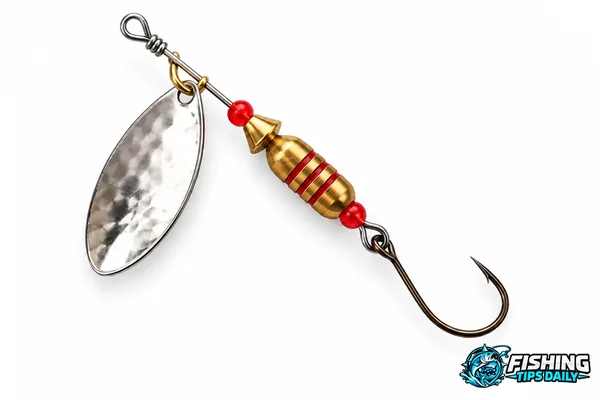
Inline spinner with a blade rotating around a straight shaft

Inline spinners

A blade rotates around a straight wire shaft. It is a different design from the bent-wire spinnerbait above.

A useful starting situation
Searching streams and lake margins; smaller versions suit smaller fish.
Give it the right action
Retrieve just fast enough for the blade to turn and experiment with sink time. Keep control as current changes.

Start with the frame

A wire-frame spinnerbait carries its blades on an arm above a weighted hook, usually dressed with a skirt. An inline spinner carries a rotating blade around a straight shaft, with a hook behind the body. They both flash, but they do not pass through cover in the same way.

The wire arm helps a spinnerbait negotiate some wood and vegetation. It is still possible to hang one up. An exposed treble on an inline spinner is generally better suited to an open route or the edge of cover.

Blade shape gives you a starting clue

Long willow-shaped blades typically emphasize flash and offer less resistance than a broad Colorado-style blade of similar size. Rounder blades create more pull and help you feel a slower retrieve. Blade size, weight, and the whole lure design matter too.

You do not need a complete blade collection to begin. Pick a lure you can cast accurately and keep at the intended level; learn its slowest reliable working speed beside the bank.

Inline spinners: let the blade work

Start the blade with a short pull if necessary, then settle into a steady retrieve. A blade that turns needs less rod movement than many beginners give it. In current, direction matters: moving upstream, across, or downstream changes water flow past the blade.

For trout in moving water, an across-current cast can let the spinner swing through a seam. Keep it clear of the bottom and follow the lure with the rod. A quality swivel may help manage twist where appropriate, but first check that the whole lure is not tumbling.

A spinnerbait can swim at several levels

Bring it in promptly with a higher rod angle for a shallow path. Let it settle and slow the retrieve for a deeper one, while keeping the blades turning. Add a plastic trailer only when its extra profile or action serves a purpose; make sure it sits straight.

A practical starting routine

Make the first casts count.

Make one deliberate adjustment at a time so you know what changed.

  1. Identify the style: bent wire frame or straight inline shaft. Choose an open casting lane appropriate to its hook arrangement.
  2. Make a short test retrieve where you can see the blade turn.
  3. Cast across a useful edge and hold a repeatable speed and rod angle.
  4. After weeds or a missed strike, inspect the blade and hooks before the next cast.
Picture the next cast

Put the idea on the water.

These are starting situations to try, not reports of a guaranteed bite.

01

Bass along a windy weed edge

Cast parallel to the edge with a wire-frame spinnerbait. Keep the lure outside the thickest growth and just above the vegetation. A short hesitation beside a gap changes the rhythm without moving far from the target.

02

A small trout stream

Use a compact inline spinner that your light rod casts comfortably. Work an open current seam, adjusting speed so the blade turns without dragging the lure into the stones.

03

Crappie on a shallow margin

Try a small inline spinner along an open edge. If the fish hold still beside brush and refuse to chase, a small jig or minnow that stays in place is an easier fit.

Before you switch everything

A problem worth fixing.

Blade stops vibrating

Remove weeds or a fouled skirt and check the swivel or clevis. Increase speed slightly if the lure is stalling.

Lure rides too high

Slow down, lower the rod, allow more settling time, or use an appropriately heavier model.

Line develops coils

Check for a rotating lure body and damaged components. Remove twist and use a suitable swivel when needed.

Check the rules for your exact water before choosing bait, hooks, or a fishing method.

Join the Fishing Tips Daily newsletter waiting list

Our newsletter is not sending yet. Leave your email if you would like to hear from us when it launches.

By joining, you agree to receive our newsletter when it launches. To request removal before then, contact us. Read our privacy policy.