
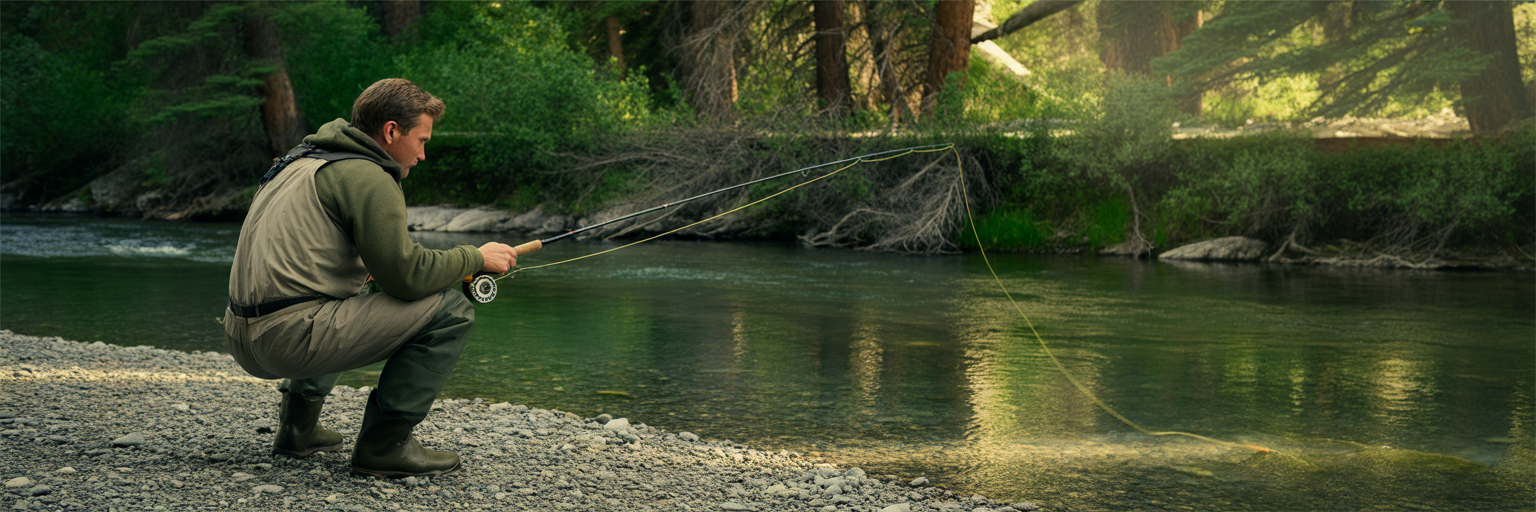
Trout possess downward and forward vision alongside a keen ability to detect ultraviolet light, allowing them to spot an unnatural hook or thick fishing line from twenty feet away in low, gin-clear flows. When visibility is high, your margin for error disappears, and fooling a pressured fish requires matching every detail of your presentation to the real forage swimming in that stream.
Why a Clear-Water Trout Lure Guide Matters for Finicky Fish
Nothing tests your patience quite like watching a heavy brown or rainbow shadow your bait all the way to the bank on an Ozark spring creek or a Rocky Mountain tailwater, only to peel off at the very last second. In low, transparent water, the advantage shifts entirely to the fish. Because trout have all the time they need to inspect an offering before burning calories on a chase, oversized hardware, loud blade vibrations, or visible line will instantly blow your cover. Putting this Clear-Water Trout Lure Guide to work on your home water starts with a simple shift in mindset.
Learning how to catch wary trout means trading aggressive, noisy presentations for stealth, natural finishes, and downsized profiles. At Fishing Tips Daily, we built our connected fishing database to help you match your local waterway and resident species with the exact tackle required to turn those frustrating follows into solid hookups. Before you even tie on a bait, reviewing our seasonal trout fishing tips will help you adjust your expectations and gear box to changing water clarity.
You also need to understand how fish use high-visibility currents to set up feeding lanes and inspect drifting food, which is why we recommend studying our guide on how to read trout streams before your first cast. Ultimately, consistent success in gin-clear streams and lakes comes down to one rule: you must fool their eyes first so you can trigger their predatory instincts second.
Matching Lure Size and Color to Natural Forage
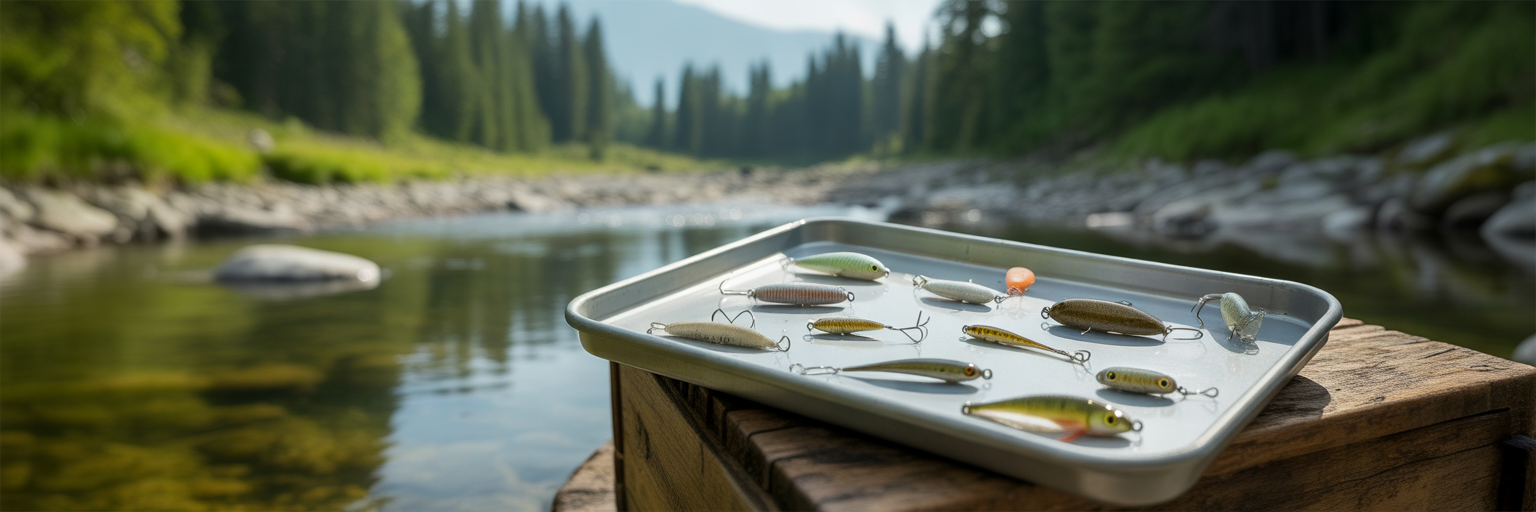
Once you spot where fish are holding, your next decision at the tackle box is picking a profile and color that blend seamlessly into the local food web.
Downsizing to Ultralight Profiles
When water levels drop and clarity peaks, standard bass-sized hardware looks like an alien object to a wild trout. You need to scale down to compact profiles under two inches and rely on ultralight lures for trout in the 1/16 oz to 1/32 oz range, or even 1.2-gram micro-spoons. These tiny offerings enter the water with a whisper rather than a splash, preventing the sudden pressure waves that send spooky fish bolting for undercut banks.
Choosing Natural Finishes for Sun and Shade
Your color palette should mirror the actual bugs and baitfish living among the rocks. Stick to muted, organic finishes like olive, dark brown, translucent smoke, and matte black to mimic aquatic nymphs, sculpins, and juvenile minnows. When fishing metallic blades or spoons, let the sky dictate your metal choice. Tie on subtle silver or nickel on bright, sunny days to replicate the natural flash of real baitfish scales, and switch to muted gold or copper when fishing shaded timber or under heavy cloud cover.
Save the neon chartreuse, hot pink, and firetiger patterns for muddy runoff, which you can learn to target in our guide on timing the trout bite after rain in streams. In clear water, those loud colors usually alarm wild fish, with one notable exception: a tiny fluorescent orange or pink accent dot on an otherwise natural spoon can trigger an automatic reaction strike from newly stocked trout raised on hatchery pellets.
As a quick rule of thumb before your first cast, look down at the streambed in knee-deep water. If you can count the individual pebbles on the bottom, start with a 1/32 oz lure in a color that matches those exact rocks.
| Light and Water Condition | Target Forage Imitated | Recommended Lure Weight and Length | Best Finish and Color Pattern |
|---|---|---|---|
| Bright Sun, Gin-Clear Riffles | Juvenile Minnows, Dace | 1/32 oz to 1/16 oz (1 to 1.5 inches) | Subtle Silver, Nickel, Translucent Smoke |
| Overcast Skies or Shaded Banks | Sculpins, Aquatic Nymphs | 1/16 oz or 1.2g Micro-Spoon (Under 2 inches) | Muted Gold, Copper, Olive, Dark Brown |
| Deep Clear Pools, Heavy Pressure | Midges, Tiny Fry, Worms | 1/64 oz to 1/32 oz (1 inch) | Matte Black, Olive Green, Natural Tan |
| Clear Water, Newly Stocked Fish | Hatchery Pellets, Small Baitfish | 1/16 oz (1.5 inches) | Natural Silver or Brown with Tiny Orange Dot |
Best Spinners, Spoons, and Minnow Baits for High Visibility
Getting the size and color right solves half the puzzle, but the mechanical action of your hardware determines whether a trailing trout actually opens its mouth.
Inline Spinners and Thin-Profile Spoons
Picking the best trout lures clear water anglers rely on means paying close attention to blade resistance and metal thickness. When selecting inline spinners, look for compact Colorado or Indiana blades that start revolving the instant they touch the current. They allow a slow, controlled retrieve without putting out an aggressive, unnatural thumping vibration. Similarly, thin-profile spoons and micro-spoons excel because their gentle wobble and fluttering fall imitate a dying minnow without overwhelming a cautious trout’s sensitive lateral line.
Minnow Plugs and Subtle Soft Plastics
When targeting larger, sight-feeding predators in deeper runs, reach for 1.5-to-2-inch floating or suspending minnow-style hard baits. Micro-crankbaits and jerkbaits painted in realistic juvenile rainbow, brown trout, or dace patterns look identical to easy meals. However, in heavily pressured tailwater pools where fish have seen every piece of metal and hard plastic on the market, switching to unweighted micro-jigs, three-inch trout worms, or tiny tube baits rigged on light wire hooks will keep your rod bent. You can explore rigging options in our breakdown of what you need to know about soft plastic lures.
If you are just building out your vest, you do not need to buy high-end custom tackle right away. You can easily pull natural-finish inline spinners, small spoons, and soft grubs from a versatile starter assortment like the PLUSINNO 137-Piece Fishing Lure Kit before investing in specialized micro-tackle. Match your lure category to the water in front of you using these guidelines:
- Inline Spinners (1/32 to 1/16 oz): Best for shallow riffles and moderate currents where blades can spin cleanly above the rocks.
- Thin-Profile Micro-Spoons (1g to 2g): Ideal for deeper glides and calm tailouts where a fluttering, vertical drop draws strikes.
- Suspending Minnow Plugs (1.5 to 2 inches): Perfect for working along submerged logjams and deeper undercut banks where big brown trout ambush prey.
- Soft Plastic Micro-Jigs (1/64 to 1/32 oz): The top producer for slow, deep, heavily pressured pools where trout refuse fast-moving hardware.
Retrieve Adjustments That Trigger Strikes Without Spooking Trout
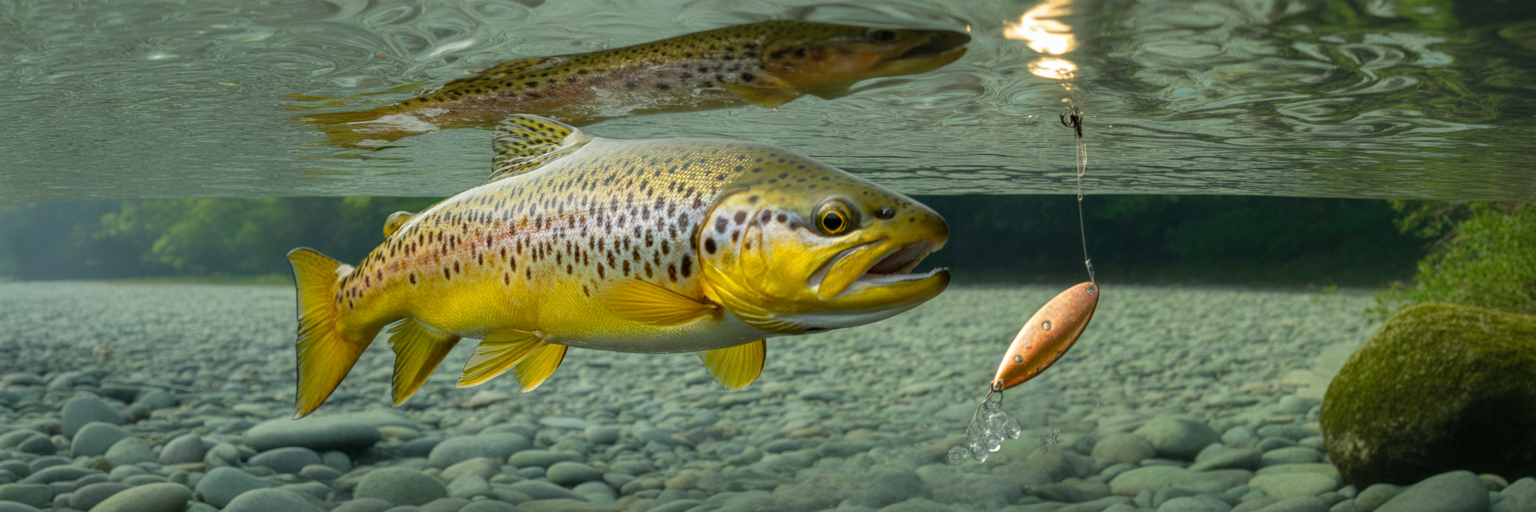
Tying on a realistic bait will not help if you crank it back like a buzzbait. A steady, high-speed straight retrieve looks completely mechanical in clear water, giving an inspecting trout plenty of time to spot your hook or line while following behind the lure. Applying a few proven trout spinner retrieve tips and cadence adjustments breaks up that unnatural straight line and forces fish to make a split-second decision.
- The Lift-and-Fall Spoon Retrieve: Cast your ultralight spoon across the current and impart two sharp wrist twitches so the metal darts upward. Immediately drop your rod tip slightly to create controlled slack, letting the spoon flutter erratically downward like a stunned baitfish. Stay alert, because most strikes happen right on the drop.
- The Swing-and-Pause Spinner Technique: Pitch your inline spinner at a 45-degree angle upstream and reel just fast enough to keep the blade ticking as the water carries it near the bottom. As the lure swings past midstream boulders or shaded undercuts, briefly stop turning the handle so the spinner helicopters down into the strike zone.
- The Twitch-and-Freeze Minnow Cadence: Work suspending minnow plugs with short, erratic snaps of the rod tip followed by a full three-to-five-second pause. That dead stop leaves the bait hovering right in the trout’s face, which is almost always the exact moment a following fish commits.
Because you can see the action unfold in clear water, watch the fish’s body language closely. If a trout charges hard and turns away, slow your cadence and lengthen your pauses on the very next cast.
Stealth, Casting Distance, and Line Setup on Clear Water
Even the most lifelike retrieve fails if the trout spots your shadow on the bank or sees a heavy monofilament line dragging through the pool.
Ultralight Rods, Leaders, and Direct Knots
Successfully fishing clear trout streams requires launching tiny 1/32 oz baits far enough to stay outside the fish’s window of vision. Pair a responsive ultralight spinning reel spooled with 2-to-4-pound test main line with the right blank; our guides on rod power and action and how to choose rod length will help you match a shorter 5.5-foot rod to brushy creeks or a 7-foot rod to open tailwaters. Always tie on a four-foot section of 2-to-4-pound fluorocarbon leader (3X to 6X tippet), which has a refractive index nearly identical to water.
Ditch bulky snap swivels entirely, as metal snaps ruin the balance of tiny baits and alert line-shy fish. Tie directly to your inline spinners with a tight improved clinch knot, and use a non-slip loop knot for micro-spoons and minnow plugs to give them maximum side-to-side freedom.
Stream Approach and Field Checklist
Treat every clear pool like you are stalking wild game. Wear drab earth tones like olive, tan, and gray, stay low to keep your silhouette off the horizon, and use streamside brush to break up your outline. Work your way upstream whenever possible so you approach from behind the fish’s blind spot.
Of course, crouching low over uneven boulders and wading against cold, rocky currents for six hours takes a real physical toll on your knees and lower back. To keep your legs fresh for multi-day trips, as highlighted in Personal Recovery Lab’s guide to using PEMF therapy to enhance athletic recovery, targeted post-trip recovery routines can help ease sore muscles before you hit the water again. Before making your first cast into a clear run, run through this quick mental checklist:
- Stealth Approach: Are you staying low, utilizing bank cover, and casting upstream behind the fish?
- Leader Check: Is your 2-to-4-pound fluorocarbon leader free of nicks and tied directly to the lure without a snap swivel?
- Natural Lure Choice: Does your bait’s size and finish match the bottom color and current sky conditions?
- Erratic Retrieve: Are you adding pauses, drops, and twitches to prevent a robotic straight-line presentation?