
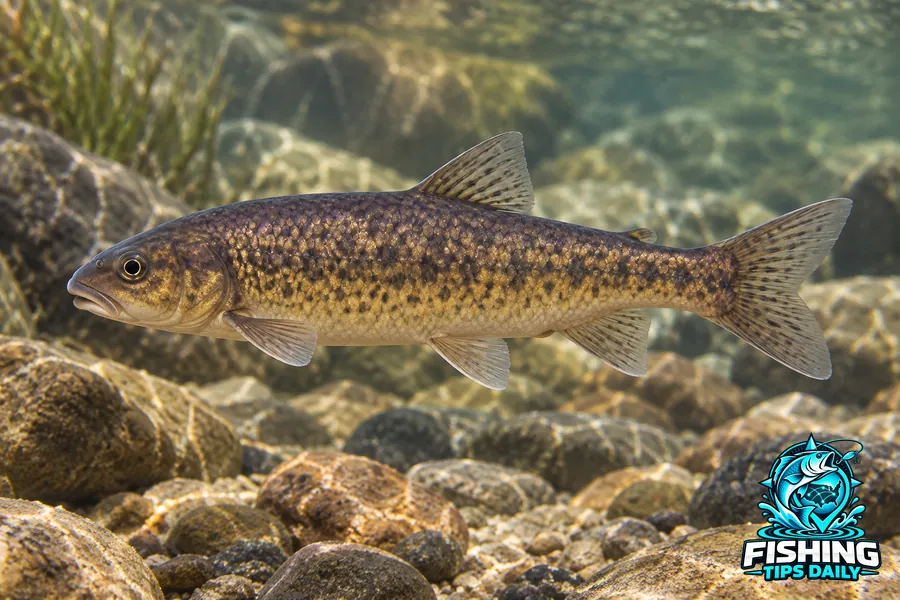
Southwestern Range
The range includes northern Mexico and limited southwestern United States localities, including the Big Bend region. Those scattered United States records should not be expanded into a continuous range across all intervening desert streams. Preserve the exact drainage.
Bottom Feeding
Adults use rocky riffles and nearby pools and feed largely on diatoms, algae and other material associated with the substrate. This supports a grazing description. Habitat and food together distinguish the account from an exclusively insect-eating minnow profile.
Pits and Length
Males move small gravel with the snout or mouth while constructing spawning pits and defend territories. Eggs are left after spawning. The compiled maximum is sixteen centimeters total length, compared with a common value of 8.3 centimeters; the pit itself is a separate structure, not a fish-size measurement.
Separate Nest Building from Egg Care
A male can construct and defend a spawning site without guarding the eggs afterward. Keep those stages distinct.
All Lakes With Mexican Stoneroller
Browse lakes and reservoirs with documented Mexican Stoneroller records, listed alphabetically. Records do not establish current abundance or public access. Check the evidence and managing authority for the water you choose.
No published lakes are currently linked to this species in our confirmed records.