
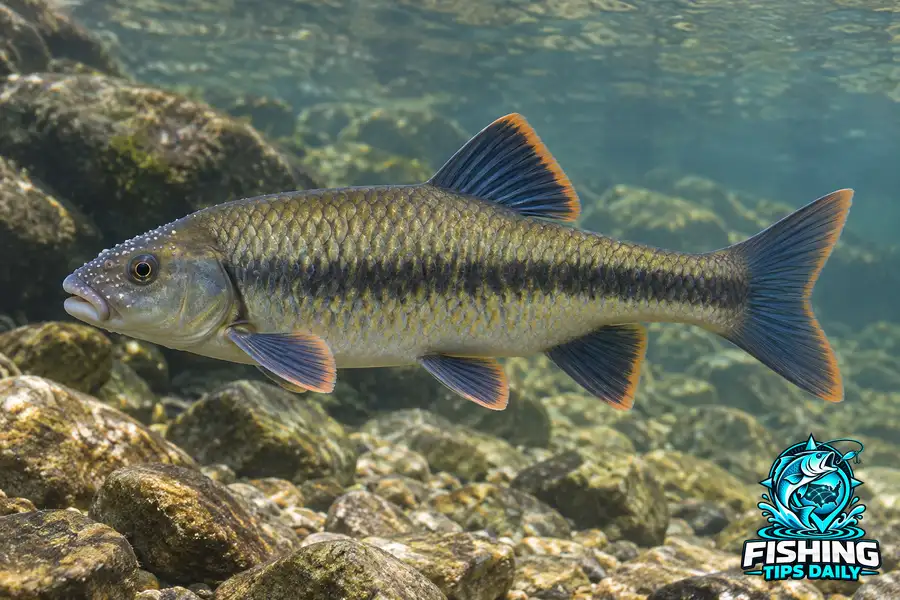
Size and Weight
The reported maximum total length is 16 cm, approximately 6.3 inches. This measurement includes the tail fin. A dependable maximum individual weight was not found in the accessible species material, so no weight is calculated from length.
Habitat and Range
Headwaters, creeks and small rivers with rocky riffles and runs provide habitat; fish also occur in some pools. Its range includes the Apalachicola and Oconee drainages and portions of several nearby systems in Georgia and Alabama. A drainage record does not establish occurrence in every lake or stream within that watershed.
Natural Food
A digestive study included Bluefin Stoneroller among four herbivorous Campostoma species. Enzyme activity and nutrients changed along their intestines in ways consistent with processing food during passage through the gut. The work supports a plant-feeding description without implying that every item eaten is plant material.
Fishing and Observation
No species-specific bait or lure recommendation was verified. Its feeding biology should not be translated into an unsupported recommendation to fish with vegetation. Observations of small fishes feeding in shallow runs are useful, but locality and identifying characters are still needed to distinguish related stonerollers.
Built to Process a Plant-Based Diet
The study found little evidence of extensive fermentation in these stonerollers. Their own digestive enzymes help process food as it moves through the intestine. Plant-feeding fishes do not all rely on the same digestive strategy.
All Lakes With Bluefin Stoneroller
Browse lakes and reservoirs with documented Bluefin Stoneroller records, listed alphabetically. Records do not establish current abundance or public access. Check the evidence and managing authority for the water you choose.
No published lakes are currently linked to this species in our confirmed records.