
Identification
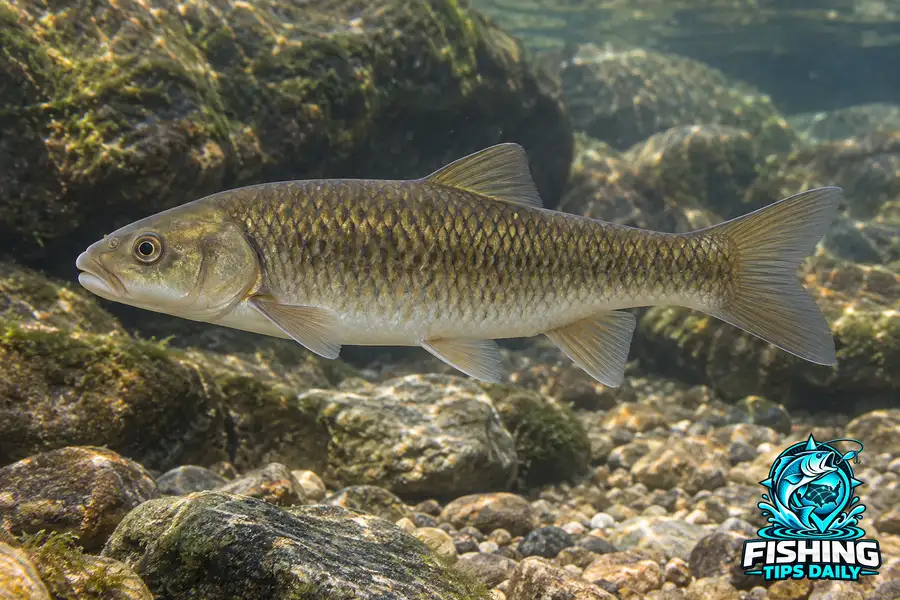
A flattened shelf on the lower jaw is the key feeding feature. Small eyes and a brownish body accompany an appearance that can seem unremarkable until the fish turns and flashes in a feeding school.
Interpreting Size
The 22-centimeter reference is an older reported maximum. Missouri describes fish reaching about eight inches, with most substantially smaller. Keep the location and measurement method with any unusually large observation.
Food and Stream Habitat
Stonerollers graze algae and associated material from firm surfaces; young fish use smaller foods. Rocky and bedrock streams provide extensive feeding areas. In spring, breeding males excavate gravel nest pits, adding another reason bottom conditions matter.
Watch for Feeding Flashes
A fish turning against a stone may expose a bright flank. Watching a shallow riffle quietly can reveal a feeding group that was difficult to see from a quick glance.
All Lakes With Central Stoneroller
Browse lakes and reservoirs with documented Central Stoneroller records, listed alphabetically. Records do not establish current abundance or public access. Check the evidence and managing authority for the water you choose.
Showing 1–17 of 17 lakes · Page 1 of 1
- Baw Beese Lake Hillsdale, MI
- Big Stone Lake Big Stone, MN
- Byram River Reservoir Western Connecticut, CT
- Carpenter Lake Hillsdale, MI
- Chippewa Lake Douglas, MN
- Del Clark Yellow Medicine, MN
- Elk Lake Sherburne, MN
- Hemlock Lake Hillsdale, MI
- Houghton Lake Roscommon, MI
- Lake Huron Alcona, MI
- Lake of the Woods Lake of the Woods, MN
- Lake Sylvan Yellow Medicine, MN
- Little Chippewa Lake Douglas, MN
- Long Lake Cass, MI
- Long Lake Hillsdale, MI
- Pine Lawn Mower, MN
- Round Lake Aitkin, MN