
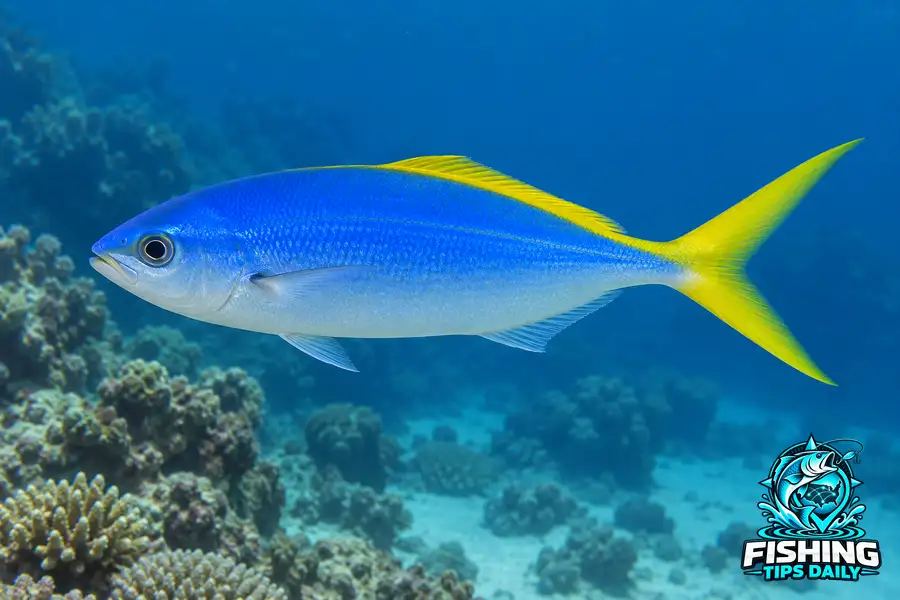
Identification
The yellow tail and upper rear body contrast with blue sides and a pale underside. A dark mark occurs near the upper base of the pectoral fin. The extent of yellow changes with size and region, so a photograph should be checked for the whole color pattern. This tropical fusilier is distinct from Blue Grenadier, a different fish sometimes sold under a similar common name.
Size and Weight
The reported maximum total length is 40 cm, approximately 15.7 inches. A common standard length of 26.6 cm, or 10.5 inches, excludes the tail fin. These two figures should not be compared as though their measurement endpoints were identical. A dependable maximum individual weight was not established.
Habitat and Natural Food
Schools feed in open water near coral reefs, especially lagoons. They pick zooplankton from the water column and can mingle with other fusilier species. A large mixed school therefore does not demonstrate a large population of this species alone.
Spawning and Fishing Context
Adults gather at reef channels and spawn near the surface during outgoing tides. Observations describe spawning around sunset near the full moon. Drive-in nets are a documented harvest method, but the available evidence does not establish a preferred hook bait or artificial lure.
A School with a Spawning Schedule
The timing of reproduction involves more than the season. Observed aggregations combined a particular lunar period, sunset and outgoing water at reef channels. That pattern describes the observations; it is not a promise that every school spawns at every full moon.
All Lakes With Blue Fusilier
Browse lakes and reservoirs with documented Blue Fusilier records, listed alphabetically. Records do not establish current abundance or public access. Check the evidence and managing authority for the water you choose.
No published lakes are currently linked to this species in our confirmed records.