
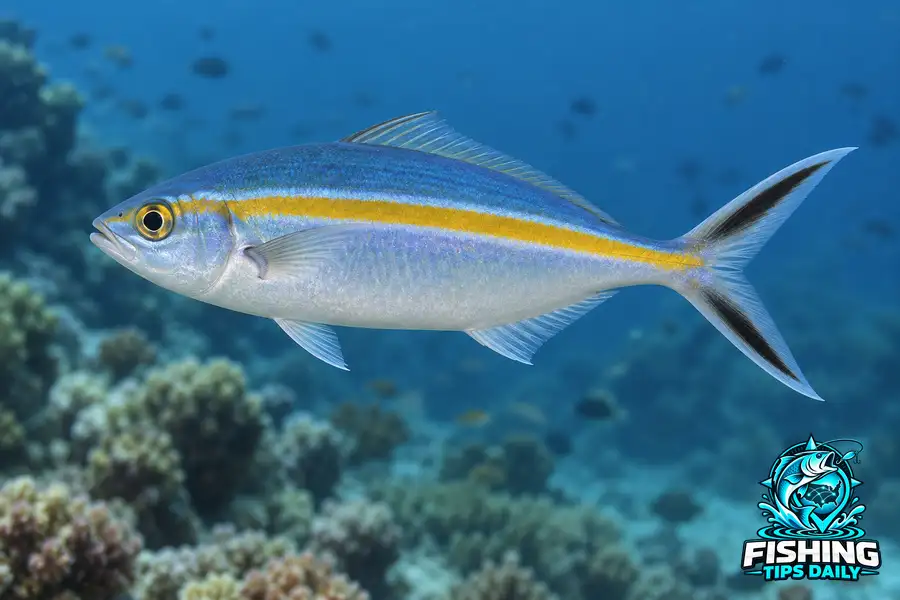
Color Pattern
The upper body is blue, becoming pale below, with a gold stripe bordered by lighter and bluish tones. Dark markings follow both caudal lobes. A side photograph that preserves the tail can reveal more than an image focused only on the stripe.
Range and Schools
The species occurs from eastern Africa and the Red Sea through the Indo-Pacific toward Samoa, Japan and New Caledonia. It forms schools around coastal lagoons and seaward reefs, sometimes with other fusiliers. A mixed school should not be assumed to contain a single species.
Reproduction and Size
Spawning produces small pelagic eggs. The compiled maximum is 45.4 centimeters fork length, while a separate published weight reaches 1.6 kilograms. These measurements need not come from the same fish, and fork length differs from measurement to the longest tail tip.
Check the Tail Streaks
The golden stripe is conspicuous, but dark markings on both tail lobes help refine identification among similarly colored schooling reef fishes.
All Lakes With Goldband Fusilier
Browse lakes and reservoirs with documented Goldband Fusilier records, listed alphabetically. Records do not establish current abundance or public access. Check the evidence and managing authority for the water you choose.
No published lakes are currently linked to this species in our confirmed records.