
Bass fishing
Read Largemouth Bass Behavior Through Cover, Food, and Depth
A bass location makes more sense when you can explain what the fish gains by being there. Cover can provide concealment; a current edge can bring food; a nearby drop can offer another holding level. Read those relationships before assigning the fish a seasonal rule.
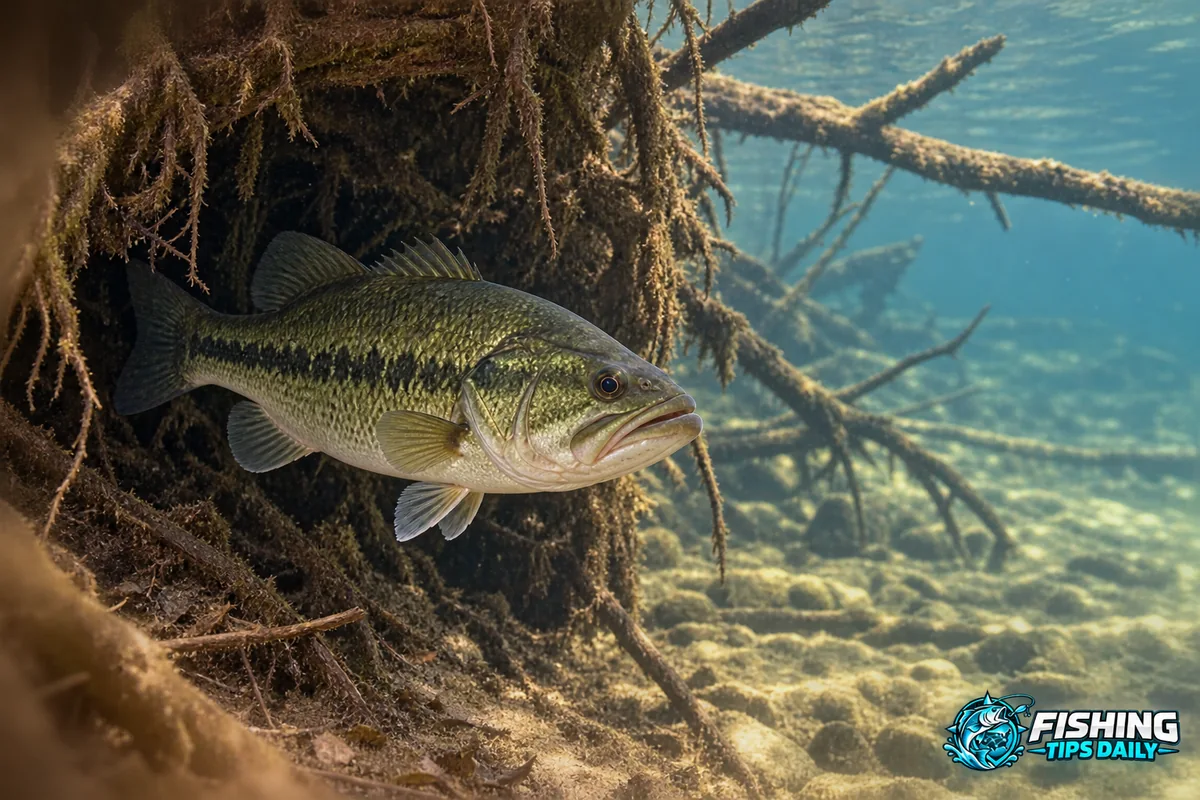
Separate cover from structure
Cover includes objects such as wood, vegetation, docks, and rocks that fish can use closely. Structure describes the shape of the bottom, including points, humps, channels, and breaks. The terms are often mixed together, but separating them helps you describe a useful place precisely.
A fallen tree on a featureless shallow bank is one target. A fallen tree reaching toward a channel edge is another because it offers both cover and changing depth. Neither guarantees fish, but the second gives you more specific positions to test.
Follow food without forgetting shelter
Largemouth eat available prey that can include fish, crayfish, and other animals. Observe baitfish, feeding activity, and the general size of forage. Matching a useful profile and level is often more practical than trying to reproduce every color detail.
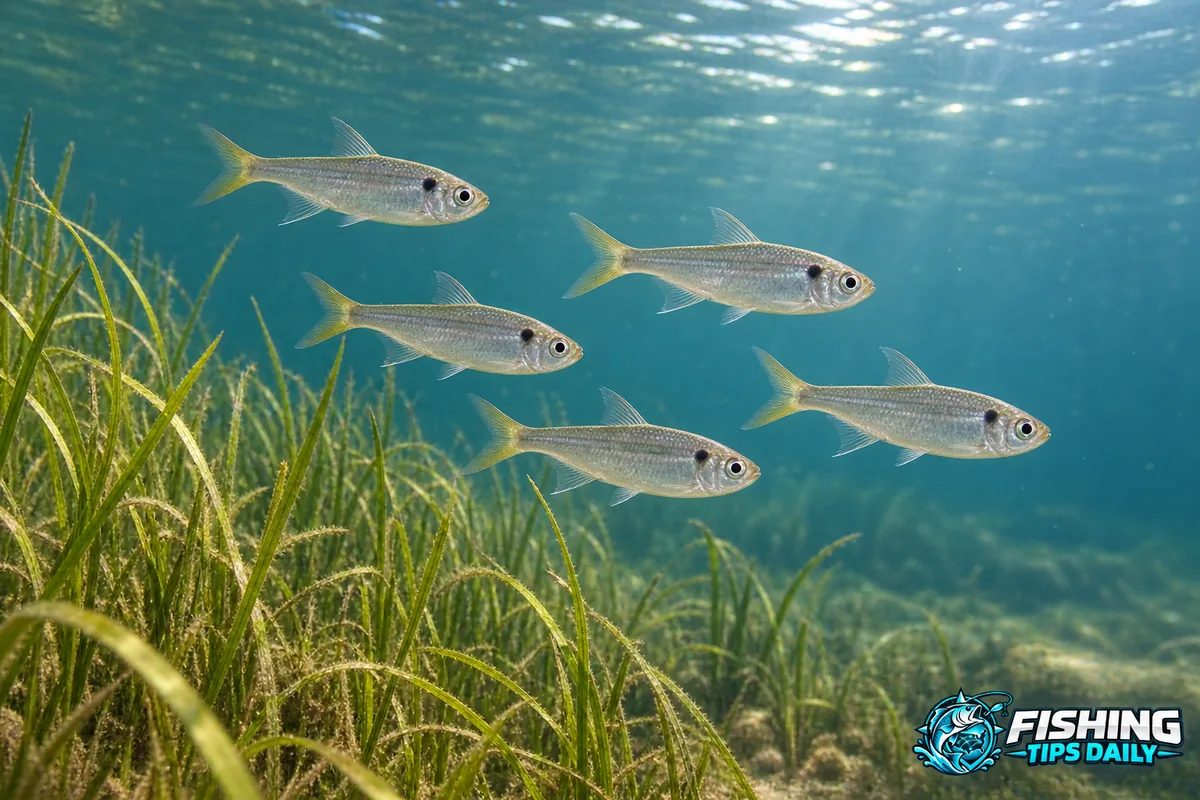
Fish can ambush beside cover or roam after food. If baitfish are away from the bank, a shoreline-only approach may miss feeding fish. If a school of small fish crosses a point, test the edge or cover near its path instead of casting blindly into the center of the school.
Use light and water conditions as clues
Shade, cloud, wind, clarity, and current can change how exposed a fish is willing to be and how it finds a bait. A shaded dock corner may be useful on a bright day, while a wind-rippled bank can offer a different feeding opportunity. These are clues to test, not promises.
Water level changes alter access to cover. A drop can leave yesterday's productive grass too shallow, while rising water opens new shoreline habitat. Consider where a fish can move nearby rather than assuming it has left the entire area.
Think of seasons as transitions
Spring movement often connects deeper holding water with shallower spawning habitat. Summer can emphasize shade, cover, flow, and suitable depth. Fall can bring shifting forage, and winter can reduce the amount of movement needed to feed. Timing varies among waters and individual fish.
Do not force a map-wide pattern from one catch. Record the position and presentation, then test a similar place. If another fish bites at the same kind of edge, you have a more useful working idea. Keep the species profile for identification and biology separate from your fishing observations.
Quick comparison
| Observation | Working idea | How to test it |
|---|---|---|
| Bite at a shaded outside post | Shade plus depth matters | Fish comparable posts |
| Baitfish over a point | A feeding route may cross the edge | Work the relevant depth band |
| Water has dropped | Shallow cover may be less useful | Check its nearest deeper connection |
| Bites only after a long pause | Fish may need a slower opportunity | Repeat the pause on similar cover |
Turn one bite into a small pattern
A bass takes a plastic beside the outside end of a laydown. Note that the end reaches deeper water and sits in shade. Test another shaded laydown with a similar depth connection. If the next bite comes from the same position, prioritize those targets. If it does not, keep the first catch as one observation rather than a rule.
When it is not working
- Every bank looks fishy
- Choose one relationship—cover beside depth—and compare specific targets.
- The calendar says fish should be shallow
- Check the actual weather, water, and accessible depths.
- You keep changing color
- First ask whether the bait reaches a plausible feeding position.
Common questions
Are all bass beside cover?
No. Some feed or suspend away from visible cover, especially when forage is offshore.
Can behavior identify the species?
No. Use physical identification traits and reliable species information.