
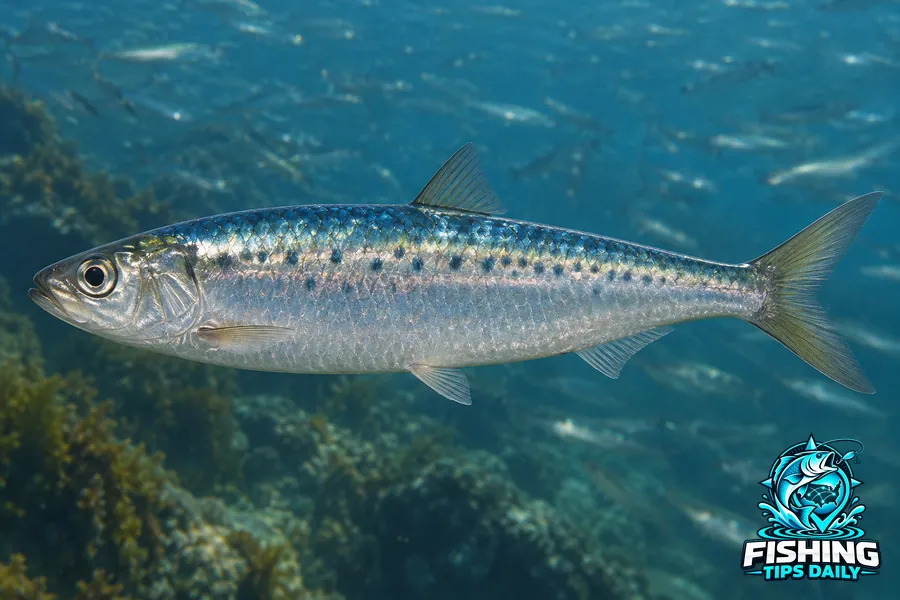
Range and Identity
The inventory retains Sardinops sagax, while regional accounts distinguish northeastern Pacific sardines from other sardine lineages. NOAA’s coastal range extends from southeastern Alaska toward Baja California. A worldwide sardine compilation should not automatically supply the same maximum or migration pattern for every regional form.
Habitat and Behavior
Fish form dense schools near the surface in coastal nearshore and offshore water, sometimes entering estuaries. Older adults can move farther north than younger adults. The position of a school therefore reflects season, age composition and ocean conditions rather than a fixed year-round location.
Size and Life-History Records
Both plant and animal plankton provide food. Females release eggs repeatedly during a spawning season. NOAA notes lengths exceeding twelve inches, which is retained as an open-ended size description rather than a maximum. Broader compiled length and mass maxima are not transferred across unresolved regional species scope.
Field Note
Keep the ocean region and season with a sardine record. Similar-looking schools can belong to different lineages or represent different stages of seasonal movement.
All Lakes With Pacific Sardine
Browse lakes and reservoirs with documented Pacific Sardine records, listed alphabetically. Records do not establish current abundance or public access. Check the evidence and managing authority for the water you choose.
No published lakes are currently linked to this species in our confirmed records.