
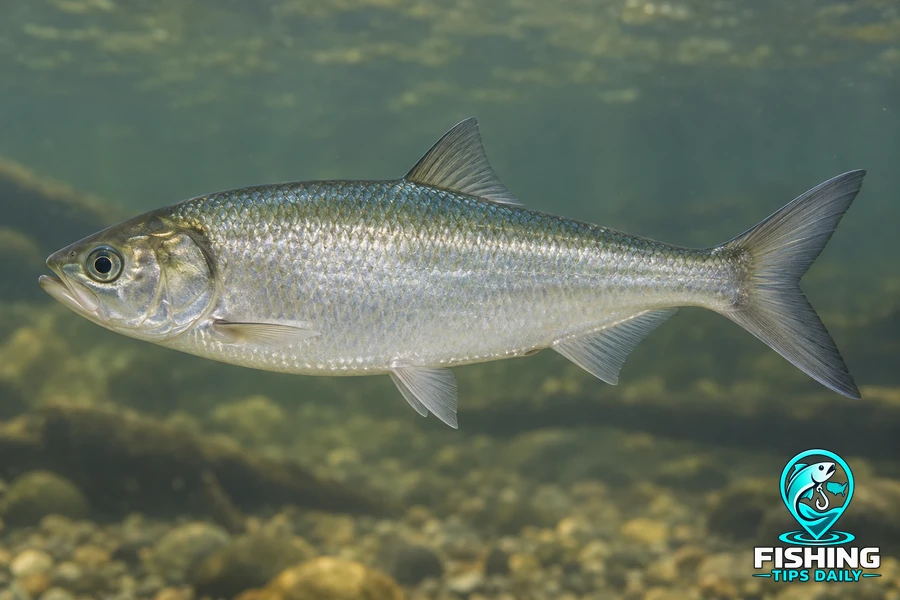
Identification and Life Cycle
Alabama Shad are silvery members of the herring group. Species identification requires more than a bright flank: similar shad and herrings can occur in the same river systems.
Adults move from the sea into freshwater to spawn. Juveniles remain in rivers through their first growing season before moving toward the Gulf.
Habitat and Natural Food
Access to flowing river habitat is central to the life cycle. Dams and altered flow can interrupt the connection between marine feeding areas and freshwater spawning habitat.
Research in the Pascagoula and Apalachicola rivers found that larger juveniles ate mostly insects. The balance of aquatic and terrestrial insects differed between rivers. Adults on spawning runs may take little or no food, so juvenile diet should not be used to predict adult feeding.
Size and Weight
A published species summary lists a maximum standard length of 51 cm, about 20.1 inches. Standard length excludes the tail fin. Adult sizes reported for Gulf drainages are commonly around 12–16 inches; measurement conventions can differ between accounts.
That maximum is separate from the ordinary adult range. No dependable typical weight is assigned here.
Fishing and Conservation
A successful method for American Shad or Skipjack Herring is not automatically a verified method for Alabama Shad. No species-specific bait ranking is included.
Because these migratory fish have declined across parts of their range, identification and current local protections should be checked before any harvest.
A Journey Upstream From the Gulf
Reproduction depends on a connection between two environments: the sea and a flowing river. A barrier on that route can cut off spawning habitat even when suitable water remains upstream. This migration is the defining feature of the Alabama Shad’s story.
All Lakes With Alabama Shad
Browse lakes and reservoirs with documented Alabama Shad records, listed alphabetically. Records do not establish current abundance or public access. Check the evidence and managing authority for the water you choose.
No published lakes are currently linked to this species in our confirmed records.