
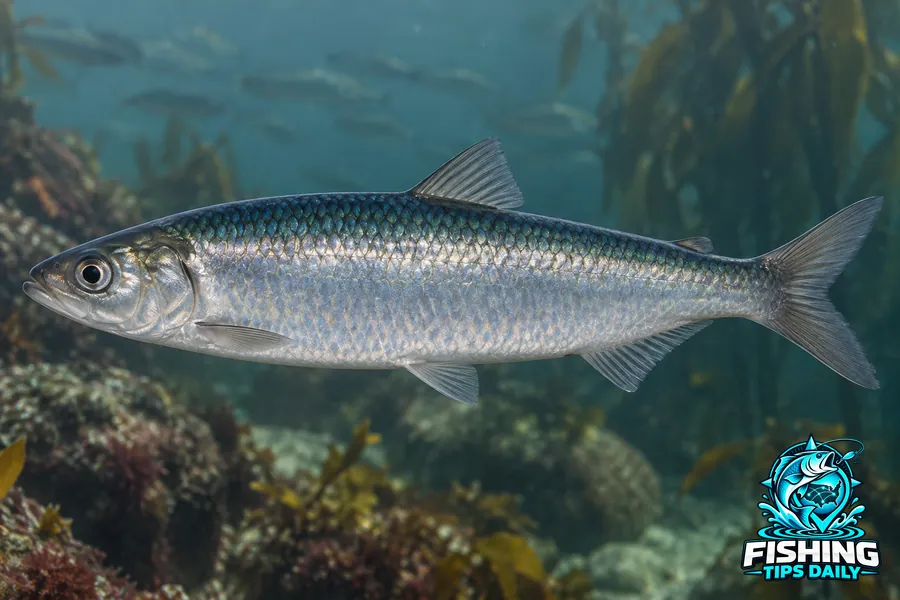
Range and Identity
Clupea pallasii occurs in the North Pacific and northern connected waters. Size and longevity vary strongly among regions, so a local herring account should retain its coast or stock context. Northern and southern populations should not be expected to reach identical sizes at the same age.
Habitat and Behavior
Adults gather in coastal schools and move into estuarine or shoreline habitat to spawn. Young later form schools in protected bays and inlets before using deeper water. A shallow spawning observation describes one phase rather than the year-round habitat of every adult.
Size and Life-History Records
Planktonic and other small animal foods are recorded, with feeding changing by age. The compiled maximum is forty-six centimeters total length. NOAA provides lower regional upper sizes, including about thirty-four centimeters in the Bering Sea, so a regional maximum is not treated as a universal species limit.
Field Note
Keep the region and length convention with a measurement. Differences between herring populations can be substantial even when the scientific identity is the same.
All Lakes With Pacific Herring
Browse lakes and reservoirs with documented Pacific Herring records, listed alphabetically. Records do not establish current abundance or public access. Check the evidence and managing authority for the water you choose.
No published lakes are currently linked to this species in our confirmed records.