
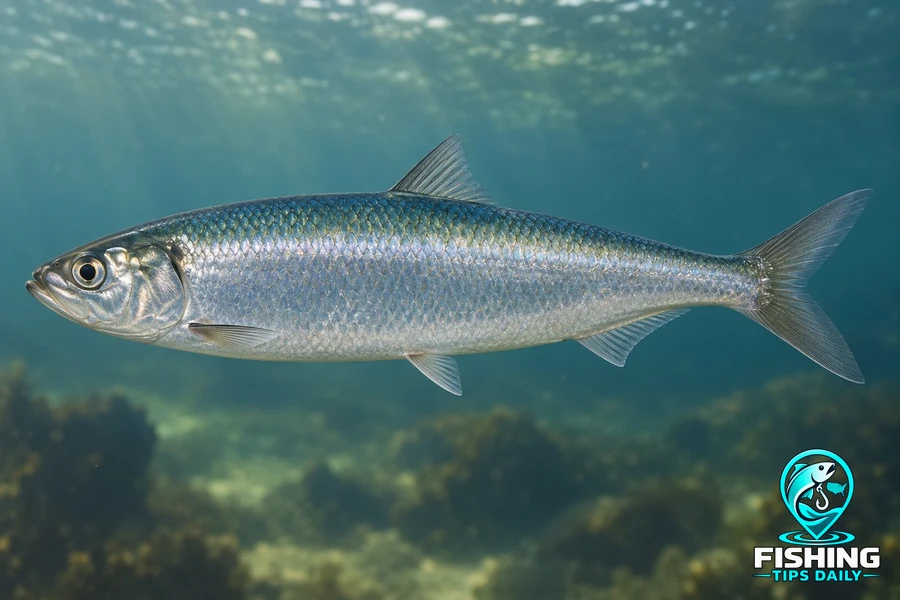
Identification
A blue or greenish back contrasts with silvery sides. This profile covers Clupea harengus, the Atlantic species; Pacific Herring and river herrings are different fishes. Shared common names do not make their size records interchangeable.
Size and Weight
The reported maximum standard length is 45 cm, approximately 17.7 inches excluding the tail. The species summary reports maximum weight rounded to 1.1 kg, about 2.4 pounds. These are separate summary values. A regional description of fish reaching 14 inches is not the species-wide maximum.
Habitat and Natural Food
Coastal and shelf waters provide feeding and spawning habitat. Herring consume small drifting animals, including krill and fish larvae, while many larger fishes, seabirds and marine mammals eat herring. Schools move among feeding, spawning and wintering areas.
Fishing and Use
Commercial fisheries use methods including purse seines and midwater trawls. Herring also supplies bait for other fisheries. These fishery descriptions do not establish a universal recreational rig or a local harvest allowance.
A School’s Nursery on the Seafloor
Herring deposit eggs on bottom substrates such as gravel and rock. Many spawning fish together can create dense layers of eggs, supplying food for bottom-feeding predators as well as producing the next generation.
All Lakes With Atlantic Herring
Browse lakes and reservoirs with documented Atlantic Herring records, listed alphabetically. Records do not establish current abundance or public access. Check the evidence and managing authority for the water you choose.
No published lakes are currently linked to this species in our confirmed records.