
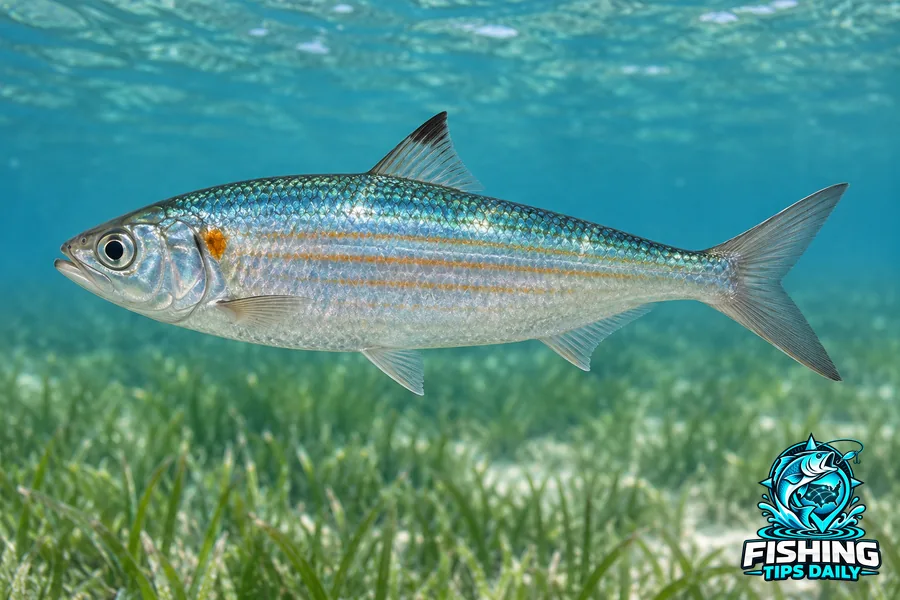
Range and Identity
Harengula humeralis occurs around Bermuda, Florida, the Bahamas and the Caribbean toward the Guianas. The checked distribution account does not substantiate a Brazilian extension. A broad tropical Atlantic label would therefore go beyond the locality evidence summarized for this species.
Habitat and Behavior
Fish commonly occur near shore and over clear coral habitat. Large schools can gather along beaches, particularly near Thalassia seagrass beds. The bottom association and schooling behavior are complementary observations: a school remains in the water above a particular coastal habitat.
Food and Life History
The maximum reference is twenty-two centimeters total length, with fifteen centimeters given as a common size. The summary does not establish a detailed prey list, spawning schedule or independent maximum mass. Those facts require more than the general sardine common name.
Field Note
Record the seagrass or reef setting with the school. A photograph showing only tightly grouped fish can hide the coastal habitat that makes the observation informative.
All Lakes With Redear Sardine
Browse lakes and reservoirs with documented Redear Sardine records, listed alphabetically. Records do not establish current abundance or public access. Check the evidence and managing authority for the water you choose.
No published lakes are currently linked to this species in our confirmed records.