
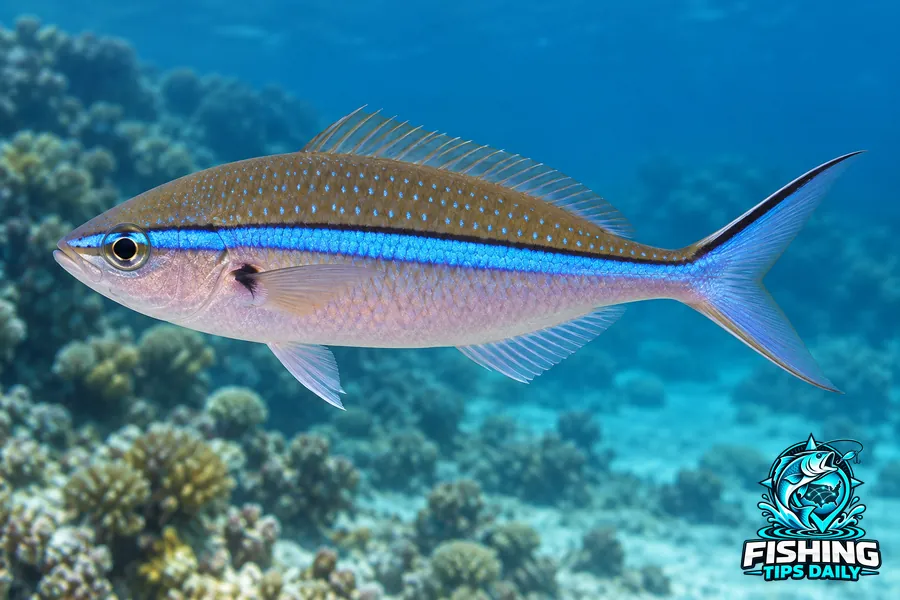
Range and Identity
The distribution extends from East Africa through much of the tropical Indo-Pacific toward the Tuamotu Islands. Japanese and Australian-region records help define the wider range. Similar fusiliers occur together, so the bright appearance of a school alone is not a secure identification.
Habitat and Behavior
Fish gather in midwater around reefs, where they can feed above the bottom. Young are associated with shallower inshore areas. A school seen over a reef therefore need not be feeding on the corals or attached organisms directly beneath it.
Food and Life History
Zooplankton provides the recorded food. Reproduction involves small pelagic eggs that develop in the water column. The maximum reference is thirty centimeters total length; a common standard-length measurement in the source uses a different endpoint and should not be compared without qualification.
Field Note
Include the school’s height above the reef and whether the fish are juveniles or adults. Both details help describe their use of reef water.
All Lakes With Neon Fusilier
Browse lakes and reservoirs with documented Neon Fusilier records, listed alphabetically. Records do not establish current abundance or public access. Check the evidence and managing authority for the water you choose.
No published lakes are currently linked to this species in our confirmed records.