
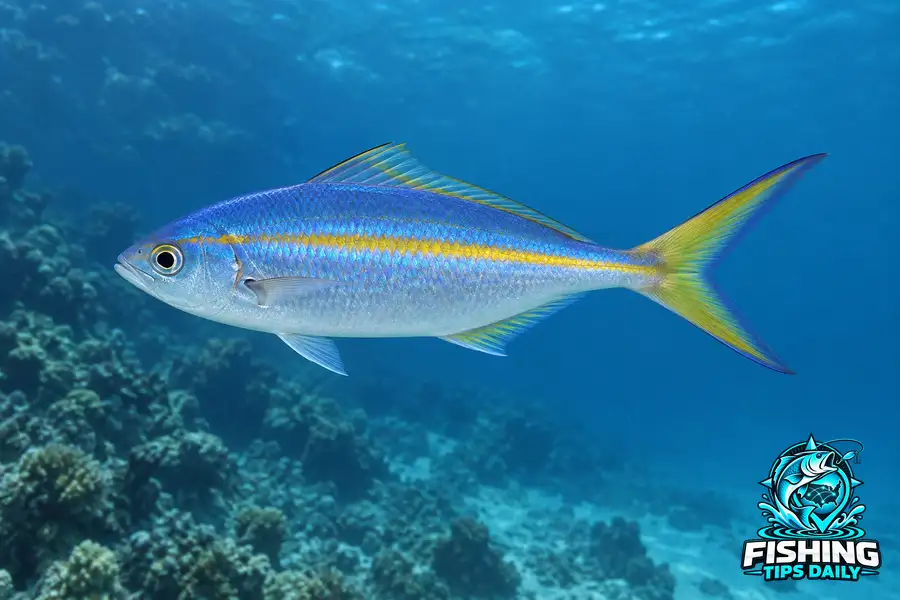
Identification
The lower of the two thin stripes mostly follows the lateral line. Its blue upper body fades to a paler underside, while both tail lobes end in dark tips. Similar fusiliers share a streamlined outline, making stripe placement especially useful.
Size and Weight
Published maximum total length is 35 cm, approximately 13.8 inches including the tail. A dependable measured maximum weight was not established. Length-based biomass models used in reef surveys are not individual weight records.
Habitat and Natural Food
Schools gather in midwater around reefs, particularly in clear settings near oceanic islands or reefs away from large land masses. Small drifting animals provide its food. This is a marine reef association, not evidence of freshwater lake occupancy.
Fishing and Reproduction
Recorded fishing methods include drive-in nets, and the species is also used as tuna bait. These describe established fishery uses rather than a recreational lure recommendation. Spawning produces numerous small eggs that drift in the water.
A Plankton Feeder Above the Reef
Bigtail Fusilier obtains food from the water column rather than grazing the coral surface. Its schooling behavior and slender swimming form suit that midwater life, with the reef providing the surrounding habitat rather than the meal itself.
All Lakes With Bigtail Fusilier
Browse lakes and reservoirs with documented Bigtail Fusilier records, listed alphabetically. Records do not establish current abundance or public access. Check the evidence and managing authority for the water you choose.
No published lakes are currently linked to this species in our confirmed records.