
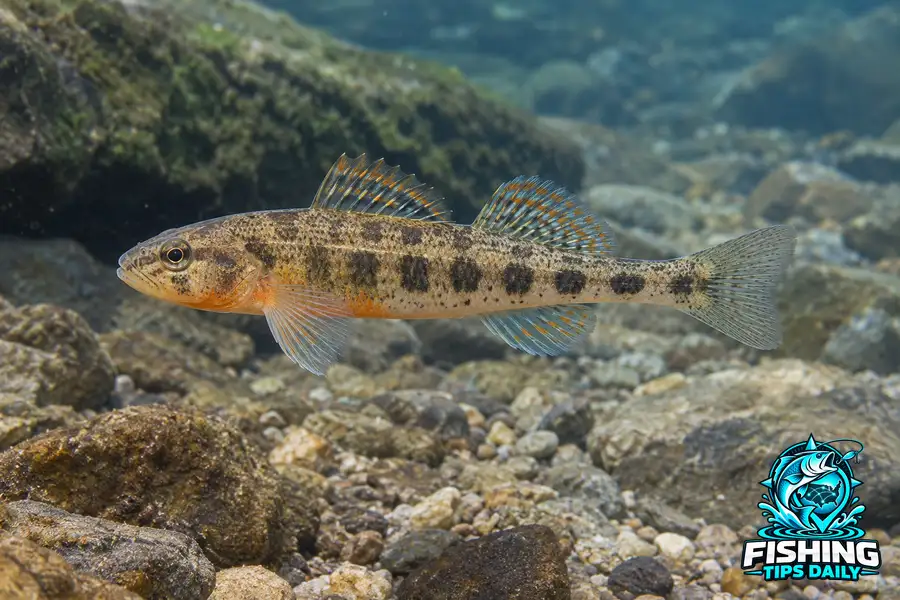
Identification
The body is slender, with brown over the back and orange on the underside and tail stalk. Blue and orange can appear in the dorsal fins. Small size and seasonal color changes make locality and habitat valuable alongside visible markings.
Spring Habitat and Food
Moss and other submerged plants provide cover in spring habitats. The diet includes small crustaceans such as amphipods, isopods and copepods, along with midge larvae. These foods link the darter to the invertebrate life supported by its spring environment.
Reproduction
Eggs are deposited on vegetation or other substrate and are not guarded as an individual clutch. Alabama accounts describe an extended breeding period, with a spring to early-summer peak. The fish should therefore not be assigned the same brief spawning window as every neighboring riffle darter.
Plants Are Part of the Profile
Spring vegetation supplies more than a background for photographs. It provides the setting for feeding, shelter and egg deposition.
All Lakes With Coldwater Darter
Browse lakes and reservoirs with documented Coldwater Darter records, listed alphabetically. Records do not establish current abundance or public access. Check the evidence and managing authority for the water you choose.
No published lakes are currently linked to this species in our confirmed records.