
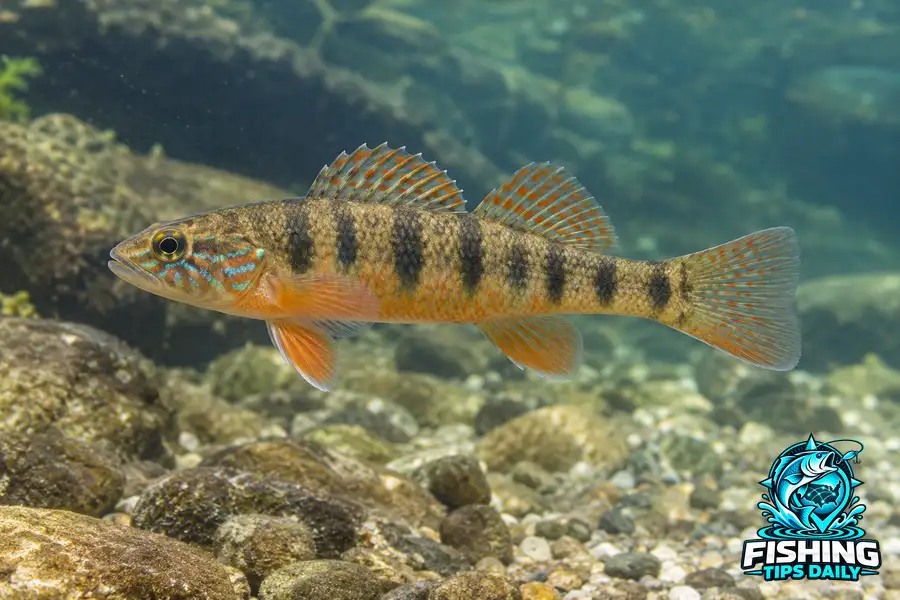
Identification
Orange or red spots lie above a row of dark oval side blotches. Breeding males can show turquoise on the cheeks, breast and several fins. The red area of the first dorsal fin does not extend across it in the same way seen in every related darter, making a clear fin view valuable.
Habitat
Coastal Darter uses moderate to swift current, often around submerged wood and snags. Sand and gravel can underlie this cover. The combination differs from assuming that all colorful darters require exposed, boulder-filled riffles.
Size and Season
The published sources use different measurement conventions. A standard-length value ends at the tail base; the Alabama adult range does not specify an equivalent convention, so it is retained separately. Reproductive observations include spring fish, when the colorful male features are more conspicuous.
Wood in the Current
Submerged branches can be important structure for this darter. Record that cover along with the bottom material and drainage when documenting habitat.
All Lakes With Coastal Darter
Browse lakes and reservoirs with documented Coastal Darter records, listed alphabetically. Records do not establish current abundance or public access. Check the evidence and managing authority for the water you choose.
No published lakes are currently linked to this species in our confirmed records.