
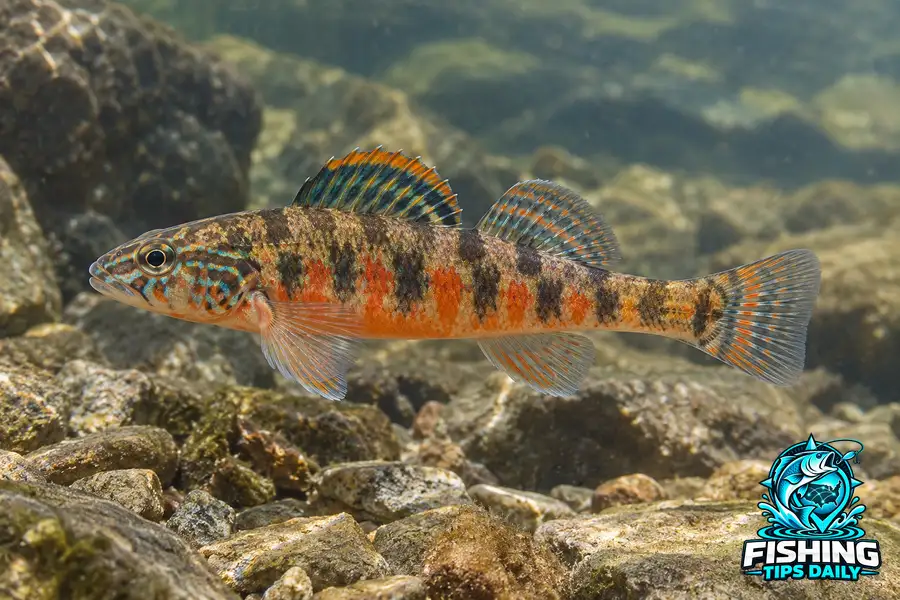
Breeding Male
The soft dorsal fin is dark with a bright yellow margin and a frilled outline. Pale rectangular markings interrupt its dark rays. The tail has numerous alternating dark and yellowish bands, while breeding males become dusky to black over much of the body.
Stream Habitat
Crown Darters occur from headwater streams to medium rivers, with smaller streams and quieter pools especially important. Spring seeps beside headwaters also provide habitat. This is not a species to assign broadly across the Tennessee drainage without checking the tributary.
Spawning
Females place eggs beneath sheltered objects such as stones and logs. Regional observations record breeding condition from late March into early June. The maximum length includes the tail and is larger than many adults observed in those small-stream habitats.
The Crown Is Seasonal
The elaborate soft dorsal fin is most conspicuous in a breeding male. Its absence on a female or nonbreeding fish does not settle the identification.
All Lakes With Crown Darter
Browse lakes and reservoirs with documented Crown Darter records, listed alphabetically. Records do not establish current abundance or public access. Check the evidence and managing authority for the water you choose.
No published lakes are currently linked to this species in our confirmed records.