
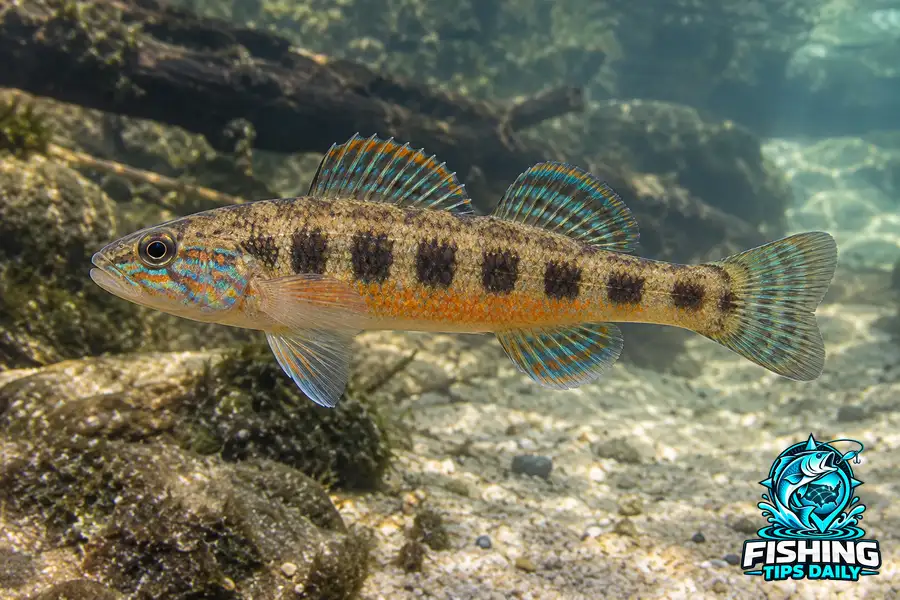
Identification
Seven to ten dark side markings can resemble W, X or M shapes, with about six saddles across the back. The underside is pale. A thin bridle crosses the tip of the snout; the similar Bluntnose Darter has a broader lip marking. Strong red or blue breeding color is not expected.
Pools and Cover
This darter occupies sandy or muddy pools with little current. Roots, aquatic plants and submerged sticks provide cover along the edges. Sand and gravel can occur together, so the presence of some gravel does not mean the fish was taken from a fast riffle.
Breeding Season
Alabama observations place spawning from the middle of March into late May. This regional window is more useful than treating one date as universal. When identifying fish during that period, continue to compare side markings and the snout instead of expecting a dramatic color transformation.
A Quiet-Water Darter
Sheltered roots and pool margins are characteristic habitat. Searching only the fastest rocky water would overlook an important part of this species’ setting.
All Lakes With Choctawhatchee Darter
Browse lakes and reservoirs with documented Choctawhatchee Darter records, listed alphabetically. Records do not establish current abundance or public access. Check the evidence and managing authority for the water you choose.
No published lakes are currently linked to this species in our confirmed records.