
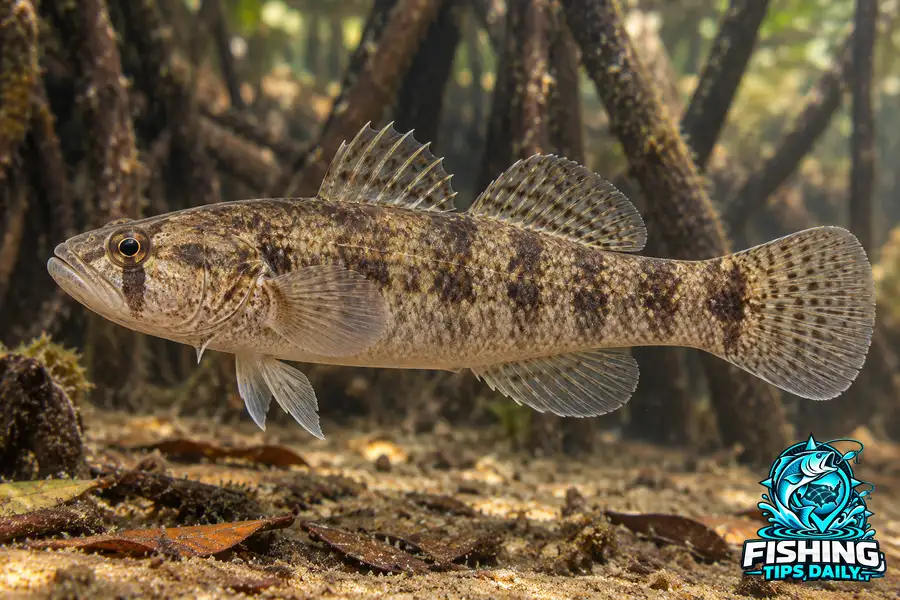
Identification
This record uses Eleotris acanthopoma; modern accounts also use Eleotris acanthopomus. The fish has a generally dark brown body and two dorsal fins. Its pelvic fins remain separate, unlike the united pelvic disc found in many gobies.
Size and Weight
A reported maximum standard length of 14 cm equals about 5.5 inches. That measurement stops at the base of the tail fin. A measured maximum weight was not established, so no weight is inferred from length.
Habitat and Natural Food
Mud-bottomed estuaries and lower freshwater streams provide habitat. In Okinawa’s Teima River, researchers found crabs important in tidal reaches and aquatic snails important in freshwater reaches. These are local observations of this species, rather than a single diet that every population must follow.
Life History and Fishing
Museum accounts describe eggs laid on the bottom. Documented foods also include small worms and insects, but natural prey alone does not prove the best hook bait. This profile focuses on identification and ecology because a dependable species-specific angling method was not established.
A Different Menu Upstream
The Teima River study connected feeding with position in the river. Crabs and aquatic snails were important in different reaches, showing how the same fish can use different food resources within one connected waterway.
All Lakes With Asian Sleeper
Browse lakes and reservoirs with documented Asian Sleeper records, listed alphabetically. Records do not establish current abundance or public access. Check the evidence and managing authority for the water you choose.
No published lakes are currently linked to this species in our confirmed records.