
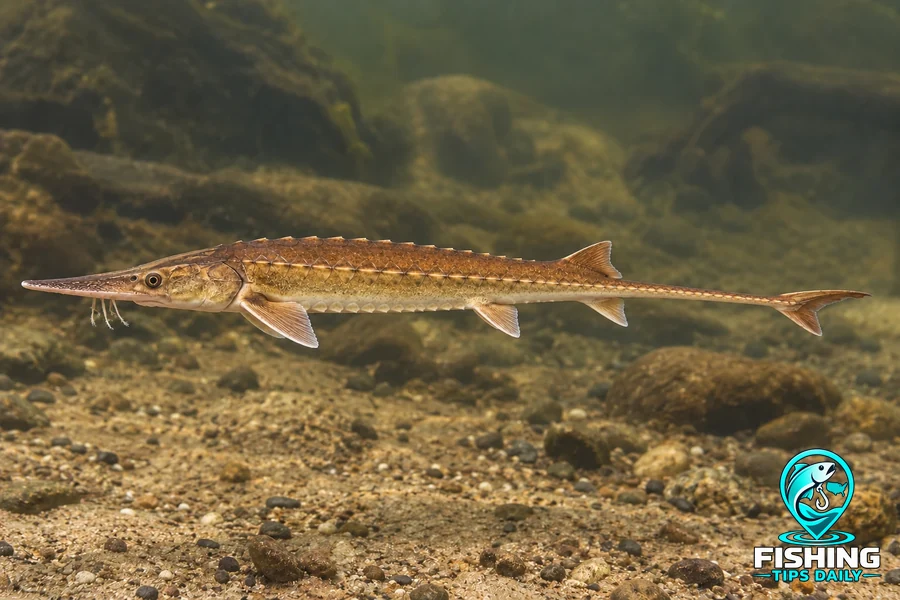
Identification
The body is slender and the snout is flattened. Brown-orange tones above, golden sides and a pale underside distinguish its appearance from the large, dark sturgeon familiar to many anglers.
A shovel-shaped head alone does not establish species identity. Other sturgeon share that general form.
Habitat and Natural Food
Historically this fish occupied the Mobile basin’s large rivers below the Fall Line. Its habitat includes flowing channels over sand, gravel and other substrates, with suitable bottom habitat supporting feeding.
Aquatic insects and mollusks are among the reported foods. Changes in flow, river fragmentation and degraded habitat can affect both the fish and its prey.
Size and Weight
Adults are described as reaching roughly 30 inches, about 76 centimeters, with weights of about 2–3 pounds reported. These are broad profile figures, not a population-wide average or a matched length-and-weight record.
The limited information available on this rare species calls for care when interpreting size estimates.
Conservation and Fishing
Alabama Sturgeon are federally endangered and should not be deliberately targeted by recreational anglers. No bait, rig or harvest instructions are included.
Recovery depends on the river system as a whole. Preserving a short stretch of apparently good habitat cannot by itself replace the connected habitat needed throughout the life cycle.
A River Journey Begins as a Larva
Young larvae drift downstream before settling into bottom-oriented life. Long, flowing river reaches are therefore part of the nursery habitat. Impoundments can interrupt that journey, making river connectivity especially important for recovery.
All Lakes With Alabama Sturgeon
Browse lakes and reservoirs with documented Alabama Sturgeon records, listed alphabetically. Records do not establish current abundance or public access. Check the evidence and managing authority for the water you choose.
No published lakes are currently linked to this species in our confirmed records.