
Fishing line
Braid vs. Monofilament: Choose Line for the Presentation
Line affects more than breaking strength. It changes how the bait falls, how much you feel, and how easily the outfit handles slack. Choose the line system for the presentation and cover, then make sure your knots and drag suit it.
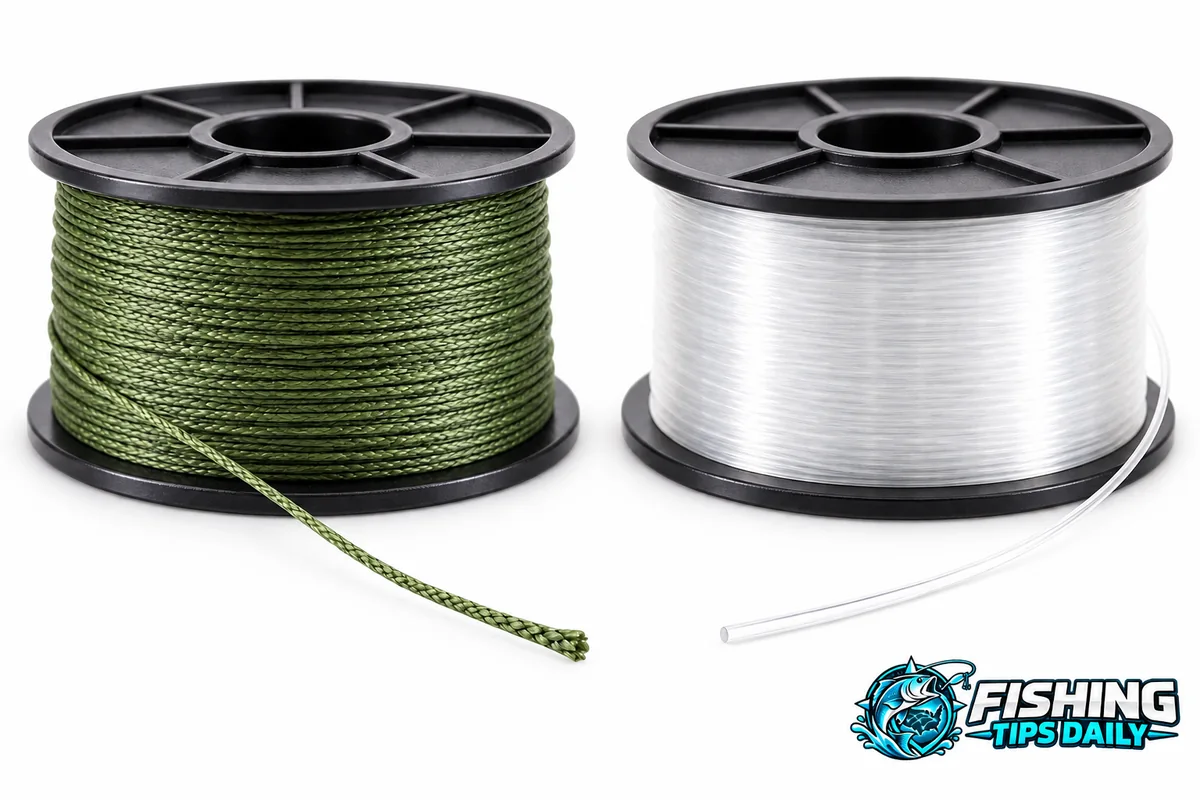
What braid does well
Braid generally offers high strength for its diameter and low stretch. That can help with bite detection and controlling a lure at distance. It is useful for some vegetation presentations, but strength alone does not make it immune to damage from rock, shells, or sharp edges.
Thin braid can dig into poorly packed layers or form loose loops when retrieved without tension. It also transmits sudden loads with less cushioning than stretchy nylon. Match drag, rod action, and hook strength to the complete system rather than tightening everything because the line label shows a large number.
Where nylon monofilament is convenient
Nylon mono is a simple option for many floats, light bait rigs, and mixed beginner trips. Its stretch can cushion fish movement and mistakes. It is usually straightforward to tie, though heavy or old coils can be awkward on a small spinning spool.
Mono also has disadvantages. Stretch can reduce feedback at long range, and damage or age can compromise it. Inspect the first section often and replace line that is rough, kinked, or otherwise suspect. Do not assume that a line is fresh just because the spool was never emptied.

Decide whether a leader solves a real problem
A suitable leader may help where terminal tackle needs different handling, abrasion characteristics, or visibility from the main line. Braid-to-leader setups are common, but the added knot has to pass or sit outside the rod guides cleanly and withstand repeated use.
Fluorocarbon is another leader option with its own stiffness and knot requirements. It is not invisible in every condition, and no leader material is abrasion-proof. Choose diameter for the fish and cover, then test the connection. For a beginner, one well-tied direct connection may be preferable to a complicated system that fails.
Manage the line during the trip
After every cast, remove loose loops before retrieving. Check the line near the lure after contact with wood or rock and after catching a fish. Retie when the working section feels damaged. Avoid pulling a snag with line wrapped around your hand, especially braid.
When you change line type, revisit drag and hook-setting force. The same strike with a stiff rod and low-stretch line can be much harsher than it was with mono. Carry a tool for cutting your chosen line and collect all discarded pieces, which can entangle wildlife.
Quick comparison
| Fishing job | Reasonable starting option | Tradeoff |
|---|---|---|
| Simple panfish float | Nylon mono | Easy handling, more stretch |
| Bass plastic at distance | Braid with a suitable leader, or mono | More feedback versus extra knot management |
| Small treble-hook lure | Mono or a cushioned braid setup | Keep pressure without excessive shock |
| Abrasive cover | Appropriate diameter and frequent inspection | No line material eliminates wear |
Choose for a pond float rig
For short casts with a small hook and bait, begin with manageable mono suitable for the fish and cover. Learn to set depth and detect bites. If you later fish plastics farther away and want more feedback, test braid on a compatible reel with a suitable connection. Change the system because the fishing job changed, not because one material is universally superior.
When it is not working
- The knot slips
- Use a knot recommended for that material and tie it with adequate tag and proper seating.
- Line breaks away from the knot
- Inspect abrasion, old damage, and sharp tackle edges.
- Wind knots keep appearing
- Reduce loose-line retrieval and check spool fill and lure twist.
Common questions
Is 10 lb braid the same thickness as 10 lb mono?
Usually not. Compare the stated diameter and capacity information.
Must braid always have a leader?
No. It depends on presentation and conditions, but direct braid still needs an appropriate terminal knot.