
Fishing gear
Rod Power vs. Action: Two Different Things to Match
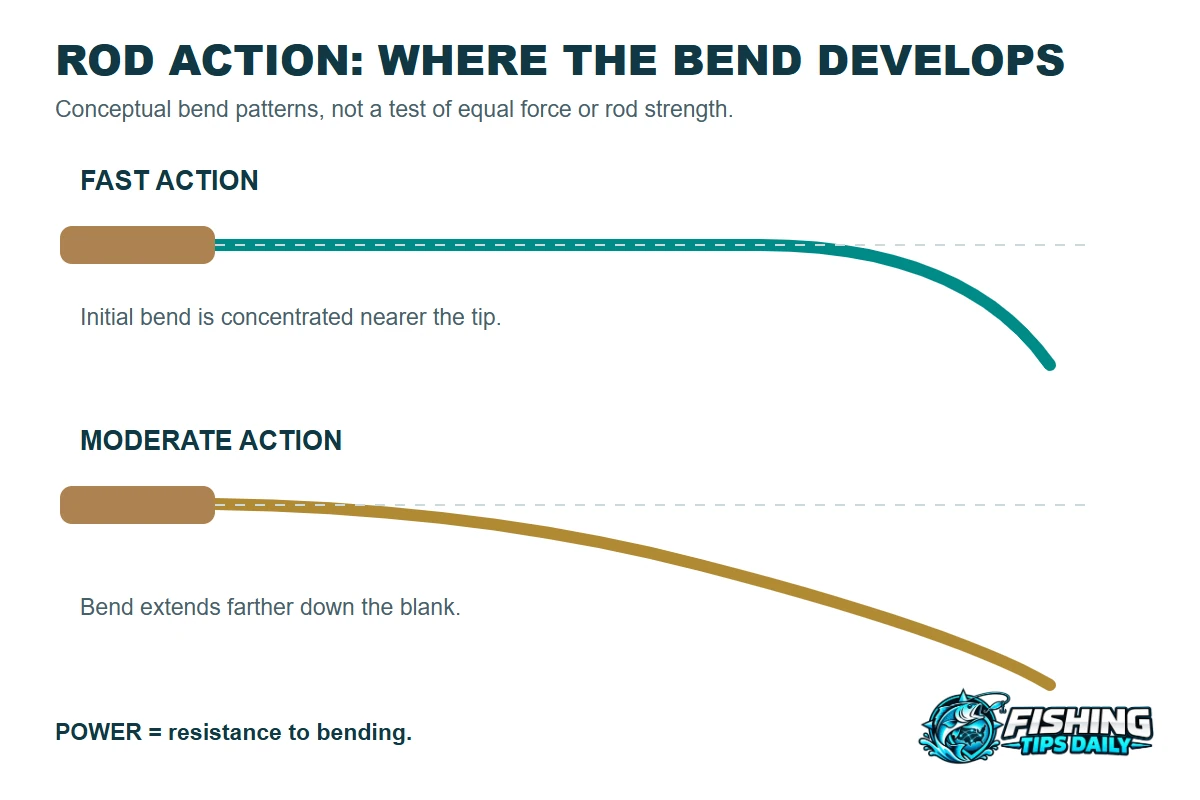
Power is how much force it takes to bend a rod. Action describes where that bend develops. A rod can be both medium power and fast action because those terms describe different characteristics. Start there, then compare the lure and line ratings.
Power: how much load the rod handles comfortably
Light, medium-light, medium, and heavy are common power descriptions. They help indicate the loads a rod is designed to cast and control, but are not perfectly standardized across makers or rod families. A heavy bass rod and a heavy offshore rod are not interchangeable tools.
For casting, include the complete rig weight: lure or sinker plus hook, bait, trailer, and accessories. A small fish can be caught on a heavy rig, and a large fish can sometimes be landed on light tackle in open water. Fish size alone does not decide the correct rod.
Action: where the rod begins to bend
A fast-action rod bends more prominently toward the tip under initial load. A moderate-action rod carries its bend farther down. As load increases, more of either blank will flex; a fast rod does not have an unbendable lower section.
Action influences how the outfit feels during casting, lure work, and a fight. A more forgiving bend can help cushion treble hooks and sudden surges. A responsive tip with suitable backbone can suit many single-hook presentations. Neither description guarantees sensitivity or quality by itself.
Match the rod to the hook and presentation
A light jig needs a rod that loads enough to cast it and still gives control at the intended depth. A weedless plastic may require enough force to move the hook through the bait and into the fish. A crankbait with small trebles calls for steady pressure without unnecessary shock.
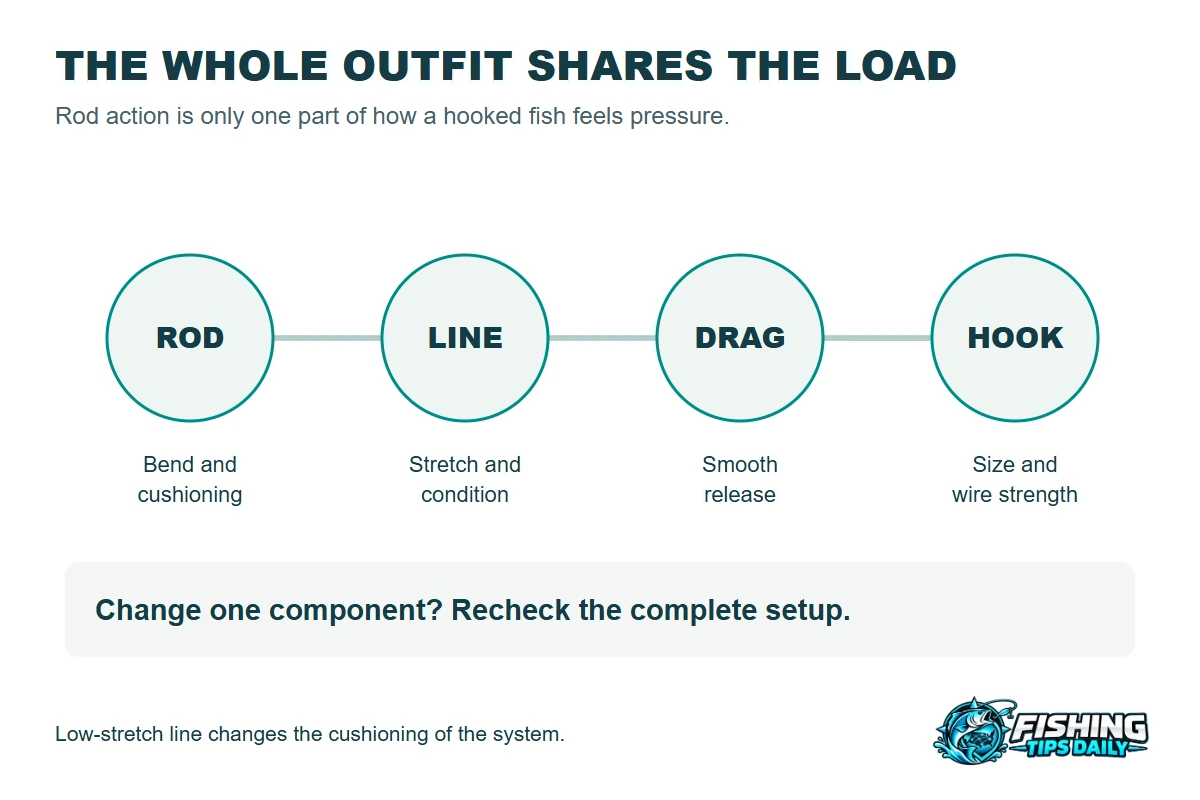
Line changes this relationship. Low-stretch braid with a stiff outfit transmits a strike differently from stretchy nylon on a more flexible rod. Think of rod, line, hook, drag, and fish as one system rather than selecting each part independently.
Use a practical comparison instead of bending labels
Write down your typical lure weights and the cover you fish. Compare rods whose printed ranges include those loads, then attach the intended reel and check comfort. Ask about the specific model's intended use rather than choosing solely by a single adjective on the blank.
Do not test a rod by jamming its tip against a hard surface or lifting a heavy object at a steep angle. During fishing, avoid high-sticking and lifting fish by the rod. The wrong loading angle can damage a rod even if the fish is smaller than the line rating suggests.
Quick comparison
| Presentation | Power question | Action question |
|---|---|---|
| Tiny panfish jig | Will it load with this light bait? | Can I control the jig and cushion the hook? |
| Single-hook bass plastic | Can it handle the rig and cover? | Does the tip and backbone suit the hook? |
| Treble-hook crankbait | Does the lure weight fit? | Is there enough cushioning? |
| Heavy bottom bait rig | Can it safely cast the full load? | Does it suit bite detection and hook style? |
Two rods, both marked medium
Suppose one is rated for lighter lures and has a fast tip, while the other covers heavier crankbaits with a moderate bend. The first may suit a compact plastic rig; the second may cast and cushion a treble-hook lure more comfortably. The shared word “medium” is not enough to choose between them.
When it is not working
- The lure will not cast well
- Check its total weight against the useful rod range.
- Fish pull free on surges
- Review drag, hook condition, line stretch, and rod cushioning together.
- The rod feels insensitive
- Check line slack, lure control, and grip as well as rod design.
Common questions
Does fast action mean fast retrieve?
No. It describes rod bend, not how quickly you turn the reel.
Does heavy power mean unbreakable?
No. Rods can fail from damage, overload, or poor loading angles.