Catfish fishing. Good bait. A better place to put it.
From a channel cat on a quiet bank to a blue cat that leans hard on the drag, the job starts with knowing your fish. Choose the right bait, read the water, and give your rig a purpose.
Channel, blue & flatheadNatural baitsBank & boat tactics
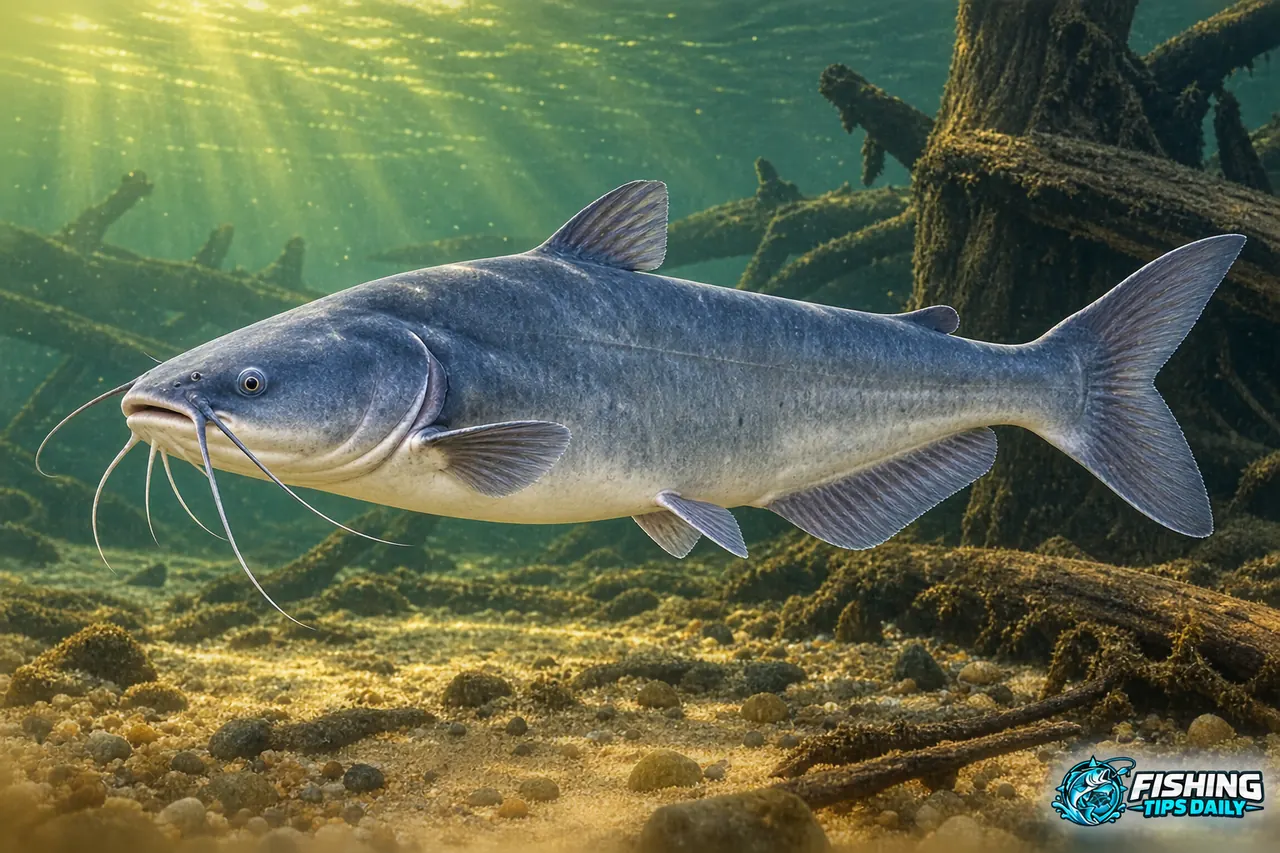
Follow the food. Find the edge. Let the rod load.Illustrated freshwater catfish habitat
Same whiskers. Different habits.
Which catfish is on your mind?
Catfish aren't simply scavengers waiting for something rotten. These fish hunt, track food, and use different parts of the water. Choosing a target helps you choose a bait and a place to fish.
THE VERSATILE FEEDER
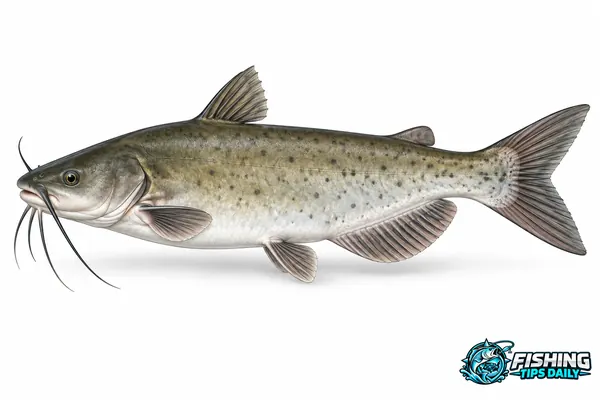
Channel catfish
Ictalurus punctatus
Recognize it
A deeply forked tail and a curved outer edge on the anal fin. Smaller fish often show dark side spots; those spots can fade on large adults.
Where it lives
Ponds, lakes, reservoirs, and rivers. Try a feeding flat, a moderate-current edge, or an accessible bank near deeper water.
First bait to consider
Chicken liver, worms, prepared bait, and small pieces of fresh cut fish are useful starting options.
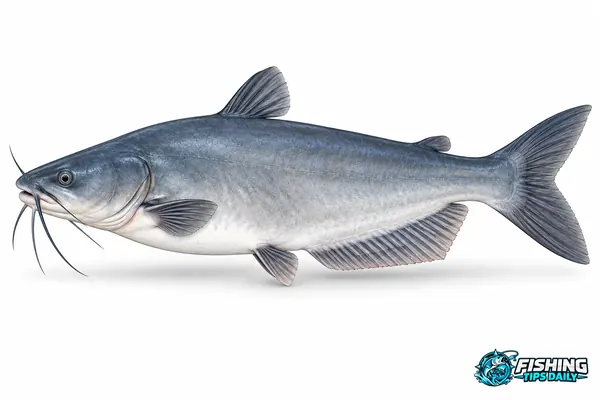
A forked tail, generally unspotted body, and a long anal fin with a straighter outer margin. Color alone is not reliable; big channel cats can look similar.
Where it lives
Large rivers and reservoirs, often using channels, ledges, and open-water feeding areas. Baitfish location can be more useful than visible shoreline cover.
First bait to consider
Start with fresh cut shad or another legal local forage fish. Adjust bait size to the fish you want to catch.
These are three major sport catfish species, not every catfish in American waters. Bullheads and white catfish also have dedicated followings. Check several identification features before keeping a fish.
The bait box, ranked our way
Top catfish baits. Fresh cut bait gets the first spot.
Fresh cut shad or bluegill takes our top spot where permitted, followed by chicken liver and other options for different fish and situations. No single bait is the best choice for every catfish. You can catch them on lures, too, but this guide focuses on natural and prepared baits.
OUR #1 PICK 01
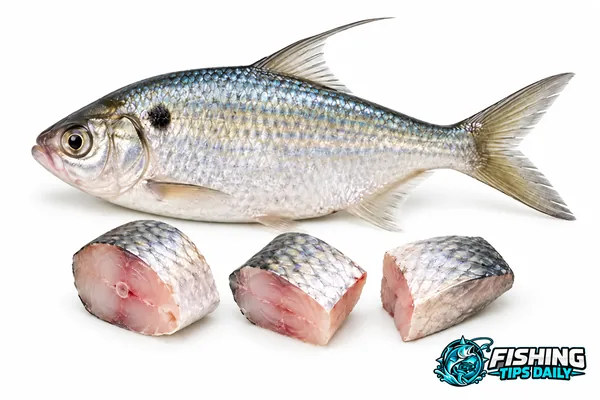
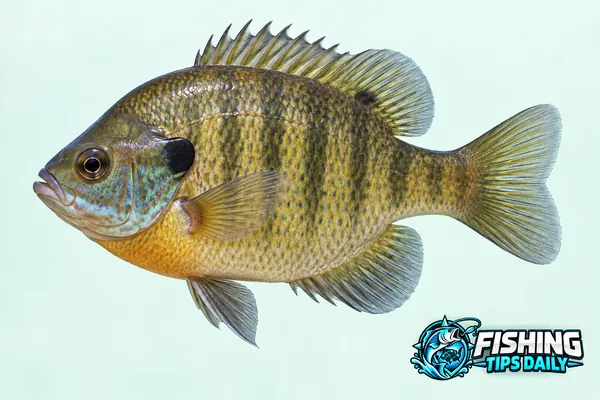
Fresh cut bait: shad or bluegill
Our first choice for blue and channel catfish. Fresh pieces of shad or bluegill offer scent and a familiar fish meal. Use only fish that may legally be caught, possessed, and used as bait on that water.
Keep bait chilled and cut pieces to suit your hook. Leave some skin attached for a firmer hold. Compare a small chunk with a longer strip rather than assuming the biggest piece will get the best bite.
Fresh bait. An open hook gap.
Pass the hook through a firm, skin-on edge. Leave the point and gap clear, especially with a circle hook, so the bait does not block the hook from working.
Replace washed-out pieces and keep unused bait cold. This is our overall first pick, not a rule for every catfish: legal live baitfish remain a useful starting choice for adult flatheads.
02 / BAIT BOX
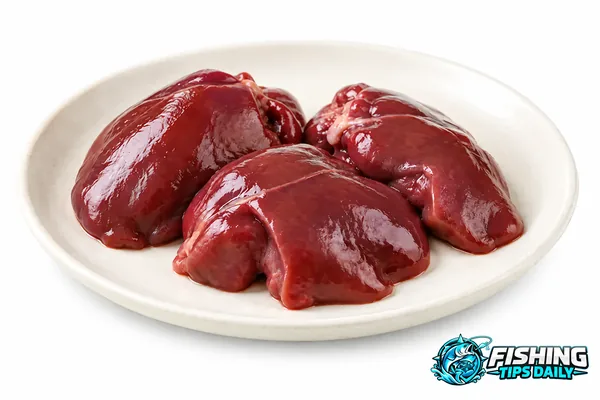
Chicken liver
An accessible channel-cat bait with a strong scent. Keep it chilled, use a manageable piece, and hook through a firmer edge. A gentle lob helps soft liver stay on during the cast.
Keep the point and gap exposed; secure soft pieces with bait elastic if needed.
03 / BAIT BOX
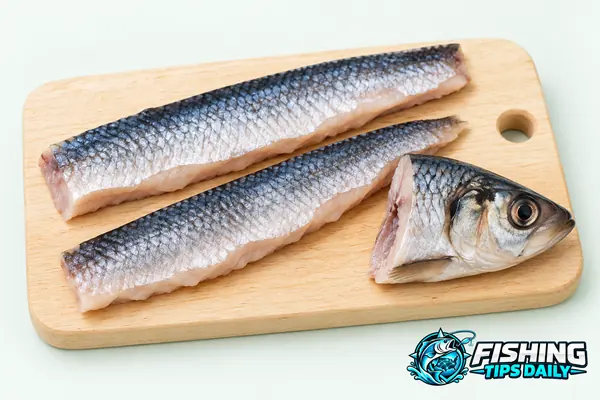
Other fresh cut bait
Where permitted, local forage such as herring or a legally usable fish can offer the same practical advantages. A head section and a fillet strip present differently—compare them.
Know which species may legally be used as bait.
04 / BAIT BOX
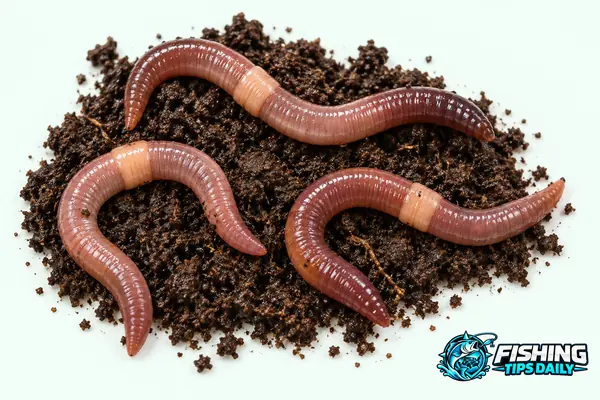
Nightcrawlers
A simple option for channel cats, especially when you want bites rather than only a trophy. Thread enough of the worm to hold it while leaving some movement.
Expect other fish to be interested, too.
05 / BAIT BOX
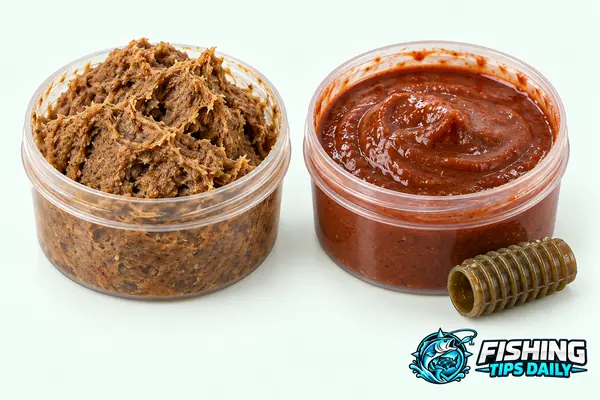
Prepared punch or dip bait
Convenient for targeting channel cats. Punch bait is firmer; dip bait usually needs a suitable carrier. Match the hook or holder to the product and local rules.
Check that the bait is still there after a soak.
06 / BAIT BOX
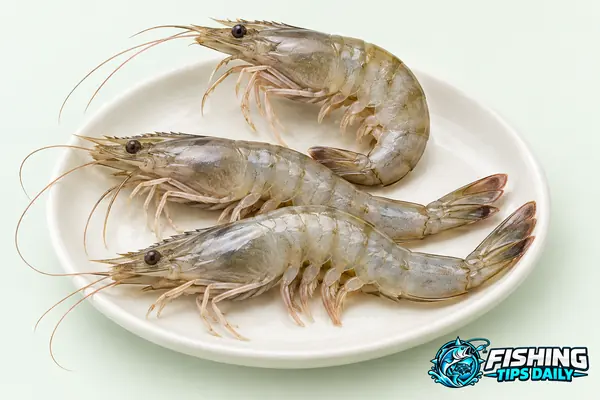
Raw shrimp
A handy channel-cat option when baitfish are hard to obtain. Use plain shrimp, sized to leave the hook gap open; try shell-on pieces if they hold better.
Keep it cold and compare it with another bait.
07 / BAIT BOX
Legal live baitfish
Especially useful for flatheads. Match the hook to the bait, leave the fish able to swim, and position it where a hooked catfish can be brought away from the cover.
Use only permitted bait; never move live fish between waters.
Choose a target, then a position
Build a sensible first setup.
Think about the current before adding sinker weight. Think about cover before choosing line. A rig that sits where you intended is more useful than one that rolls into a snag every few minutes.
These are starting approaches, not a bite prediction. Legal bait choices, water conditions, and local fish populations still come first.
Simple tackle. Clear purpose.
Three rigs worth understanding.
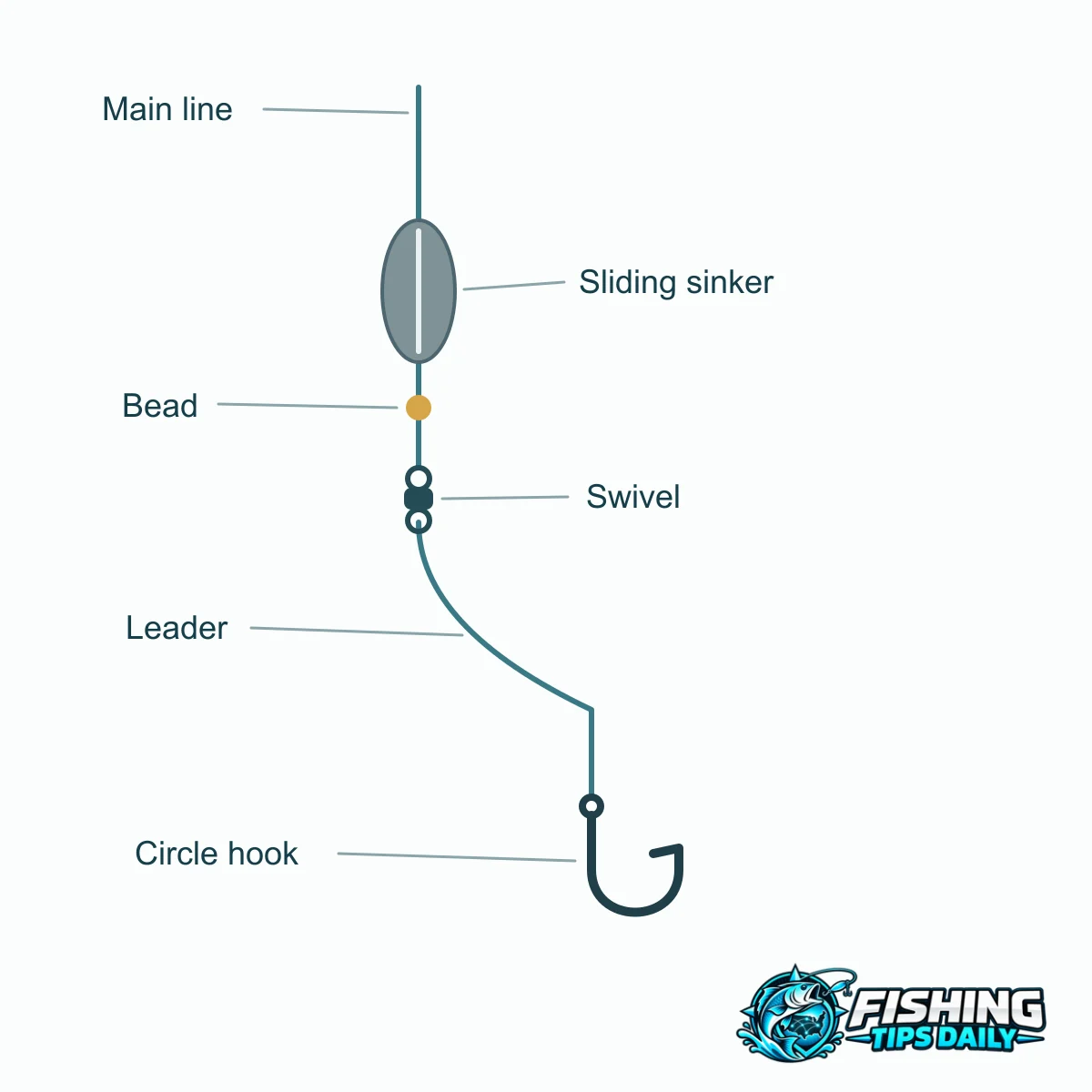
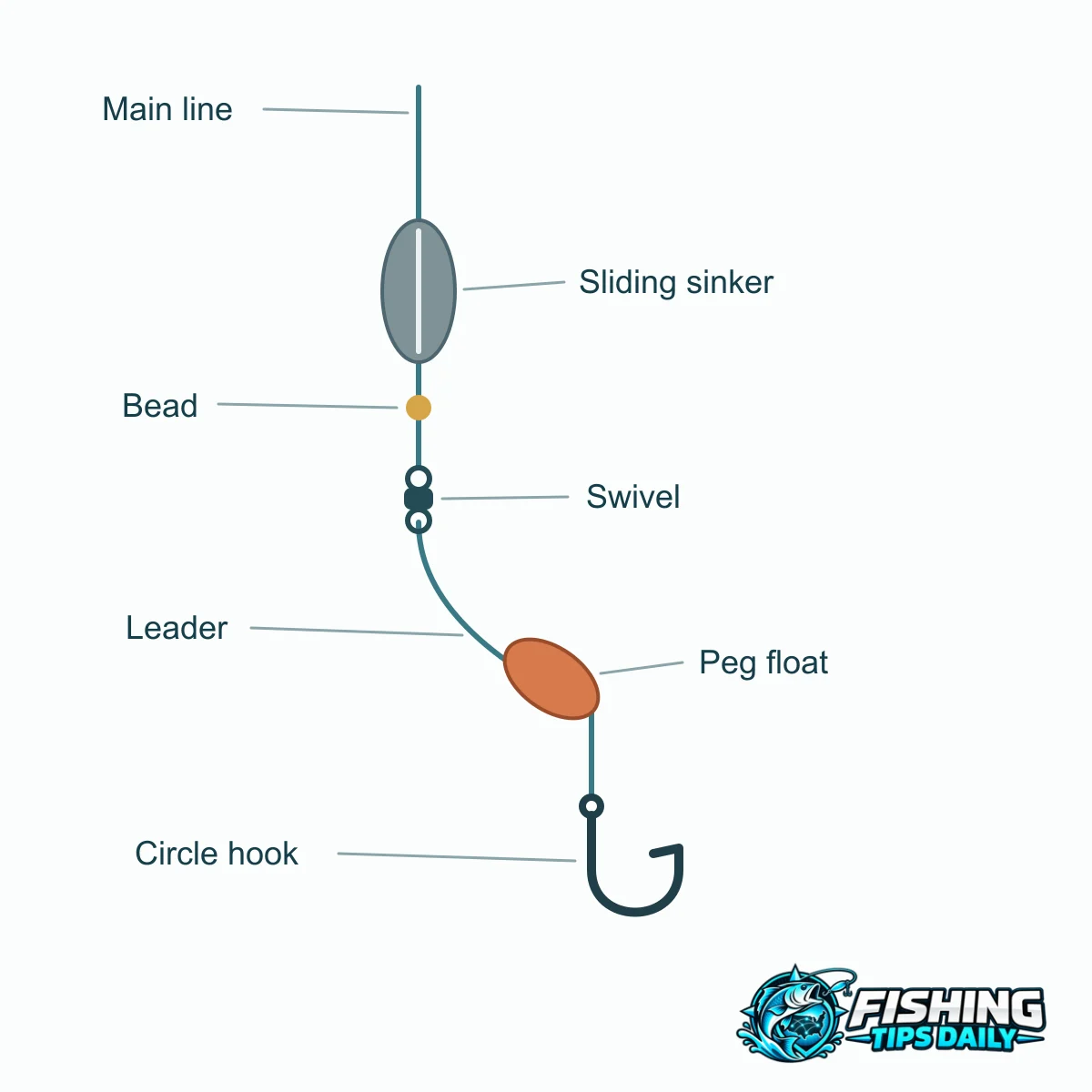
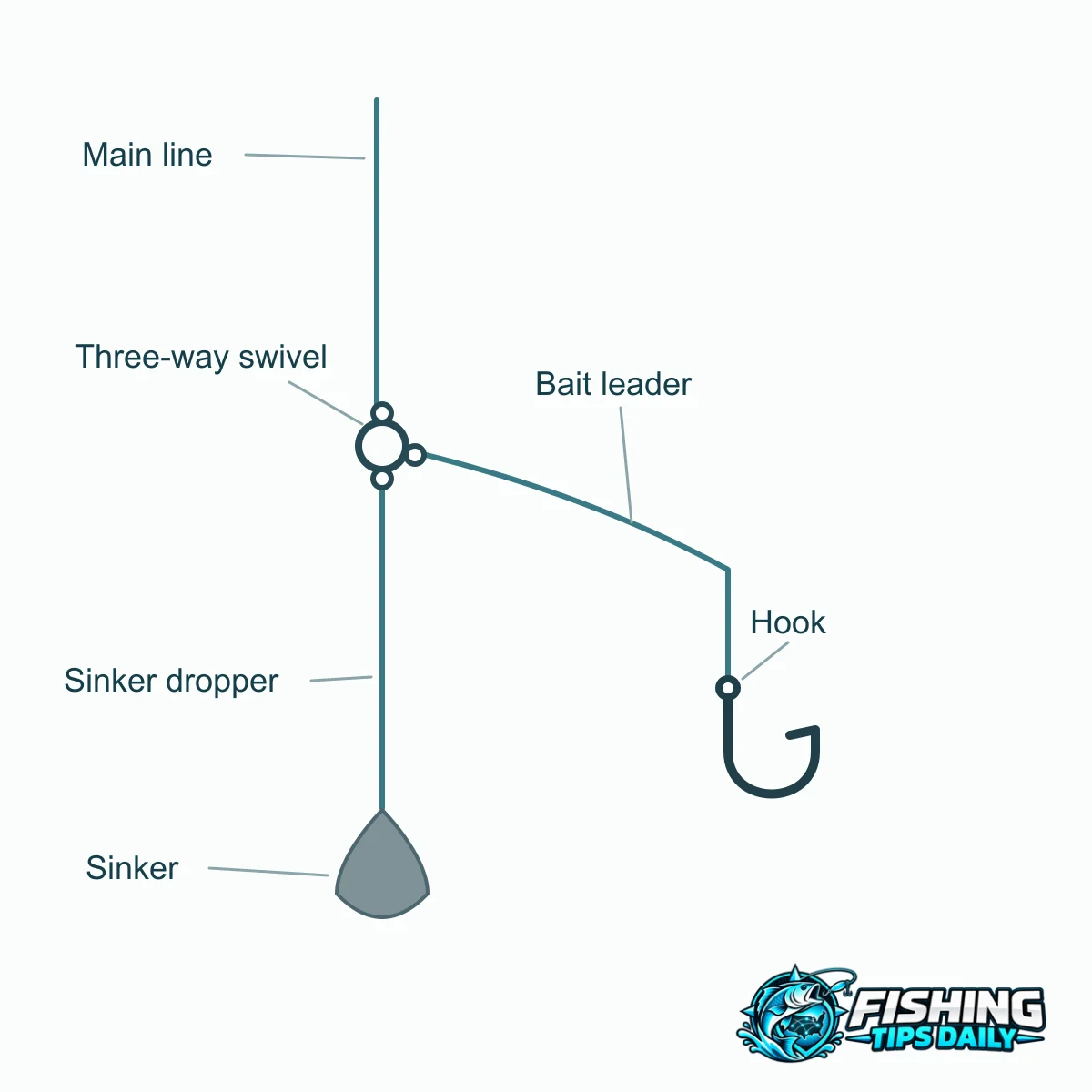
Learn how each piece works before adding more hardware. The diagrams leave bait off the hook so the connections and hook shape are easy to see.
Tie the main line to one eye of a three-way swivel.
Attach a sinker dropper to the lower eye and a bait leader to the remaining eye.
Lower or cast carefully so the two branches separate. Adjust their lengths for current and the height you want the bait to fish.
Adjust the dropper length to set the swivel above bottom. Current and leader length affect how high the bait rides; long leaders can tangle or let live bait reach snags.
Circle hook? Let the pull develop.
Keep the point and gap exposed. When the fish takes steadily, reel into pressure and let the rod bend rather than making a sharp hookset. A conventional J-hook is fished differently; do not use the same response automatically for both.
Match tackle to the job
A small channel cat and a fish in a logjam need different outfits.
Choose a rod rated for the combined sinker and bait weight. Use a smooth drag, inspect leaders after contact with rock, and put bank rods in holders that will not pull loose.
Practical rod-and-line starting points
Situation
Outfit
What matters most
Channel cats in open water
Medium to medium-heavy rod; roughly 10–20 lb mono
Cast the bait gently and avoid overpowering small hooks.
Larger blues
Medium-heavy or heavy rod; roughly 20–40 lb mono or an appropriate braid setup
Line capacity, dependable drag, and control of the weight.
Flatheads near cover
Heavy outfit; often 30–50 lb mono or heavier braid with a suitable abrasion leader
Enough strength to steer away from cover without exceeding the rod's rating.
These are starting ranges, not requirements. Current, bait size, fish size, and snag risk can justify a different setup.
Follow the year, not a single depth
Catfish change their routine, too.
SPRING
Find fresh feeding water
Warming shallows and accessible creek mouths are worth checking as feeding activity increases. A little stain can help, but a dangerous flood is not a fishing opportunity.
First adjustment
Try the shallow feeding edge and the adjacent break. Let bites show which part of the area is being used.
SUMMER
Separate shelter from feeding routes
Shade, deeper refuge, and nearby food can concentrate fish. In reservoirs, the deepest water may be low in oxygen, so depth alone does not make it a good choice.
First adjustment
Check a flat or edge during low light, then try nearby cover or a suitable deeper contour.
FALL
Stay with the baitfish
Cooling water can shift forage and catfish into new areas. On a reservoir, investigate points, creek transitions, and feeding flats instead of sitting only on a summer spot.
First adjustment
Compare two depth zones with the same fresh bait. Move the setup that gets no attention toward the productive pattern.
WINTER
Give each species its due
Blue catfish can remain catchable in cold water, often around forage and deeper routes. Flatheads generally become much less active as temperatures fall.
First adjustment
Concentrate on where fish are holding. Use controlled presentations and avoid assuming all three species share the same winter bite.
Catfish are cavity nesters.
These species use protected places such as crevices, hollow logs, and undercut banks. Males guard the eggs and young. During nesting, a fish's routine can become very different from its usual feeding circuit.
A slower bite doesn't mean the lake is empty.
When fish are occupied with nesting, try a different area or species rather than simply putting out more bait. Fish do not all spawn together, and nearby feeding fish may still be available.
Keep your hands out of hidden cavities.
This guide is about rod-and-reel fishing. Avoid reaching into submerged holes or pulling apart spawning cover; use normal tackle and leave nest shelter intact.
Where to make the next cast
Put scent where a fish can find it.
A bait on a travel route beats a bait tossed somewhere deep with no other reason. Look for a place that puts feeding water beside shelter, a depth change, or a current break.
Night is an option, not a requirement.
Low light is useful for shallow feeding fish and many flathead trips. Channel and blue catfish can also be caught in daylight. Pick a time you can fish safely and a location that makes sense for that time.
1
Bank access with options
A point, creek mouth, or bank beside a depth change lets you test more than one zone. Make a controlled cast and leave room to land a fish.
2
Current seams
Try the slower side of a flow change or the downstream edge of cover. Increase weight only enough to hold your chosen position.
3
Wood with an escape lane
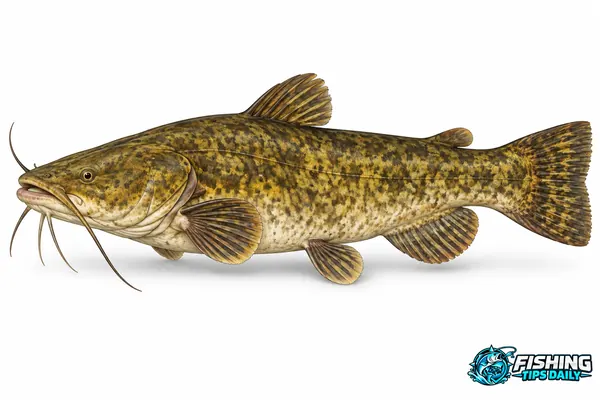
For flatheads, place bait near shelter without putting it deep inside a maze of limbs. Plan how you will steer a hooked fish before the bite.
4
Open-water feeding areas
Blues may follow forage away from visible cover. Use a contour and baitfish activity to narrow the search, then anchor or drift with control.
Fish a spot with a plan.
Where local rules allow more than one rod, compare a shallow edge with a deeper one instead of placing every bait in a tight cluster. Keep track of which rod has which bait.
If nothing happens, check that the bait is intact and the hook is exposed. Then change one thing—distance, depth, bait, or position. A useful wait is one spent testing a reason, not simply watching the clock.
Let the boat help, not hurt.
Anchoring makes a scent trail more consistent in current; drifting searches a wider area. Either method works best when you know how fast the bait moves and whether the sinker is holding or dragging.
Wear a life jacket, keep out of dam exclusion areas, and account for changing releases. In strong current, never anchor from the stern. A fish is not worth a boat pulled sideways or a flooded transom.
When the rod starts talking
From the first tap to the landing net.
01
Stay ready
Set the drag before the bite. Keep rods secure and the line path clear of feet, bags, and loose equipment.
02
Use steady pressure
Match the response to the hook. Once connected, keep tension and let the drag work instead of locking down against every surge.
03
Support the fish
Use a suitably sized landing net. Support a large catfish horizontally; do not lift it by the line, gills, or jaw alone.
The Fishing Tips Daily shortlist
Our top 10 catfish lakes.
Ten featured destinations for planning your next trip, in our chosen order. Conditions change; use each lake's current access, rules, weather, and water level to shape the day.
01
South Carolina
Lake Marion
The upper lake of the Santee Cooper system has extensive woody habitat. Its connection to Moultrie through the Diversion Canal adds another distinct part of the system to understand.
Trip approach: Choose a manageable area around cover and nearby feeding water; use marked navigation routes around timber.
This long Tennessee River reservoir supports an established catfish fishery. Flow and the shape of the river channel give anglers more to work with than the shoreline alone.
Trip approach: Compare channel edges with nearby flats using fresh cut bait, and account for current changes.
Texoma holds channel, blue, and flathead catfish. This large border reservoir offers different opportunities depending on whether you want a channel-cat session or a deliberate hunt for larger fish.
Trip approach: Pick a species before choosing bait. Confirm the license and water-specific rules for this interstate lake.
Oklahoma’s Lake Eufaula has an established catfish fishery, extensive access, and many arms to explore. This selection is not Walter F. George Reservoir on the Alabama–Georgia border.
Trip approach: Start with one creek arm and its approach to deeper water instead of trying to cover the entire lake.
This Roanoke River reservoir lies downstream from Kerr and spans North Carolina and Virginia. Blue catfish give anglers a reason to investigate its deeper routes and feeding areas.
Trip approach: Choose an accessible stretch near a channel transition and check the rules for the waters you fish.
Blue and channel catfish are a major draw on this northeast Texas reservoir. Its catfish opportunities include both everyday fishing and the chance to target larger blues.
Trip approach: Use smaller bait for channel-cat action or fresh cut forage for a focused blue-catfish approach.
The lower Santee Cooper lake offers a broad open-water setting that feels different from timber-rich Marion. Both belong on a catfish trip plan, but they do not fish identically.
Trip approach: Watch the wind before choosing a drift. Work a defined contour and keep track of the bait’s depth and speed.
Choose for your kind of trip, rather than treating this list as a ranking. The reasons below are our interpretation of the linked agency information. Source checks: October 6, 2026.
Historical records and seasonal guidance do not predict today’s bite. Verify your access point, weather and current rules before departure.
Your shortlist is saved in this browser only.
Catfish trip comparison: reasons to consider each water, access planning and important limits
No waters are saved yet. Choose “All ten destinations” and select the waters you want to compare.
How we selected these waters and used the evidence
These are the ten destinations featured in this guide. This comparison adds agency evidence and practical planning differences; it is not a nationwide survey or a promise of fishing quality. Undated agency pages are labeled as such. A source check is not an on-site facility inspection.
Lake Marion
SCDNR Lake Marion: Catfish fishery, woody habitat and access resources. Undated agency guide. General guidance, not a live fishing forecast or confirmation that a facility is open.
Wheeler Lake
Outdoor Alabama Wheeler Reservoir: Catfish presence and reservoir layout. The page also contains older bass survey material. Undated agency guide. General guidance, not a live fishing forecast or confirmation that a facility is open.
Lake Texoma
TPWD Lake Texoma guide: Catfish species, bank-access examples and interstate fishing guidance. Undated agency guide. General guidance, not a live fishing forecast or confirmation that a facility is open.
Lake Eufaula
ODWC Eufaula fishing resources: Catfish species and lake-planning resources; report conditions change. Undated agency guide. General guidance, not a live fishing forecast or confirmation that a facility is open.
Kerr Lake / Buggs Island Lake
Virginia DWR Buggs Island Lake: Catfish fishery, access and special regulations. Undated agency guide. General guidance, not a live fishing forecast or confirmation that a facility is open.
Wilson Lake
Outdoor Alabama Wilson Reservoir: Catfish fishery and tailwater opportunities, not permission to enter dam exclusion zones. Undated agency guide. General guidance, not a live fishing forecast or confirmation that a facility is open.
Lake Gaston
Virginia DWR Lake Gaston: Presence of channel and blue catfish in the shared reservoir. Undated agency guide. General guidance, not a live fishing forecast or confirmation that a facility is open.
Milford Lake
Kansas Milford State Park: Catfish opportunities and park facilities; does not establish a current blue-catfish abundance. Undated agency guide. General guidance, not a live fishing forecast or confirmation that a facility is open.
Lake Tawakoni
TPWD Lake Tawakoni guide: Catfish species, bank and drift methods and special-rule links. Undated agency guide. General guidance, not a live fishing forecast or confirmation that a facility is open.
Lake Moultrie
SCDNR Lake Moultrie: Catfish fishery, reservoir contours and access resources. Undated agency guide. General guidance, not a live fishing forecast or confirmation that a facility is open.
Confirm a legal access point and its current opening or ramp status.
Check the weather, wind and water conditions.
Check the correct license, water-specific harvest rules and bait restrictions.
Choose channel, blue or flathead catfish before selecting bait and tackle.
Confirm that your bait species, collection method and transport are legal.
Pack suitable hooks, sinkers, sturdy tackle, pliers and a landing net; plan for current and snags.
Check local fish-consumption advisories before keeping fish for a meal.
For a boat trip, prepare life jackets and required equipment; check launch conditions.
Note your first productive depth, cover, retrieve and time.
Choose a backup access point or water before leaving.
Know before you go
A few answers for the bait bucket.
Is fresh cut bait the best choice for every catfish?
No. Fresh cut shad or bluegill is our #1 overall pick where permitted, especially for blue and channel catfish. Chicken liver is #2 and remains a useful channel-cat option. Legal live baitfish are especially useful for adult flatheads.
Do catfish only feed on the bottom?
No. They can feed above bottom, and blues may follow suspended forage. Start near a useful contour or feeding area, then adjust bait height. A float on the leader can keep a bait above soft bottom or debris.
Should catfish bait be rotten?
You do not need spoiled bait. Keep liver, shrimp, and cut fish chilled and handle them cleanly. Fresh cut forage is a sensible starting point; deliberately spoiling it is not a requirement for a strong scent trail.
How long should I wait before moving?
There is no dependable universal timer. If your bait is intact but neither depth zone gets attention, change a position or try the next likely area. Give a carefully chosen flathead spot more patience than a random cast with no cover or food nearby.
What size hook should I use?
Choose a hook with enough gap to remain exposed after you add bait. Hook numbers vary among brands, and a worm-sized channel-cat bait needs a different hook from a large live fish. Check the actual fit rather than relying on one printed size.
Can I use a fish I catch as bait?
That depends on the species, state, water, and method. Some game fish cannot be used, and bait collection or transport may be restricted. Check the exact rules before collecting bait, and never release unused live bait into a different water.
Can catfish take artificial lures?
Yes. Catfish sometimes strike jigs, crankbaits, and other moving presentations. Natural bait remains a practical focus for this guide, but calling them fish that never take lures would be misleading.