
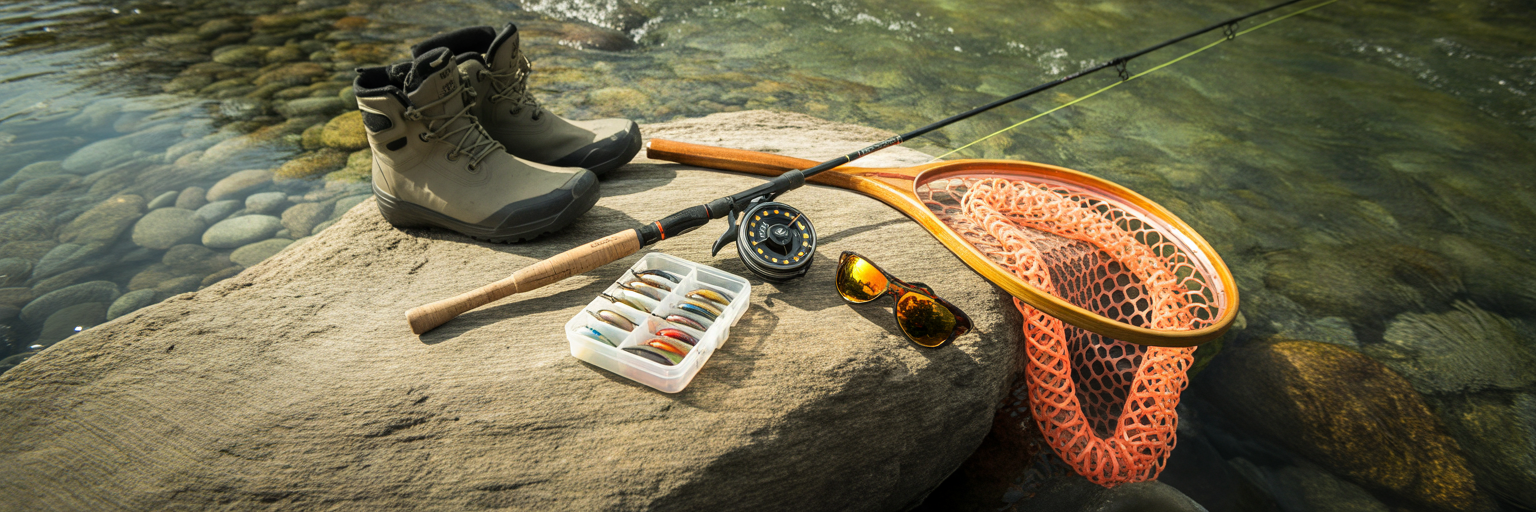
Stream-born trout spend their lives facing into the current, using submerged boulders and seam lines to ambush food drifting past in a fraction of a second. Preparing for moving water means leaving bulky lake tackle behind and packing a light, responsive kit that lets you move quietly along the bank. Putting together a solid first river trout trip gear checklist keeps your shoulders fresh and your eyes on the water.
Building Your First River Trout Trip Gear Checklist
Simplicity is your greatest asset on moving water. Lugging a heavy, overstuffed backpack up and down rocky banks drains your stamina before noon. Worse yet, digging through a mountain of plastic trays distracts you from reading current seams, eddies, and subtle surface dimples. When you carry less weight, you stay mobile and focus entirely on learning how to fish for trout in a river by watching how the current moves around cover.
Matching Your Packing Strategy to the Water
Deciding what to pack for trout fishing starts with scouting the exact stretch of river you plan to visit. Casting from high grassy banks on a wide tailwater demands a slightly longer rod and heavier lures that punch through wind and deep current. If you are wet-wading a shallow summer meadow creek, you can trim your kit down to a shirt-pocket box of hooks and a pair of quick-dry shorts. Hiking into tight, brushy mountain streams requires compact gear that will not snag on overhanging alder branches every ten steps.
Checking State and Local Waterway Regulations First
Before you load a single lure into your pack, verify the state fish and wildlife regulations for your exact river section. Trout waters frequently change rules from one bridge crossing to the next. Many premier stretches enforce artificial-only zones, single barbless hook mandates, or strict bait bans that dictate what stays at home. Using our connected database on Fishing Tips Daily lets you scout your target river ahead of time, helping you match local trout species with water conditions and legal methods. A light, legal, water-specific kit always beats carrying every lure you own.
Choosing a Simple Rod, Reel, and Line Setup
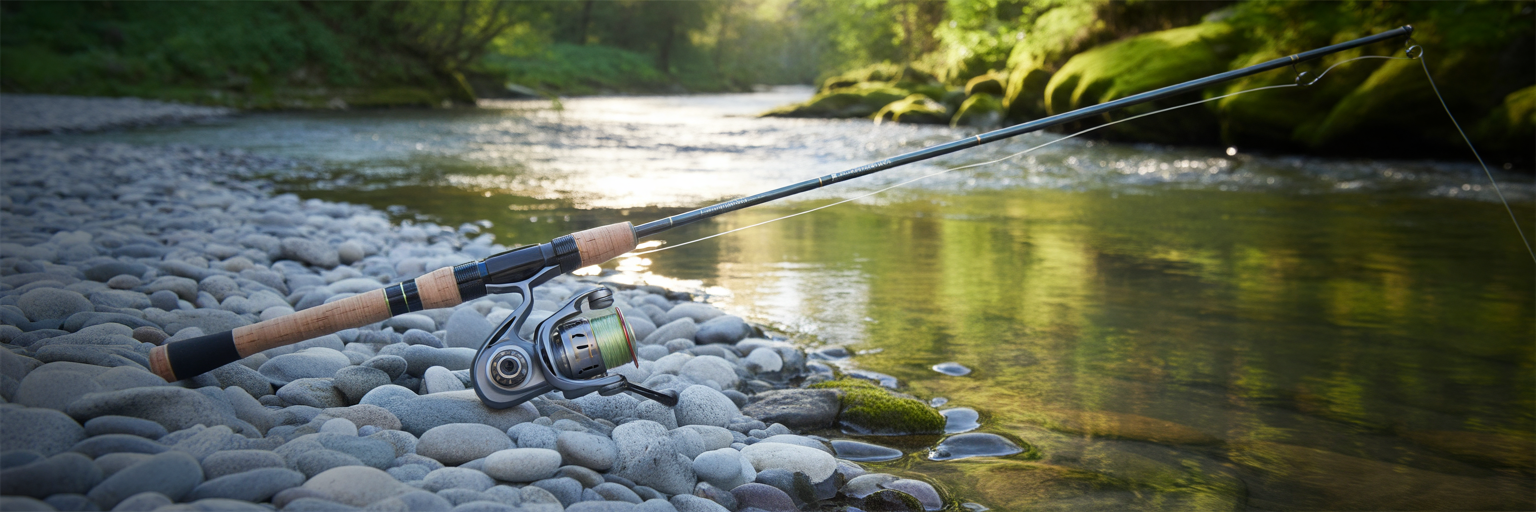
Once you know the rules and terrain of your target stream, you can assemble a reliable river trout spinning setup that handles light presentations without fighting your wrist. Leave the stiff bass rods in the garage. Trout have soft mouths and sharp eyesight, so your primary hardware needs to cushion quick headshakes while tossing tiny weights with pinpoint accuracy.
Selecting the Right Spinning Rod Length and Power
As highlighted in the New York State Department of Environmental Conservation’s I FISH NY Guide to Trout Fishing in Streams, a 5-to-7-foot light or ultralight spinning rod spooled with 4-to-6-pound test line is ideal for stream fishing. That soft rod tip gives you the sensitivity required to detect subtle strikes and load tiny split shot on the cast. Stream width and shoreline brush dictate your ideal length, and you can check our complete guide on how to choose rod length for fishing to see how rod size affects your accuracy. Pick a shorter 5-to-6-foot rod for ducking under low branches on tight mountain creeks, or step up to a 6.5-to-7-foot light rod on wider rivers where longer casts and mending line across fast currents are necessary.
Pairing a Smooth Reel with 4-to-6-Pound Line
Balance that rod with a 1000-to-2000-size spinning reel featuring a smooth front drag system. When a hooked rainbow or brown trout turns broadside into heavy current, a jerky drag will snap light line instantly. Spool your reel with fresh 4-to-6-pound test line. Beginners often prefer monofilament for its forgiving stretch and easy knot-tying on cold mornings. However, fluorocarbon offers lower visibility in gin-clear water and higher abrasion resistance when scraping against submerged river rocks. Many experienced river anglers spool up with 4-pound monofilament as a mainline and tie on a three-foot fluorocarbon leader for the best of both worlds.
| Stream Environment | Ideal Rod Length and Power | Recommended Line Type and Weight | Primary Advantage |
|---|---|---|---|
| Small Brushy Mountain Creek | 5 ft to 6 ft Ultralight | 4 lb Monofilament | Easy underhand roll casts beneath low branches and forgiving stretch on short-range strikes |
| Medium Riffle and Pool Stream | 6 ft to 6.5 ft Ultralight or Light | 4 lb to 6 lb Monofilament or Fluorocarbon Leader | Versatile casting accuracy for working both pocket water and deeper runs |
| Wide River or Tailwater | 6.5 ft to 7 ft Light | 6 lb Fluorocarbon or Mono Mainline with Fluoro Leader | Longer casting distance and superior line mending control across heavy current seams |
A balanced ultralight combo spooled with fresh 4-to-6-pound line maximizes your casting accuracy and gives you complete fish-fighting control in moving water.
Terminal Tackle and a Focused Selection of Presentations
With your rod and reel rigged, you only need a single pocket-sized compartment box to hold your hooks, weights, and lures. Walk past the massive tackle bags at the shop and build a streamlined ultralight trout tackle list designed to keep your presentations drifting naturally at eye level with feeding fish.
Essential Hooks, Weights, and Swivels
- Size 8 to 12 Baitholder or Octopus Hooks: Small, sharp wire hooks hide easily inside natural baits and penetrate quickly with light line pressure.
- Removable Split Shot Weights: Carry a multi-pack of small lead or non-toxic tin shot (sizes BB, 3/0, and 7) so you can adjust sink rates as current speed changes.
- Tiny Barrel Swivels (Size 12 or 14): Tying a micro swivel about 18 inches above an inline spinner prevents spinning blades from twisting your light mainline into a bird’s nest.
- Clip-On Floats: Two small balsa or foam bobbers help suspend baits above snaggy boulder gardens in slower pools.
- Inline Spinners (1/16 to 1/8 oz): Pack gold blades for overcast skies or stained water, silver for bright sun, and black patterns for low-water stealth.
- Hair or Soft-Plastic Trout Jigs (1/32 to 1/16 oz): Olive, white, and brown micro jigs mimic minnows and aquatic nymphs when bounced along the bottom.
- Small Wobbling Spoons (1/12 to 1/8 oz): Narrow metal spoons cast like bullets into headwinds and flutter enticingly through deep tailwater runs.
High-Confidence Lures and Natural Baits
When you are selecting inline spinners, spoons, and jigs for gin-clear mountain creeks or low-flow conditions, check out our clear water trout lure guide to avoid spooking line-shy fish. Where local regulations allow natural or prepared options, worms, mealworms, and scented dough baits remain deadly effective. Pinch a couple of split shot 12 to 18 inches above your hook so the weight ticks the rocky bottom slightly every few seconds while the bait drifts naturally with the current speed.
Have you ever watched an angler spend half their morning retying lures on the bank while fish rise right in front of them? Avoid the classic beginner trap of swapping lures every five minutes. Carry fewer options so you concentrate on casting angles and depth control rather than digging through trays. One pocket box of hooks, split shot, and proven spinners will cover every pool, riffle, and run you encounter.
Footwear, Wading Gear, and Bank-Fishing Apparel
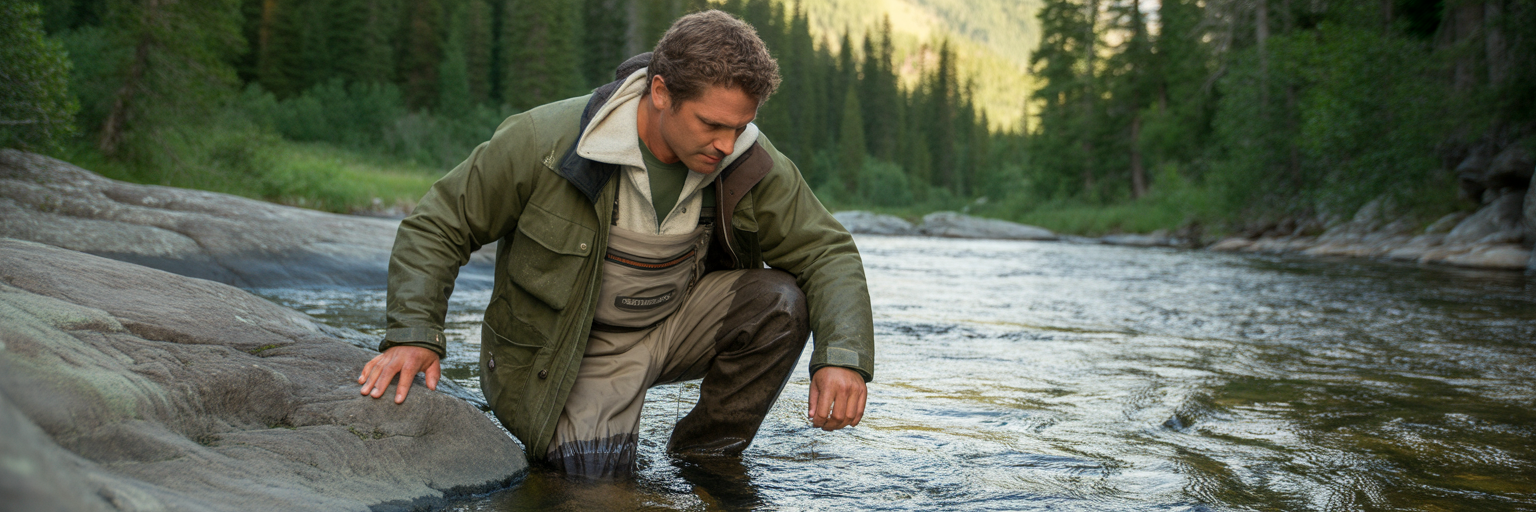
Good presentations mean nothing if you slip on a mossy rock or scare every trout out of the pool before making a cast. Staying upright and unseen requires matching your footwear and clothing to the river corridor.
Traction Options for Slick River Rocks and Muddy Banks
Riverbed cobblestones are coated in microscopic algae that feels like greased glass underfoot. Dedicated felt-soled or sticky rubber wading boots offer the best grip in moving water, though sturdy hiking shoes with aggressive lugs work well for dry bank walking or summer wet-wading. During warm July and August trips, wet-wading in quick-dry nylon pants and neoprene guard socks keeps you mobile and cool. Cold spring snowmelt or autumn mornings call for breathable hip or chest waders.
Keep in mind that many small creeks are best fished entirely from the shoreline. Stepping into shallow water sends underwater pressure waves right into undercut banks, spooking holding trout before your spinner hits the surface. If you do wear waders in deeper water, always cinch a snug wading belt around your waist to prevent water from flooding your legs if you trip, and carry a collapsible wading staff or trekking pole to probe uneven currents.
Layering for Shifting River Corridor Weather
Shaded river valleys hold cold air well into the morning and warm up rapidly at midday. Dress in a three-part system starting with a moisture-wicking synthetic or merino wool base layer, a lightweight fleece mid-layer, and a packable rain shell. Stick to muted earth tones like olive, brown, or slate gray so your silhouette blends into streamside trees and rock walls. Matching your footwear traction and muted layers to water temperatures and terrain keeps you comfortable and invisible to wary trout.
Fish-Handling Tools and On-the-Water Safety Essentials
Rounding out your trout fishing gear for beginners means packing the tools that protect both the angler and the fish. Trout are delicate coldwater predators that do not tolerate rough handling or long air exposure.
Must-Have Tools for Safe Catch and Release
Never step onto a river without polarized sunglasses with amber or copper lenses. Beyond shielding your eyes from flying hooks when a lure pulls free from a branch, polarized lenses cut surface glare so you can spot submerged tripping hazards and holding trout. As detailed in the Missouri Department of Conservation’s Trout Fishing Tips, packing polarized sunglasses, needle-nose pliers or forceps, and a landing net alongside a check of local regulations sets you up for a safe outing. Choose a rubber-bag landing net rather than knotted nylon mesh, which scrapes off a trout’s protective slime coat and tangles treble hooks into a nightmare. Attach locking hemostat forceps and line clippers to a retractable lanyard on your chest so they are always in reach.
Step-by-Step Ethical Trout Handling and Personal Safety
We believe every angler has a responsibility to leave trout in fighting shape for the next person. Follow these four steps whenever you release a fish:
- Wet your hands thoroughly in the river before touching the fish so dry skin does not strip away its protective mucus layer.
- Keep the trout submerged inside your rubber net in gentle water while you unhook it.
- Back the hook out quickly with your forceps without ever squeezing the soft belly or touching the fragile red gills.
- Cradle the fish facing upstream into slow current until it regains equilibrium and kicks away under its own power.
Tuck your valid state fishing license and required trout stamps inside a waterproof zip pouch. Round out your safety kit with a compact first-aid pouch containing bandages and antiseptic wipes, plenty of drinking water, high-energy snacks, sunscreen, and insect repellent. Proper handling tools and basic safety supplies turn a good day on the water into a responsible one.
How to Pack Your Vest or Sling Bag Without Overloading
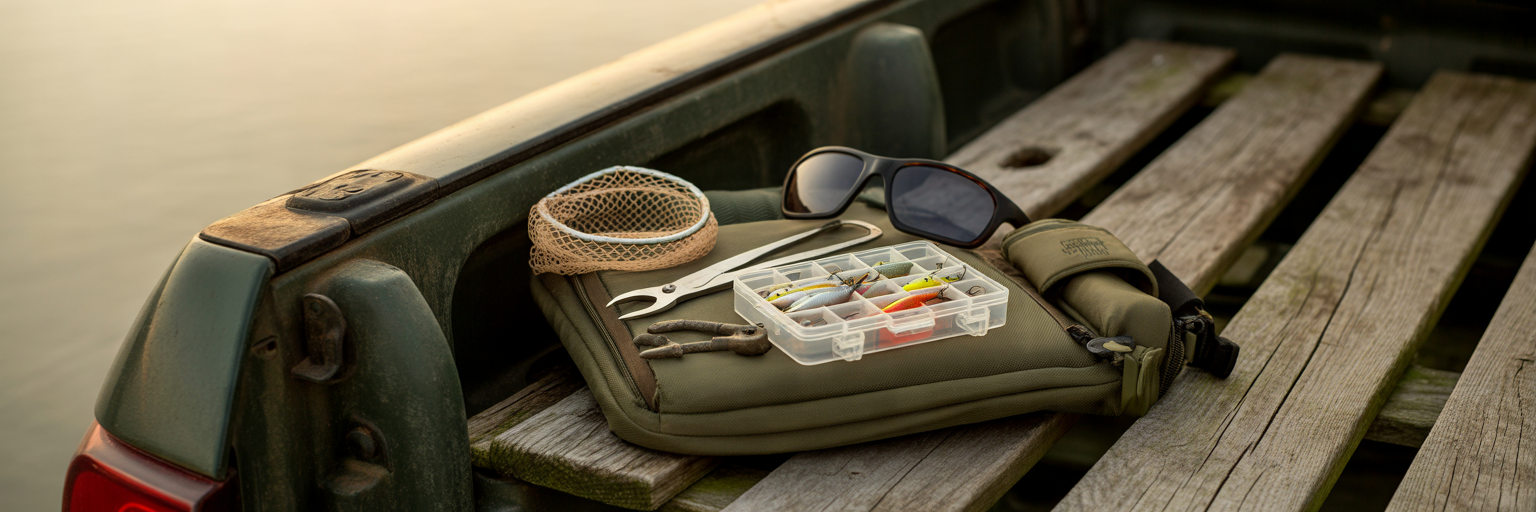
Now that your gear pile is trimmed down to the essentials, how you carry it determines how effortlessly you move along the shoreline. Leave standard hiking backpacks behind and opt for a compact sling pack, minimalist chest pack, or traditional mesh vest. These systems ride high on your torso, keeping your tackle dry when you step through thigh-deep riffles.
Organizing High-Use Tools vs. Trunk Backup Gear
Organize your pockets by frequency of use so you never have to take your eyes off a rising trout. Clip your forceps and line nippers to exterior zingers, and slide your primary pocket lure box and split shot dispenser into the front chest pockets for easy one-handed access while standing in current. Store bulkier items like your water bottle, packable rain shell, snacks, and license pouch in the rear compartment.
Keep backup supplies locked in your vehicle at the trailhead so you have peace of mind without hauling dead weight down the canyon:
- Bulk filler spools of 4-pound and 6-pound line
- Secondary lure trays and extra jars of dough bait
- Heavy multi-tools and spare reel spools
- A hard cooler stocked with ice, cold drinks, and lunch
Before you lock the truck and walk down the trail, run through a quick three-point tailgate check: confirm your license is in your pocket, test your reel drag before walking through brush, and verify your polarized glasses and forceps are clipped on. Step into the river light, legal, and ready to make your first cast count.