
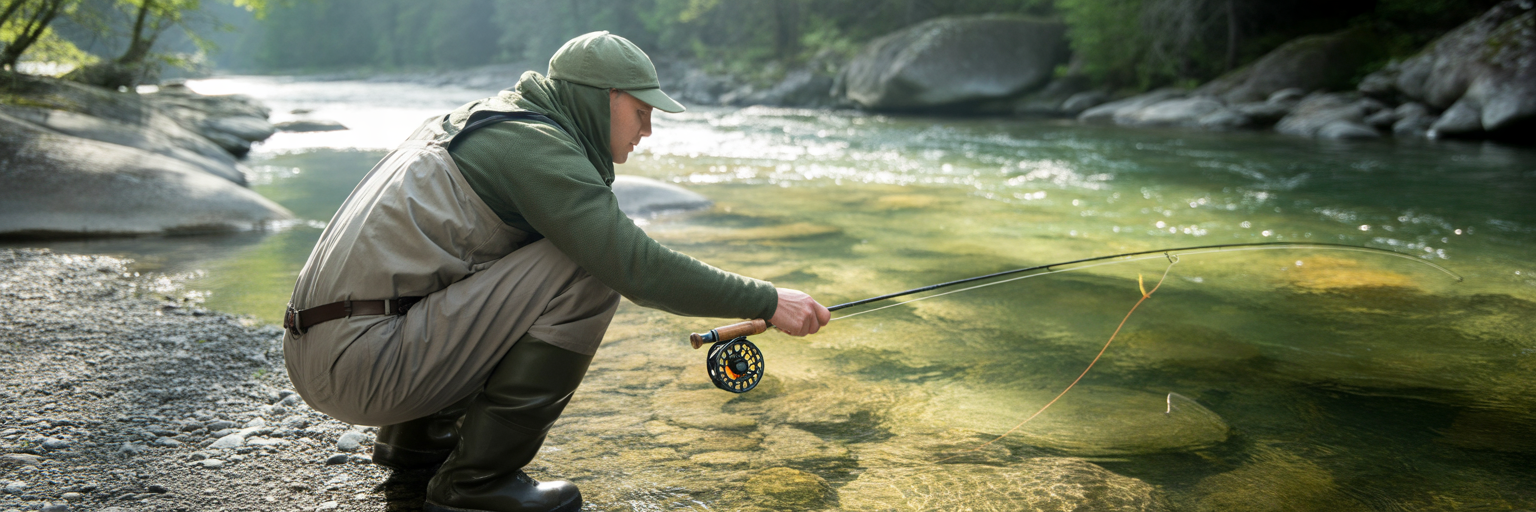
Biologists estimate that up to 90 percent of the trout in any river occupy just 10 percent of the water. Learning to read trout streams from the bank before rigging up lets you locate that productive 10 percent without spooking the very fish you came to catch.
Why You Must Read Trout Streams From the Bank First
Every angler knows the itch to splash straight into the river the second the truck doors close. Resist that urge. Taking five to ten quiet minutes to observe the water before tying on a fly, inline spinner, or bait rig is the foundation of our best trout fishing tips for year-round success. Crunching straight into the riverside gravel sends acoustic shockwaves through the riverbed, while waving a rod overhead casts shadows that instantly lock down active fish.
Use the shoreline to your advantage before making a single move toward the water. An elevated bank gives you a clear view through surface glare, provided you crouch low or keep tree trunks behind you so your silhouette blends into the background. Streamside brush, tall grass, and boulders act as natural blinds that keep you hidden outside the trout’s cone of vision while you map out the current.
Working Near to Far Before Getting Your Feet Wet
Once you step toward the bank, commit to the golden rule of working near to far. Many anglers wade right through the ankle-deep water at their feet just to fire a long cast toward the middle of the river. In doing so, they blow out the prime fish holding in shallow water, undercut banks, and soft pockets mere inches from the shoreline.
When you read trout streams methodically, you dissect the water right below your boots first, then make short casts to mid-range targets, and only wade in once the near water is thoroughly covered. Five minutes of quiet patience on the bank directly translates to more hookups on your very first casts.
Breaking Down the Riffle, Run, and Pool Sequence
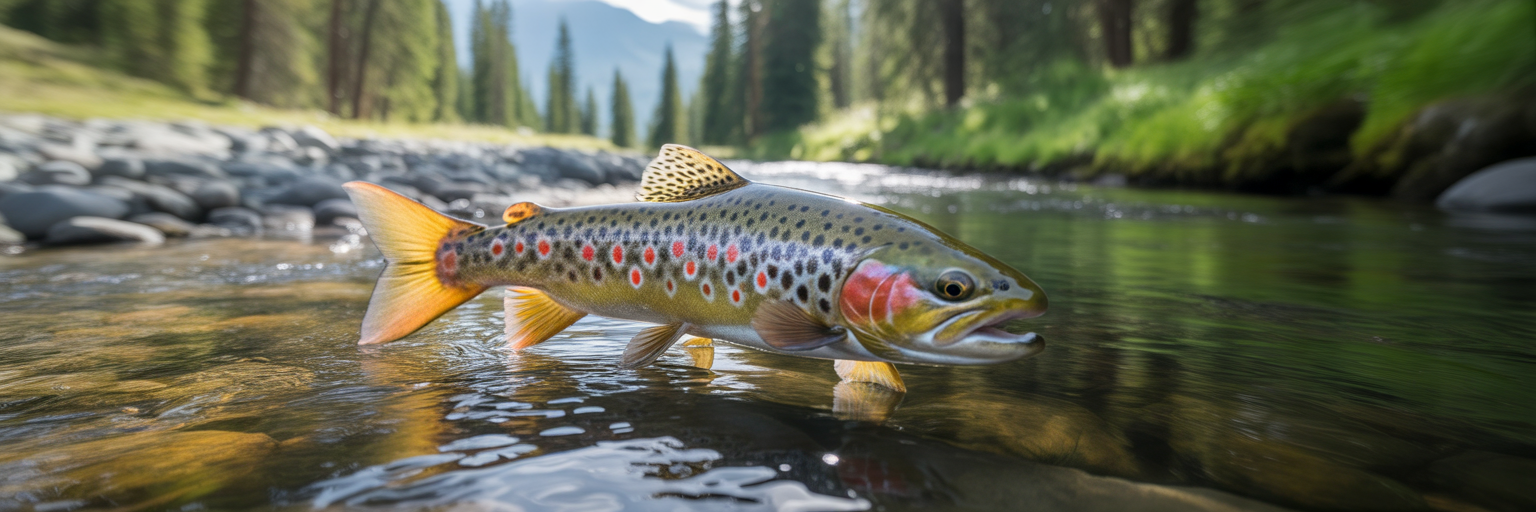
Stepping back to view the whole corridor reveals a repeating pattern in almost every moving waterway. Most creeks follow a classic riffle, run, and pool sequence that dictates how water moves and erodes the riverbed. Pinpointing where trout hold in rivers depends on understanding how fish rotate through these three zones based on time of day, water temperature, and insect activity.
Riffles and Runs as Active Feeding Zones
Riffles are the shallow, fast, choppy stretches dancing over gravel or cobble bottoms. This turbulent water acts as both an oxygen factory and an insect nursery, tumbling nymphs and aquatic larvae loose from the rocks. Better yet, the broken, bubbly surface hides trout from overhead predators and masks your approach. Immediately downstream, the riverbed deepens into a run. These medium-depth troughs feature stabilizing currents that funnel drifting nymphs, worms, and baitfish into predictable paths. Covering varying channel widths across riffles and runs without wading too close is much easier when you review our guide on choosing rod length to improve your reach and line control.
The Anatomy of a Pool and When to Skip It
Below the run, the river carves out a pool divided into three distinct parts. The high-percentage pool head is where fast water dumps in and slows down, creating a prime ambush spot. The deep belly in the center offers slow water where fish rest during bright midday sun or cold winter flows, while the shallow tailout at the rear draws active trout staging during low light. As highlighted in the Missouri Department of Conservation guide on wild trout behavior, wild fish constantly balance energy conservation with protection from predators across these zones.
Here is a hard truth from years on the water: you should frequently skip deep, glass-smooth pool bellies altogether. While deep pools hold the most trout, those fish are often lethargic, educated, and easily spooked compared to the aggressive, opportunistic biters holding in riffles and runs.
| Stream Zone | Water Depth and Speed | Bottom Composition | Trout Behavior and Mood | Prime Time to Target |
|---|---|---|---|---|
| Riffle | Shallow (1 to 3 feet), fast and choppy | Cobble, rubble, and coarse gravel | Actively feeding, opportunistic, less easily spooked | Late morning through afternoon and warm summer days |
| Run | Medium depth (3 to 5 feet), steady moderate flow | Gravel, small boulders, and sand transitions | Holding in predictable lanes, actively intercepting drift | All day during stable water temperatures and hatches |
| Pool Head | Medium depth shelving into deep, decelerating flow | Scoured rock and gravel drop-offs | Aggressive ambush feeding at the main food funnel | Morning, evening, and during active insect drift |
| Pool Belly | Deep (5+ feet), slow to nearly slack | Silt, sand, or deep bedrock | Resting, sheltering, highly selective and spooky in clear water | Midday bright sun, cold winter flows, or high water |
| Pool Tailout | Shallow (1 to 2 feet), smooth accelerating glide | Pea gravel and smooth cobble | Cruising or sipping surface insects in low light | Dawn, dusk, and overcast days |
Before making a single presentation, visually slice your stretch of river into these zones and focus your first casts on the riffle corners, main runs, and pool heads where fish are actively looking to eat.
Spotting Current Seams, Foam Lines, and Pocket Water
Once you identify the broader river zones, zoom in on the smaller hydraulics that govern daily survival. The basic rule of trout energetics is simple: trout want to burn the least amount of calories to eat the most food. They accomplish this by tucking into slow water right beside fast water, using the softer edge as a resting spot and the faster current as a conveyor belt of meals. Mastering reading river currents for trout turns a chaotic wall of moving water into a grid of high-percentage targets.
Reading Surface Clues and Vertical Bottom Seams
Visualizing current seams trout fishing requires watching where two different water speeds merge. Look for surface clues like lines of bubbles, drifting foam, floating leaves, and subtle shifts between choppy and smooth water texture. Those foam lines are the exact trout feeding lanes where insects and bait collect.
In boulder-strewn pocket water, rocks break the river into miniature holding spots. Water slamming against the front of a submerged boulder creates a high-pressure cushion where fish can hold effortlessly, while the back side forms a soft, swirling V-shaped eddy. Remember that seams also exist vertically along the river bottom. Friction against gravel, ledges, and boulders creates a calm buffer zone right on the streambed even when the surface looks ripping fast. Detecting subtle takes down in those bottom seams requires the right tip sensitivity, which we break down in our guide to rod power and action.
- Foam lines along main current edges: Cast just into the faster water beside the bubbles so your offering sweeps naturally along the slow edge where trout wait.
- The soft water cushion in front of a submerged boulder: Drop your rig two feet upstream of a protruding rock to let the hydraulic buffer carry your bait right to a staging fish’s nose.
- The calm V-pocket behind midstream rocks: Target the sharp outer seams of the calm wake rather than the dead center, as active trout face into the spinning eddy current.
- Drop-off ledges creating vertical bottom seams: Add enough weight to bounce your presentation down the step where shallow gravel drops into a deeper trough, keeping the bait in that slow bottom cushion.
Locating Prime Trout Lies and Protective Cover
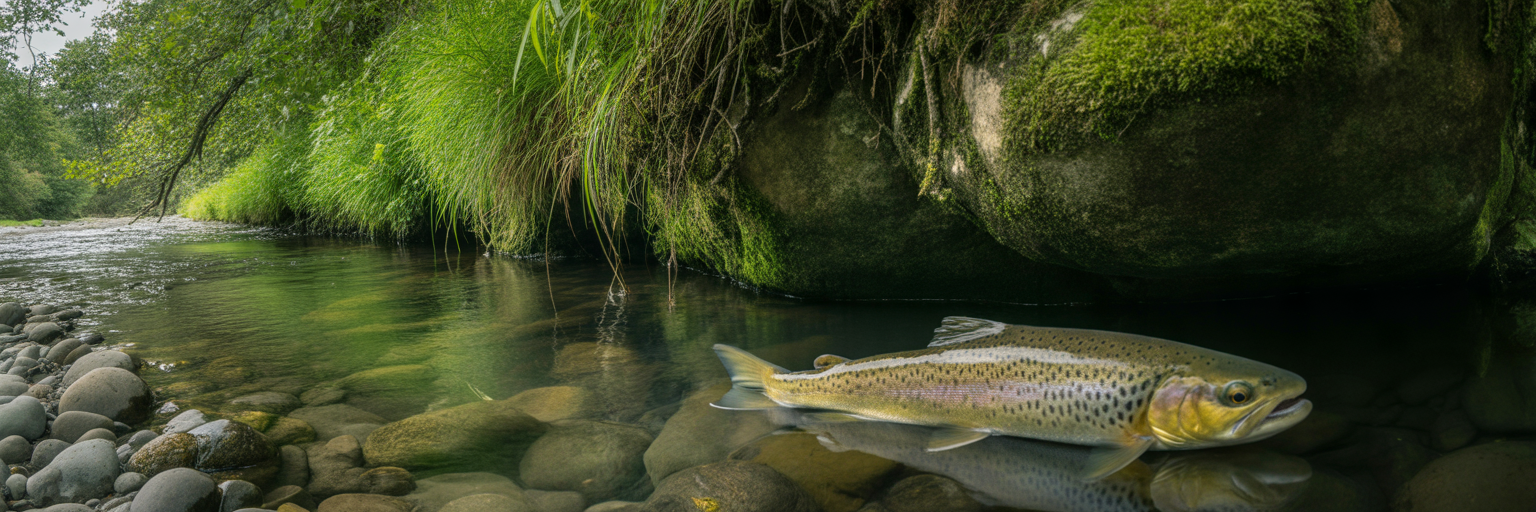
Hydraulics deliver the groceries, but physical cover keeps a trout alive. Security is always a trout’s number-one priority over food because they face constant threats from herons, ospreys, eagles, minks, and otters. When scanning from the bank, look for physical structures like undercut grassy banks, submerged logjams, root wads, overhanging alders or willows, and deep bedrock slots.
Do not overlook the power of light and surface texture. Overhead shade and choppy water act as a virtual ceiling for trout, allowing big fish to hold in water less than a foot deep so long as the surface is broken or shaded. As noted in the New Zealand Fish and Game habitat and water-reading manual, brown and rainbow trout consistently abandon open feeding lanes if nearby escape cover or surface disturbance is missing.
Keep one vital rule in mind when inspecting structure: a massive logjam or deep undercut bank might look like trout heaven, but if the current completely misses it and leaves dead slack water, it will rarely hold actively feeding fish. Prime cover must have moving current brushing past or through it to deliver oxygen and food. Rank your casting targets in this order of probability:
- First Cast (Highest Probability): Shaded undercut banks or root wads with a steady, bubble-lined current seam brushing directly against the structure in three feet of water.
- Second Cast: Submerged midstream boulders or bedrock ledges sitting beneath a choppy riffle surface where broken light hides big fish.
- Third Cast: Overhanging willow branches trailing in moderate tailout currents during early morning or evening shade.
- Fourth Cast (Lowest Probability): Huge logjams or deep shoreline pockets sitting in stagnant, zero-flow backwaters disconnected from the main river drift.
Matching Your First Presentation to Clarity and Depth
Your bankside observations only pay off when you translate what you see into the right rig. Water clarity, depth, and current speed should dictate every knot you tie before making that opening cast.
Adjusting for Gin-Clear vs. Stained Water
When facing low, gin-clear water, trout have plenty of time to inspect your offering and spot unnatural drift. Step down to longer, lighter fluorocarbon leaders or tippets such as 5X or 6X, or 4-pound test on a spinning reel. Pair that light line with small natural nymphs, subtle minnow baits, or small worms, make stealthy upstream casts, and focus on choppy riffles where fish feel less exposed. Conversely, stained or slightly high water after a rain pushes trout tighter to the banks and softer edges to escape heavy flow. That reduced visibility is the prime window to tie on larger profiles, brighter colors, or vibration-heavy lures like inline spinners and small soft plastics, a strategy we detail in our guide on timing the trout bite after rain.
Depth and current speed dictate your weight selection. Adjust your split shot on a bait rig, pick a heavier tungsten beadhead on a nymph rig, or size up your spinner blade so your offering drops into the bottom strike zone before the fast water sweeps it past the fish.
Your Pre-Cast Bankside Routine
Before heading out, you can check local water guides, species profiles, and tackle recommendations on Fishing Tips Daily to match your gear box to the specific river you plan to fish. Because modern responsive web design allows anglers to pull up stream guides and maps clearly on mobile devices right from the riverbank or trailhead, you can quickly verify local conditions before stepping onto the gravel. Follow this four-step routine at every new stretch of water:
- Pause and Observe: Stand back behind streamside cover for five minutes to note water clarity, surface chop, and any rising fish or insect activity.
- Map and Rank Targets: Locate the main riffle, run, and pool sequence, then pick out the closest nearshore current seams and shaded cover for your first casts.
- Rig for Depth and Speed: Select your leader thickness, lure or bait profile, and sink weight so your presentation reaches the bottom cushion at the exact speed of the current.
- Plot Your Casting Angle: Position yourself downstream or to the side of your first target so your line never drags across the holding lie before the bait arrives.