
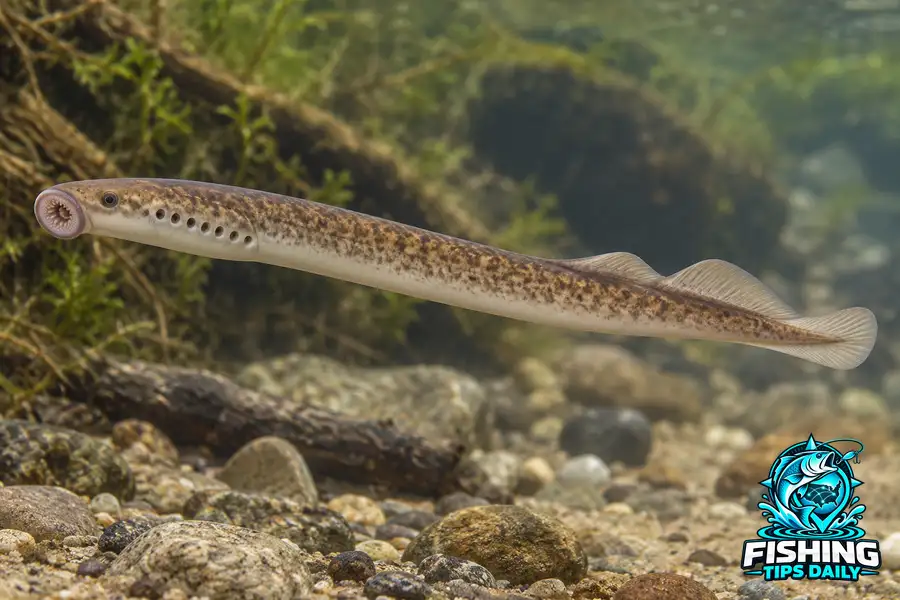
Lamprey Identity
The retained scientific name is Lampetra aepyptera. An adult oral disc and an elongated body identify the general lamprey form, but not the species by themselves. Nonparasitic brook lampreys should not inherit the host-feeding behavior of larger parasitic relatives.
Larval and Spawning Habitat
Young stages occupy stream sediment, while spawning involves coarser bottom areas. Adults use the oral disc when moving small stones during nest activity. Both fine sediment and suitable gravel therefore belong in a habitat account covering different life stages.
Length and Measured Samples
The compiled maximum is eighteen centimeters total length. Published measurements from a small set of shorter individuals do not establish a universal maximum weight. Keep life stage and measured sample information attached to such observations instead of presenting every study endpoint as a species-wide limit.
Separate Feeding Types
A lamprey’s appearance alone does not establish parasitic feeding. Species identity is essential when describing the adult life of a brook lamprey.
All Lakes With Least Brook Lamprey
Browse lakes and reservoirs with documented Least Brook Lamprey records, listed alphabetically. Records do not establish current abundance or public access. Check the evidence and managing authority for the water you choose.
No published lakes are currently linked to this species in our confirmed records.