
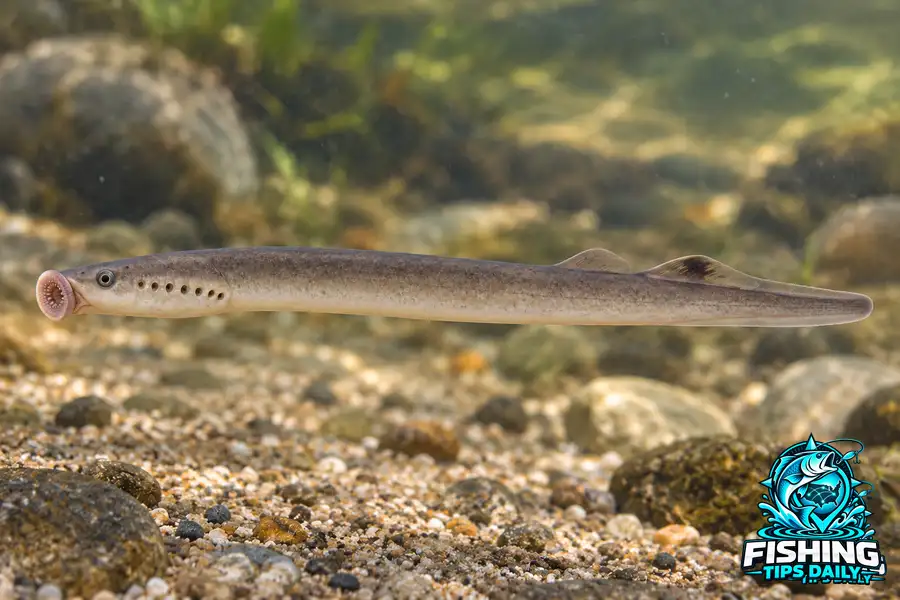
Identification and Life Cycle
A lamprey’s long body can resemble an eel, but lampreys are jawless fishes. Identifying the exact species requires more than recognizing that body shape. Young Alaskan Brook and Arctic Lampreys can be especially difficult to distinguish.
The larval stage is called an ammocoete. After transformation, an Alaskan Brook Lamprey remains in freshwater, reproduces and dies. Its adult life does not include the parasitic feeding phase associated with some other lampreys.
Habitat and Feeding
Freshwater stream habitat supports the life cycle. Larvae live within soft sediment and obtain food there, making their needs different from those of the reproductive adults.
A general lamprey record cannot automatically be assigned to this species. The distinction between freshwater residents and sea-going forms matters when reading older records.
Size and Weight
A reported maximum length is 18.8 centimeters, approximately 7.4 inches. This maximum is not an average adult size. A dependable typical weight was not established for this profile.
Fishing Context
Adults do not feed, so recommending worms or lures as a way to tempt an adult would misrepresent its biology. This is a natural-history profile, with identification and habitat taking priority over a conventional tackle list.
An Adult Life Without Meals
The Alaskan Brook Lamprey relies on energy accumulated before adulthood to complete its reproductive stage. Its name should not lead to the assumption that it attaches to fish and feeds parasitically: that is a different lamprey life strategy.
All Lakes With Alaskan Brook Lamprey
Browse lakes and reservoirs with documented Alaskan Brook Lamprey records, listed alphabetically. Records do not establish current abundance or public access. Check the evidence and managing authority for the water you choose.
No published lakes are currently linked to this species in our confirmed records.